
 Apple Podcasts

 Spotify

 RSS Feed

 Castro

 Amazon Music

 PocketCasts
noseyAF Recommends: The Four Percent Amplified

noseyAF Recommends: The Four Percent Amplified
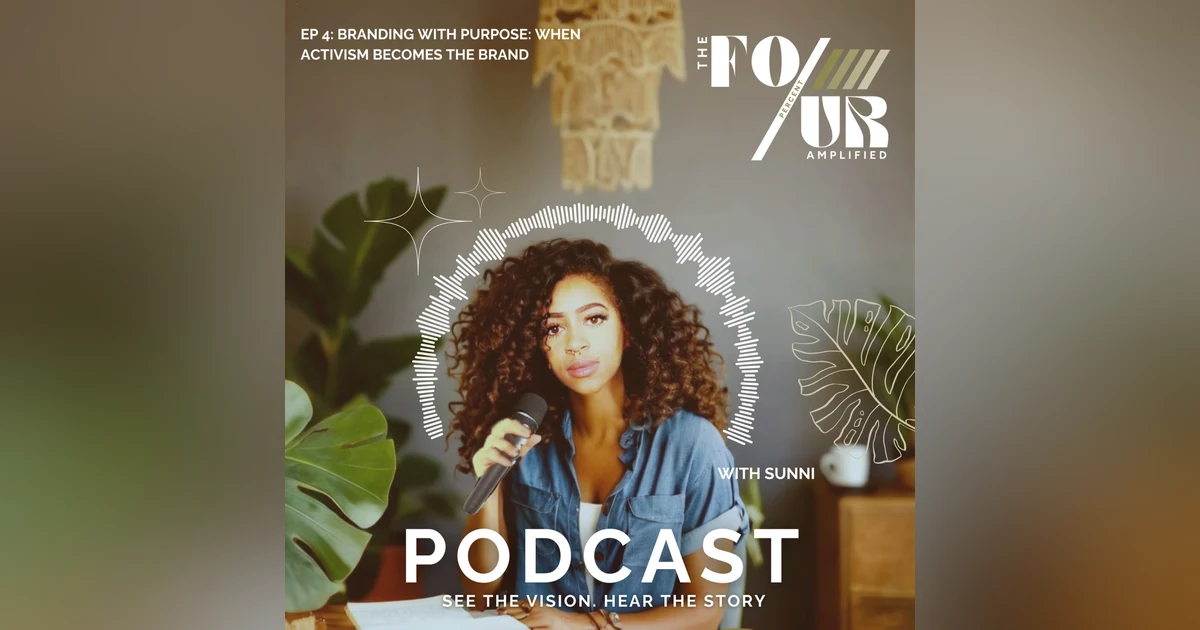
This week I'm sharing an episode of The Four Percent Amplified, hosted by Shari "Sunni" Fairclough of Sunni Aesthetics, who joined me on noseyAF for Episode 133 during my 31 Days of Black Business series. Sunni created the show to amplify BIPOC voices in the design industry, where Black designers are still only about four percent of the field.
In this episode, "Branding with Purpose When Activism Becomes the Brand," designer Leila Kharem of KHI Design Group talks about growing up between cultures, tracing her family back to Barbados and to a great-great-grandmother born into slavery in 1850s Maryland, and what she learned from her late father, Omar Kharem, a Civil Rights era photographer whose work has been exhibited at the Met and the Brooklyn Museum. His lesson, as she tells it: he never compartmentalized, and authenticity is freeing.
Stay for Sunni's opening, too. She spends the first few minutes walking through design as a tool for activism, from the Russian Constructivists to Emory Douglas and the Black Panther Party to ACT UP to the rainbow flag. It's a great piece of writing.
Chapters:
• 00:03 - Featuring the 4% Amplified Podcast with Sunni Aesthetics
• 05:36 - Leila’s Family History: Roots, Migration, and Identity
• 13:02 - Legacy Lessons: My Father's Photography and Today's Turbulent Climate
• 17:12 - Design as Activism — Beyond Aesthetics
• 25:43 - Being a Black Artist in Design
• 31:32 - Balancing Business, Design, and Activism
• 36:12 - Confidence: How Creatives Move the Needle
• 46:22 - Reflecting on History, Design, and Activism
Shared with permission from Sunni Aesthetics.
🎧 Listen to The Four Percent Amplified at sunniaesthetics.com/podcast
⭐ New here? Rate and review noseyAF, and find more episodes at noseyaf.com
📬 Get the noseyAF Dispatch, a monthly roundup of episodes and studio stories. → Subscribe here
00:00 - Untitled
00:03 - Featuring the 4% Amplified Podcast with Sunni Aesthetics
05:36 - Leila's Family History: Roots, Migration, and Identity
13:02 - Legacy Lessons: My Father's Photography and Today's Turbulent Climate
17:12 - Design as Activism — Beyond Aesthetics
25:43 - Being a Black Artist in Design
31:32 - Balancing Business, Design, and Activism
36:12 - Confidence: How Creatives Move the Needle
46:22 - Reflecting on History, Design, and Activism
Hey friends, welcome to nosey af.I'm your host Stephanie Graham and I am coming on your feed this Friday because today we're featuring an episode of the 4% Amplified podcast, which is hosted by Sunni of Sunni Aesthetics, who you might remember joined me on episode 133 during my 31 Days of Black Business Success series.So if you're interested, if you're like, yeah, I remember Sunni, or that was one of the conversations you missed, please head on over to nosaf.com backslash133 and give the conversation a listen.So Sunni created the podcast to amplify bipoc voices in the design industry, where black designers remain underrepresented.In this episode, designer and entrepreneur Leila Karam and explores the connections between branding, activism, identity and family history, including how her late father's art has shaped her creative practice.So check out this conversation.I really love the work that Sunni is doing.I hope you will give her podcast the 4% amplified some love and become a listeners of hers as well.But without further ado, let me introduce the 4% amplified with Sunni.
Shari “Sunni” FaircloughWelcome back to the 4% amplified, the podcast that turns up the volume on amplifying underrepresented voices in the design industry.I'm your host, Sunni and today we're at a powerful intersection of branding, activism and legacy, the vital territory for a mission.Understanding history is key, especially how branding and activism have long intertwined in the fight for equality and justice.As civil rights face new challenges, these lessons are crucial.I'm honored to introduce Leila Kharem, founder of KHI Design Group.Her story, deeply rooted in family history of resilience and visual storytelling, offers a unique perspective on this intersection.Her late father, Omar Karin, a photographer during the Civil Rights movement, captured pivotal moments that continue to resonate with us today.You can find his work on Instagram Straight Ahead Photography.His photographs have been exhibited at prestigious institutions such as the Met, the Museum of Natural History, and the Brooklyn Museum as part of the Committed to the Image exhibit, along with many other galleries.So if you're in the NYC area and if you love art, stop by any one of these museums.You'll be able to see Mr. Karim's work.Before we dive into Leila's personal story, it's vital to understand how design has historically served as a powerful engine for activism.Across movements of decades, creative expression has amplified calls for justice and change.Think back to the early 20th century and the Russian Constructivists.Their bold geometric designs weren't just awesome, they were visual declarations of Revolutionary ideology, mobilizing support for the Bolshevik cause and influencing propaganda worldwide.Fast forward to the American civil rights movement in the 60s.Here, design became a direct tool for resistance and empowerment.Emory Douglas and the Black Panther Party utilized striking imagery to communicate the their message of black power and the urgent fight for equality.The raised fist remains a potential symbol of this era.The AIDS Crisis of the 1980s and 90s saw Act up employ Stark, unforgettable visuals like Silence Equals Death to demand action and awareness.Reclaiming a symbol of oppression to fuel their fight.The Black Power movement also gave rise to to powerful visual identities with artists like Barbara Jones Ho and the Afrika Bra using bold colors and symbolism to foster pride and resistance within black communities.Simultaneously, the anti Vietnam War movement utilized accessible graphic design, peace signs, powerful slogans to amplify anti war sentiment and mobilize widespread dissent.The LGBT LGBTQ rights movement gifted us the rainbow flag, a design by Gilbert Baker that has become a global symbol of pride and the ongoing fight for equality.These examples underscore a powerful truth.Design has always been a vital tool for activism, shaping movements and communicating urgent needs.As we move forward, we'll explore how this rich history continues, continues to inform today's struggles and the crucial role of branding and creative expression in contemporary activism.And who better to guide us through this conversation than our guest today, Leila Karim, whose own family history is deeply intertwined with the very movements we've been discussing.Her unique perspective, shaped by this legacy and her own impactful work in design promises to offer invaluable insights.Now let's turn our attention to Leila and the personal connection that fuels her understanding of design, activism and the enduring power of the past.Let's welcome Leila.Hi, Leila.Thank you so much for joining me.It's just been amazing to have you here with me today.
Leila KharemThank you so much.I'm really looking forward to this.Thanks for having me.
Shari “Sunni” FaircloughYeah, of course.So I would love for you to share a little bit more about your family history, background and where you're from.
Leila KharemOkay.So I am from New York, born and raised a few generations in.As a New Yorker, my family are predominantly immigrants, but also have roots in the south in slavery, Irish and African.I was born in the Lower east side of Manhattan and I moved our family moved our way up into Westchester.But basically my father has ties to Barbados.His father was Bajan and his mother was mixed from New York.Her mother was born in Maryland in 1850s during slavery and made her way to New York where she met My great grandfather.And that's a whole story in and of itself.But so she was there and then she met my grandfather in New York after He emigrated in 1915.And my mom comes from Buffalo, New York, Irish background, from County Core in Ireland.And her family came here a couple generations back as well, especially to escape the famine and all the things going on in Ireland at that time in 1850, in 60s 70s era.And yeah, so here I am, very mixed in, also mixed religions.My father is Muslim, converted in their 50s.My mom was raised Irish Catholic, but is now very involved in Buddhism.If there's anything else in particular I should talk about, let me know.
Shari “Sunni” FaircloughNo, it's amazing though.I love that.Just like with different cultures blending in together and especially being from the Caribbean too, I totally get it.With that blended history, it's.
Leila KharemI wish I knew a little more about it.I made my first, my sort of pilgrimage visit to Barbados a few years ago.I didn't know my father's side of the family at all, unfortunately.And it's been a little bit of a.Like a black hole for me trying to fill in all of that heritage.So I got very involved in genealogy and was able to trace my grandfather's family back into Barbados.And I haven't met too many people, so I'm still working on that.But it was really wonderful to go see where he grew up on beautiful island.And so I'm trying to connect more with all of that and same thing with the other side, the family down in Maryland, because I was able, through the DNA work to connect with family members down there as well, so.So I'm hoping to do more with that.
Shari “Sunni” FaircloughYeah, I love that for you.
Leila KharemYeah, it's gonna been a.It's been a long time of doing research and going to archives and doing the DNA and, you know, all of that to try to pull things together.And there's so much there, most of it that I was unaware of, but it's hard because I don't have any photos and I don't have a lot of context.I don't really know who they were, what they were like.So I try to put together as much information as I can about their lives and understand some of this significant events and what might have brought them to that.Trying to understand who they were.
Shari “Sunni” FaircloughYeah, definitely.But don't give up.I know you're gonna find more of the answer soon, but you got this.
Leila KharemDefinitely not giving up.
Shari “Sunni” FaircloughBut to turn it back to your father's work and legacy as a photographer in the civil rights.How did that influence your approach to design and entrepreneurship?
Leila KharemSo I think that in some ways, it was a bit of a process for me to connect those things initially.Getting into the design world, you find yourself in this environment that is really not at all connected to your history.Very wealthy white sector that I did not grow up in.And you don't see a lot of people like us moving around, as your title suggests, in that environment.And so I compartmentalized a lot for a long time and just stayed under the sort of shadow of the people that I was working with and worked for.And it was really only in the last several years that that's changed a bit for me because it wasn't working.It just doesn't feel quite right.And I guess at this point in my life, being in my later 50s and trying to revisit things, I feel like a change needs to happen and that I want to be more authentic and more connected and everything, work and the rest of my life and not doing all that compartmentalizing.So I. I think with my father, his influence is that he was very committed to himself and his art all the time, 24 7.It was never not a part of his life, and he didn't compartmentalize at all.And I realized that authenticity and trueness to yourself is freeing.And it's something that I haven't always done in my life, but it's definitely been an influence in me lately.So I been trying to connect with new people in the design industry, joining the Black Artists and Designers Guild and going to different types of events and watching and trying to be involved in the changes that are happening in the industry and trying to connect with that so that I can be more myself and connected to the work that I would like to be doing.And my father's art was very inclusive in terms of his subject matter.I would like to be more inclusive in my work and have a little bit more diversity in my clientele and things like that.But that sort of connection to your authentic self is really the key thing that I would say I took away from my dad's work.
Shari “Sunni” FaircloughYeah, definitely.We're always growing and learning new things every day.It's like we're always trying to basically find more parts of ourselves.
Leila KharemYeah.And coming from a mixed background, that's complicated because I wasn't raised in any one particular manner to see myself as any one particular thing.My experiences are so varied in terms of my family and the religion and any sort of aspects of culture.There's so many different things going on.And it's the kind of thing where you have to figure that out.And I think for my father, that was a big part of his drive.And he was.He was very light skinned and growing up in a black family in a black environment, I think for him, his identity became something that he really had to display because he wanted people to know who he was and he wanted people to understand who he was and what his background was and who he cared about and all of that.And his work became very focused on the black community.He photographed a lot of black people.He photographed a lot of black cultural events, music and environments, also showing where people lived, what things were really like.And he really.He was really committed to.To his background and his culture and his identity.And that's something that I've been trying to do as well.Also being light skinned and trying to figure myself out, it's been a part of my life that I really need to connect to and I really need to acknowledge.And so he's.He's been a good guide in that way for me.
Shari “Sunni” FaircloughSo the question is, what are some lessons or stories from your father's experience that still resonate with you today, given our current climate that's happening right now?
Leila KharemCurrent climate is so disturbing.It is, yeah.
Shari “Sunni” FaircloughIt's very dystopian.I'm just like, oh, really?We're getting to Mad Max soon.Exactly.
Leila KharemIt's really frightening.My father talked a lot about these things growing up.He was also pretty scholarly.I grew up in a very scholarly atmosphere.Both my parents read a lot, knew a lot about history, talked a lot in the house.And so I was very aware of a lot of what had been going on in the civil rights era, which I was born right in the middle of.Born in 67 and.Right.It was a year when a lot of things were going on.So I was dropped right into the middle of all that.And so I was very conscious growing up of the details, the information, and even once sort of being removed from it.Growing up in my shallow.But he never let it go.My parents were pretty adamant about understanding things.So I was always being a product of growing up in the 80s, optimistic and complacent, just, hey, life is okay.It's cool.You guys did all that work in the 60s and now things are good.
Shari “Sunni” FaircloughBut of course, modern.Yeah, modernization, it's.Oh, we already did all that work.Moving forward exactly 10 years ago, with everything that's going on right now, I never would have guessed it would have been like this Just even being in high school and bringing about a lot of these events and it seems so.
Leila KharemFar removed, but it's really not.And, and when you think about the amount of time that has actually passed between slavery and now, it's really not that much.My grandmother was slave.That's not that far removed.And it seems like something that feels so impossible now.Jim Crow feels impossible, but it's not really.And I know my father always would say to me, whenever I would have these conversations with him, he go, it really hasn't changed that much.You'll see like they're still there, they're still hiding under those rocks.All that stuff is still going on.And I understood, of course, that systemic racism was still a problem and all of the classism and all of that was still going on.But I felt like you said, going in the right direction, like we've established laws and.And I don't like to diminish the work that people who came before us did.People sacrifice themselves to have those laws be written.Definitely it was significant and it was a big change, but the work wasn't done.And I think that having our first black president really triggered some massive response in the people that were still living in 1850.And it's frightening how intense that actually is or it's realizing how close we are in history to all of these things.So I. I know that my father was.My father was very adamant in continuing to tell me that, even though I may not have always felt exactly the same way.So lessons about just knowing where we're at, knowing what's going on, and understanding things in a way that the average person might not really even be paying attention to or something.And I think that his work tried to show that sometimes my parents were involved in a lot of sort of activist type environments, whether it was my mom teaching or my dad photographing the jazz musicians and things like that.Everybody was really trying to still live and create and teach their children and function in an environment that acknowledged them.And down in the Lower east side it was very.We were in our little bubble in a way.At least I felt that way.I was just a kid.Kid.You're in this bubble of people being able to be that way and the minute you leave, things change.And I know as a child I didn't understand all of my parents struggles living down there, but yeah, I think just staying awake is really something that.A lesson I learned from my dad for sure.Next question.
Shari “Sunni” FaircloughHow can design, or your experience with design, how can it be used As a tool for activism and not just aesthetics.
Leila KharemI think that design has always played a role, maybe more in a sense of art making, the posters and things like that, images, imagery.But design is how we live our life.It's how we function.And while on the one hand decorating a house just seems like an aesthetic process, it can involve a lot more than that.It can represent the people that are living in that house.And I think that we need to change the narrative in terms of what is good design.And I always talk about the whole concept of ethnic design or tribal design, you know, all these little niche labels that are put on anything that isn't rooted in English country or French, something, Louis, whatever.It's the sort of colonial ideal of design has always been just rooted in those very small little environments in Europe and everything else was extra.If you wanted something Japanese that was very ethnic or you wanted something African, it was very ethnic.And so it negates the fact that the rest of the world is actually much larger than England and France, you know?Yeah, definitely.
Shari “Sunni” FaircloughBut how I see it too, it's like a characteristic, like if you're home and you're there all the time, you want to make it more like you make it comfortable, just make it more of your style.And I guess as a creative, as we are creatives, we see.But it's not like that for everyone.
Leila KharemNo, it's not.I think in being in this industry as a designer, you find a lot of different kinds of clients who have all different kinds of agendas.But I think that in a bigger sense we have to change that hierarchy.And I think that the more that other forms of design become the mainstream, the more that we push different cultures and different design aesthetics and different ideals into the picture, maybe we can start seeing Ralph Lauren tartan's as ethnic, which it is.Right.It's very specifically Scottish and Irish.I think that the more that designers coming up and different types of people becoming designers start to bring those things into our worlds and into our clients homes and into our own homes, it becomes more visible and then it becomes more normal.People might start looking at something that is very African oriented and just think, oh, that's just design.That's just the way that some people live without thinking that it's some sort of niche, special little thing and that English design or French design is not the root of everything.And I think that in the design industry that was always the case.And I've learned to appreciate and to know how to create that kind of design.And it's not that there's anything necessarily wrong with it.That's how people in that part of the world live.But there's also all of the sort of appropriation, too.Ralph Lauren's perfect example of that whole safari thing.What is safari?He goes around the rest of the world, collects things and puts them in his house.
Shari “Sunni” FaircloughThat is a good point, because how I see it too, maybe it's like they saw it as inspiration, but then again, there's.There's a difference between being inspired, appreciating the culture than taking it and appropriating it.
Leila KharemYeah.Because in the end, what that look became, where you have maybe Scottish tartans next to African masks or next to safari prints or whatever it is, or that Chinese screen, it became a look that.That got tagged as an English aesthetic.English liked to go around the world and collect things, and that became theirs all of a sudden, rather than acknowledging that all of these things come from places that already have their own aesthetics and that's why they exist.And to start being able to understand that African design is more than just hanging a kente cloth somewhere or putting a stool in the corner.There's more to all of these things and that people need to start seeing the world.I think.I still think that if you ask the average American, what do they think Africa looks like, they're going to picture a safari.And Africa is like the largest continent in the world, practically.So many different things going on, nobody knows.
Shari “Sunni” FaircloughPeople confuse Africa and they always feel like it's a country where it's a whole continent.There's so many countries in that continent.
Leila KharemExactly.
Shari “Sunni” FaircloughSo for someone to say a whole continent is looking a certain way.
Leila KharemReally ignorant.Yeah.And I think that's where design comes in.Because design is all about visuals and emotion, too.
Shari “Sunni” FaircloughEmotion, feeling characteristics, even.Like when I look back at historical art, too, it's always taking on what was happening during that time.So interesting to look back on.
Leila KharemYeah, absolutely.It's representative of people's lives.And I think that people have a tendency to be visual before they are anything else in their responses to things.You see something first and then you think about it, and then you hear it, and then you taste it or whatever it is.But the first thing you do is see something.And that first impression is very, very important.And I think that in our country, at least, our education system and how we present things, which is all about design, all the things that we look at have an agenda to create a certain narrative.And I think that is what needs to change in all areas of design, whether you're doing interior design or you're doing graphic design or architecture, whatever it is, pattern designs, there's an opportunity to present something else, something different, and for people to be able to see things that they don't normally see.People think that all of Africa looks like a safari because they don't see pictures of anything else.They don't.They're not learning about anything else.They're learning about the tigers and the lions and the elephants.That's basically.It's basically it.And I think that art, design, those are the things that have pushed change.Those are the things that have made people see things differently.Art in particular, and all of design is really based in art, in a way, is a changer.It's something.It drives change.It drives people to see things differently.And I think that we can all do that in whatever little pocket of all of this we're in.So for me, it's in my design aesthetic.It's in trying to help people understand that there are maybe several ways to live, several ways to do things, and that there's art and materials and furniture from all over the world that you can admire and use.And it can also be, if you're choosing paintings or making paintings or sculpture or anything like that, that you can bring different aesthetics into it, and then those things can be displayed, and then whoever comes into those spaces gets to see them.And that can happen in all aspects of design.So whatever area of design you're going to go into, I think representation in one way or another is important.I think that's the thing that might help people to see the world a little bit more holistically.Definitely.
Shari “Sunni” FaircloughHey, amplifiers.Ever feel like your brand is whispering when it should be shouting?That's where Sunni Aesthetics comes in.My business is all about design that speaks the soul.From bold branding to sleek web design, let's turn your vision into a vibe.For five years, I've been helping small businesses like yours break through the noise.So whether you need a fresh new logo, a new brand identity, a website that converts, or social media strategy that pops.Sunni Aesthetics specializes in graphic design, web development, and social media coordination.Stop blending it in when you can start standing out.Visit sunniesthetics.com today for a free consultation and let's amplify your brand.That's sunniesthetics.com.Now back to the podcast.Can you tell us a little bit more about your experience working and I guess, just being in the atmosphere for the black artist of design?Skill.And attending the Mountain School of Craftsman.
Leila KharemOh, yeah.Haysack.Yeah.Yeah.I found I.It was all started for me when I first saw Milena Barnett choose the founder Black Artists and Designers Guild.And I was going to trade events.They would do panel talks at the Design Buildings and things like that.And normally I would find those things a bit boring, actually.It was the same conversation all the time and the same people all the time.And my mentor and employer at the time, who I love dearly, but she's a Irish woman who grew up in a very English kind of environment and has mastered all of that.But she's been my.She's been my teacher and my mentor for all those years, but also very supportive and wanting me to be myself and all of that.But.But you're in this environment which is very much defined, and you're not part of it, really.So you have to.This is something I've experienced all my life, and it just carried into work where you're.You're just trying to exist and fit into a space that isn't really your space.And I got good at that throughout my life.But it's not rewarding.It doesn't feel good.It's not something you don't get to be yourself.You don't get to do your thing.You're doing somebody else's thing all the time.And so when I started seeing Melena at different events, she's been very good at just inserting herself places and.And she's very talented and all about socially showcasing her work, and it was inspiring.And then when I heard that she started this guild, I thought, oh, okay, maybe that'll bring some change, and maybe that's something I can try to do.And I applied, not even a hundred percent sure I could get in, and I was accepted.And so that felt very validating.And so suddenly, I was connected to this network of people that honestly didn't even know existed in the design world.And we would have gatherings and functions, and to some extent, the industry started picking up on almost a trend, and it became like a commercialized thing.Oh, let's get the Guild in here.We'll showcase some black artists in our showroom, and it'll be cool.And then there were people who were also legitimately interested in people, Black designers who were finding success in making patterns and collections and things like that.But I felt, in spite of whatever hurdles still have to be jumped, that there was a new environment and there was something new and interesting going on.And it was also very much about creativity.So the guild would.Because it's also artists.And Melenia herself was a ceramicist and textile designer.But she would gather all these opportunities together and post them in our local network.And I saw the Haystack Mountain School opportunity for a one week scholarship workshop.And I do art myself.I've always done it on the side.And I.So I thought that'd be really cool.I was familiar with it because my daughter lived on that island for a while.So I actually knew the area pretty well.And I always wanted to go there.I was like, oh, there's a.It's a very small little mobster fisherman's island.And so it's a very remote, unlikely place for things.But Maine has a big art community.And it's really.The nature is stunningly beautiful and it's very serene and you can absolutely escape there.And so I.Anyway, I saw the Science Cream School many times and I thought, oh, okay, now I had an opportunity to see if I could actually go.And I applied and I got it.So that was fantastic.And I took the course that Melania was teaching in ceramics.And in her focus, being a designer who's very aware of the challenge that black people face in these industries, was very focused on authenticity and helping people to use their backgrounds and their experiences and their cultures to create whatever it was you were going to create.And so there was a very mixed group of people that were taking the class.And the environment at that school is very open and liberal and accepting and encouraging.And you could be anyone and come up there and they'll welcome you with open arms and encourage you to be who you are.And so I spent a whole week just doing art and nothing else and trying to immerse myself in my thoughts about my culture and the things that she would do.Things like, what kind of food did you eat when you were growing up?And strangely for me, it was always Puerto Rican food because lived in the Lower east side, I was surrounded by Puerto Rican people.And so I grew up on that food.And then she said, what colors do the food have?And what kind of feelings does it bring up?And all these things so really helped.I did a little sort of mini art collection about Barbados and some of the colors that I saw there.And so it helped me to feel more confident about that change in myself and my work and being able to showcase it more and talk about it more and live it more than I had in the past.So it gave me some freedom.
Shari “Sunni” FaircloughThat's amazing.
Leila KharemI love that.It was wonderful.It was such a great experience.And to be honest, the first time that I had ever done anything entirely by myself, for myself, for no other reason.
Shari “Sunni” FaircloughYeah, I know it could be freeing.
Leila KharemI'm free.Very strange experience.A good one.I can't believe it took that long to do it.
Shari “Sunni” FaircloughBut you did it.That's what matters.
Leila KharemYeah.And it's.And it set a tone going forward.
Shari “Sunni” FaircloughI love that.As an entrepreneur, how do you balance running a business with staying true to design, activism and purpose driven work?
Leila KharemOh, that's very hard and I'm not sure I've accomplished it, especially now.It's a very challenging time for any entrepreneur.Honestly, with coming out of COVID and all the political ups and downs and economic ups and downs, a lot of people are finding it very challenging right now.I, being a creative person, am not that amazing at all of this sort of business stuff.And I think most creative people are not entirely in their comfort zone doing all the admin work and the bookkeeping and the all of the mark.Even the marketing.Artistic people tend not to think that way and don't enjoy that kind of stuff.And so I am definitely in that category.I don't enjoy it.I, when I, when things are going well and money's flowing and I just get stuff done, I feel great.It's work done under the tablet.I'm doing well, it's all good.And then, but things, but when things get tight, it gets more difficult to do the things you don't like to do.So I would say that what's helped me is having a network of people that I can ask to do certain aspects of things.So have a bookkeeper, have an accountant, or have somebody that will help you with the marketing.All those areas where you don't feel 100% comfortable.If you can, if you have the luxury of being able to pass it on to another person, then do it because it helps you to then focus more on the things that you are really good at.And so I would say it's like knowing yourself and knowing your weaknesses and your strong suits and trying to navigate the things that you're not so great at in a way that you're allowing yourself to ask for help.I think that's really important.
Shari “Sunni” FaircloughYeah, it's like a learning experience too because if you don't know how to do certain things and if you know someone or hire someone that knows how to do it, it's like you're learning.
Leila KharemFrom them too as well.Ye, yeah, it's true.It's true.You start to understand things in a way that you wouldn't if you tried to teach it to yourself.And finding the right people is also something that is really important.I've been fortunate in creating relationships with people that have been long term.Like, I've had the same bookkeeper in my entire career.Wow, that's amazing.
Shari “Sunni” FaircloughThat's great.
Leila KharemYeah, that kind of thing.If you can find.Find.If you find that person that feels right to you and whatever that is, you know, for me it's about connection and caring about each other and understanding what's really needed and what's not.If you have that connection with someone, you can keep that relationship going for a long time.And then the work that gets done is more unique and it's more focused on you and it's more.This person knows what you need and you can trust them.So those kinds of things are what's important to me.Maybe if someone has a business where bookkeeping is a 247 thing that's very complex, then maybe you need a firm that is just really good at that stuff, but just being able to identify what specific things another person can really help you with and then finding that person and then keeping them.Don't be too blase about making sure that you're nurturing that relationship.And it could be anything.It could just be being friendly to them, or it could be how you pay them or how you help them out with something.Or it could be anything but just making sure that the people that are really having an impact on your work for you in a good way, that you keep them around.And just understanding.Even if you're an entrepreneur and you're doing something on your own, you're never really doing something entirely on your own.And you're always going to need someone to help you do something.So just being okay with that and utilizing it as much as you can will help you to be more creative and will help free you up from the stress of whether you're going to do that sketch today or you're going to do your bookkeeping.In the end, the sketch is what's really important.But the bookkeeping can't go undone because that's what's actually you're supposed to be doing.You also know that the bookkeeping has to get done or you're going to get in trouble getting that other person to do the bookkeeping that likes to do math.Great.Then you can do your steps.It's just setting up a little network for yourself, even as an independent.
Shari “Sunni” FaircloughDefinitely.Okay, I Guess I have my last question.What's one small but powerful thing you believe every creative can do today to move the needle towards real change?
Leila KharemOkay.I would say confidence, believing in yourself and having other people believe it, too, that you're expressing yourself and your expression is legitimate.And I think that's something that is illustrated in, say, the Black Artists and Designers Guild.Right.You know that all of those people are very confident about what they do, and they know that what they bring to the table is valuable.And I think that's what every designer has to believe about themselves, that what they bring to the table is valid and important, even if you're not always in an environment where it's received the way you want it to be received.I think being true to yourself and being confident about it is really key.It's the confidence that changes people's minds.Even just as an example, I was talking with a client this morning about a chair, which chair to pick.And in our conversations with a few different choices, I felt pretty strongly that one chair was better than another.And.And I said.She said, well, if you could modify this other chair, would that change your mind?I said, no, I'm still very clear that this is the right chair.And she said, okay, your confidence in saying that makes me feel better.That makes me want to go with this chair.And the same kind of concept applies to.Anytime you're bringing something to someone and you want them to see something and you want them to maybe change their minds or open their minds or you're trying to sell something or whatever your agenda is, that you really need to exude some confidence about it.And it's not always easy, especially when you're younger or especially when you're less experienced.But you can always tell yourself it's valid, even if it may not be a hundred percent the best possible thing that you could have created, it's still valid.And if your perspective is different than the people sitting in front of you, it's still valid.And so for young black designers who are trying to break into a world that, you know has not welcomed them really, or has expected them to come in and be different than they are, or not to try to change things, you have to have that feeling.You have to believe it.Because if you don't believe it, you're going to get sucked into trying to change yourself and trying to modify what you're doing to fit a market or something.And I think that seeking out, for me, what I'm hoping to do as well, is to seek out the clientele that is best for your work, what you're trying to do, so that you have more opportunity to do those things.If you're trying to express, say, maybe a more African aesthetic in your work, and all of your clients are looking for English country, you're never going to be able to do it.So you're going to spend your time buying a lot of English country stuff.And finding the clientele is challenging, too.I haven't totally mastered that yet.I'm trying to figure that out.And they have to be out there.So they're out there.They're out there, right?I think that's really in trying to think about concrete things that people can do.You know, this field is so varied, and people are so varied, and it's hard to pinpoint, like, an.A specific action.But I think that if you know who you are, at least you to some extent understand who you are, and you know what sort of aesthetic you want to present, and you know, what you want to show the world and how you imagine your ideal client and all of that, that you put that out there and you do it with some confidence.You know that you always understand that even if you're not always received or not always paid attention to that you're still valid.And if you don't have that, then I think people don't listen or don't watch or don't recognize you.It's the confidence that makes people stop and pay attention.And so even if you're not entirely confident in what you're doing specifically, you know that you've pick the right chair, for example, or something like that, that you trust that your opinion is still valid and that your perspective is still valid.And it's hard to sometimes.Sometimes you have to fake the confidence a little bit if you're not so sure of yourself.But.And that comes with experience.And when you're younger, it's a little bit harder to do.But I think it's still something that I think young people can still do, that they can still advocate for themselves, they can still still believe that they're valid.And I think that's really a strong message and it's important.And I feel like if there's going to be any change and there's going to be a new narrative, that the people who bring that new narrative to the table have to be confident about it.
Shari “Sunni” FaircloughSo true.
Leila KharemI love it.
Shari “Sunni” FaircloughI even think about when you were talking about your family history and your dad's generation during that time.A lot of those people they had to have the confidence to do these boycotts and to really, like, really believe in their rights and stick with that.And nowadays it's so hard to find people like to jump on the bandwagon and do performative allyship and say they're with the cause, but they're really not.But it's hard to find that authenticity.I cannot talk today.
Leila KharemYeah, no, it's true.I can't imagine how difficult it is to stand in a space and believe that you are worthy and beautiful and good when everybody around you is telling me you're not.That's a very hard thing to do.And I think finding environments also with people, I think, which is.Goes back to what we were talking about before, and being in spaces with people who are supportive, people who see the same things you do, and being around people who are like you.And I think all the people who fought in.During civil rights era also, they congregated with each other to give each other strength and support.And so also being active in these groups, surrounding yourself with people that have the same agenda, it helps you be more competent and it helps you have more outlets.And it's the only thing I think that that makes change.If that person that was standing in that room, having everybody tell them they weren't worthy, stopped believing, nothing would have changed.I think about all the experiences my father had.He was born in 1927.He lived almost 100 years.Wow.
Shari “Sunni” FaircloughYeah.That's close to my grandmother.She was actually born 1917.She was 10 years older.
Leila KharemWow.
Shari “Sunni” FaircloughShe passed away in 2010.
Leila KharemBut, yeah, I mean, my dad just last year.Yeah.I'm glad they're not seeing this right now, but.But I have.I can't imagine coming up during all of these different eras having your grandmother who's raising you, telling you about her experiences with slavery, and then living through Jim Crow and all of these things.He would tell me stories.My grandfather, for example.I know this is a little off subject.He was.Became a Pullman porter.He wanted to be a designer.He wanted to be a draftsman.I think.I don't know exactly what his goals were, not knowing him, but I know that he went to Cooper Union, which had to have been a major accomplishment for a young black immigrant coming, being able to get into a school like that in the 20s.And in the end, he probably.The world stopped him from being able to fulfill his dreams.But he went on to become a pulm importer and really tried to still stay true to himself, join the black unions and all of that.But anyway, he would take a route that went north and south along the east coast.And as soon as they got to the Mason Dixon Line, they would have to segregate the train cars.
Shari “Sunni” FaircloughOh, wow.
Leila KharemOh, my gosh.And then vice versa coming back, you hit the Mason Dixon Line, you could reintegrate the green train course if you wanted to.But imagine being a black man on a train, reaching a certain station, and then suddenly having to go through the whole train and tell all the black people to move to the back.I mean, this was how life was for people.But they continued to believe in themselves, and they continued to stay, say what they wanted to say and do what they wanted to do, and try to get people to change their minds and opinions about things and insert their rights.And so in our own world and in our own environment, we have to do the same thing.And now that there's so much push back in the other direction, the only positive thing I think I could say right now is that the.The environment's a little different.There's, I don't think, the same ability for people to just go along with what they used to do.I can't see things like Jim Crow happening without massive pushback.People have lived too long in a world where we have rights and we can be successful.And I don't think going backwards is really an option, but it's a danger, and it's something that we have to be very conscious of and in everything that we do, including in our everyday work.Yeah.
Shari “Sunni” FaircloughAs people in my generation say, we're not our ancestors.We will clap back.
Leila KharemYeah, exactly.Exactly.We've already tasted what it's like not going back, that's for sure.
Shari “Sunni” FaircloughThat's right.Leila, thank you so much for joining me.
Leila KharemThank you.
Shari “Sunni” FaircloughI enjoyed hearing your story.It was.
Leila KharemThank you.
Shari “Sunni” FaircloughSo inspirational.And just hearing about your dad and just how things actually were and how things are now, currently.
Leila KharemYeah, it's definitely a continuum, and we have to just keep the trajectory going in the right direction.
Shari “Sunni” FaircloughDefinitely.
Leila KharemYeah.But I really had fun talking to you, and I appreciate it.
Shari “Sunni” FaircloughWow.Just sitting here, still processing the powerful threads we've woven together today.The undeniable link between our history, the intentionality of design, the urgent call of activism, and the deeply personal legacies that fuel it all.Leila's story, illuminated by the echoes of her father's powerful lens, serves as such a potential reminder seeing and showing matters.Design, at its heart, is about showing, isn't it?I mean, art is subjective, and when that showing is rooted in purpose, in a fight for what's right.That's where true impact ignites.And those journeys through history, from the bold declarations of the constructivist to the defiant visual language of the civil rights and AIDS movement, they weren't just lessons in a textbook.They were blueprints of courage, proving time and time again that creative expression can be a force that truly shapes the world.And now I'm turning it over to you.What moments from our conversation today truly sparked something within you?What connections did you draw between the historical power of design and activism and the challenges and, yes, the incredible opportunities we face in our world right now?What seed of inspiration has been planted?If you found this conversation valuable, please share it with someone who needs to hear it.You can also connect with us and join our community on our socials.Our email is the number four amplified at sunniesthetics.com follow us on our LinkedIn@LinkedIn.com company the 4% amped and our website is www.sunniesthetics.com podcast and follow us on Instagram at the 4% and that was a mouthful.Thank you so much from the bottom of my heart and for lending me your ears and your minds today.And a profound thank you to the incredible Omar and Leila Karim for sharing their stories and for hearing Lela's wisdom.May this episode inspire you to not just design beautifully, but to design with intention, with inspiration, to amplify the voices that need to be heard and to leave a legacy you're truly proud of.
Leila KharemThank you again.
Shari “Sunni” FaircloughSunni's out.

