

 Apple Podcasts
 Spotify
 RSS Feed
 Castro
 Amazon Music
 PocketCasts
 I Make Films for Black People and Everybody Can Watch with Barbara Allen
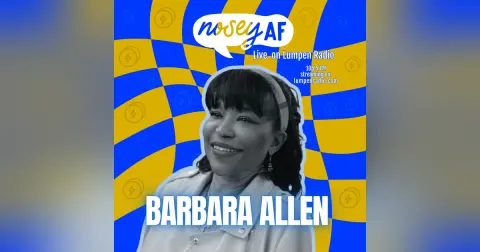
Ep 151: I Make Films for Black People and Everybody Can Watch with Barbara Allen
Two little girls saw a movie camera in a mail order catalog and spent a whole week on the phone building a case to bring to their parents. They both got a yes. Fifty some years later, one of them is a filmmaker and the other one is her writer.
This week I'm talking with documentary filmmaker Barbara Allen, the person behind Paper Trail: 100 Years of the Chicago Defender, DuSable to Obama: Chicago's Black Metropolis, Colorblind: Rethinking Race, and House Music: A Cultural Revolution. Recorded live at Lumpen Radio, no edits, no retakes.
What We Talk About
- How an 8 year old talks her mother into a movie camera, and how that kid and her best friend ended up in an editing room together twenty years later
- Why the Vivian Harsh Collection at Woodson Library is the place to go for Black Chicago history, and what's in there that the big museums don't have
- The Black pilots of 1930s Chicago: Cornelius Coffey, Willa Brown, and the man they called the one man Ethiopian Air Force
- Why she deliberately cast white male experts in a documentary about racism, and why it worked
- Time travel, virtual reality, and putting a viewer on a rooftop during Hurricane Katrina
- Where she lands on AI, and the dark comedy about AI she's making right now
- The one thing she wishes more interviewers would do
If you love Chicago history, oral archives, or anybody who has been following their curiosity since childhood, this episode is for you.
All about Barbara Allen
You're gonna love Barbara. She's a straight up walking archive with a great sense of humor about it. She's a producer, director, editor, engineer, and journalist who has spent decades telling stories about Black history, culture, and Chicago. Her documentaries include Paper Trail: 100 Years of the Chicago Defender, DuSable to Obama: Chicago's Black Metropolis, Colorblind: Rethinking Race, and House Music: A Cultural Revolution. She was a Knight Fellow at Stanford in 2013, where she built one of the first immersive VR journalism pieces, a Hurricane Katrina rooftop story narrated by Harry Lennix. She's currently raising funds for Realignment, a dark comedy about AI that is a pilot for a series.
Chapters:
- 00:22 - Settle In — Live, Unedited Conversation on Nosy AF
- 02:15 - Origins: Making Films at Eight
- 06:14 - Wearing Many Hats: Learning Every Side of Filmmaking
- 14:27 - Film timeline — Paper Trail and other works
- 20:50 - Social Media as Archive: Self‑Documenting and the Future of Storytelling
- 31:51 - Show Return — Barbara Allen: A Walking Archive
- 34:43 - AI, Authenticity, and Immersive Storytelling
- 42:01 - AI and Storytelling: When Technology Becomes the Story
- 49:16 - Lessons Learned Behind the Camera
- 52:45 - Advice for the Next Generation — Passion vs. Fame
- 59:43 - Episode Closing — Thanks & Credits
Things We Mentioned
- Paper Trail: 100 Years of the Chicago Defender
- DuSable to Obama: Chicago's Black Metropolis
- Colorblind: Rethinking Race
- House Music: A Cultural Revolution
- Realignment, her AI dark comedy in development, fiscally sponsored and currently fundraising
- The Vivian G. Harsh Research Collection at the Carter G. Woodson Regional Library
- Michael Flug, archivist
- Timuel Black, Chicago historian
- Dr. Daniel Hale Williams and Provident Hospital
- Cornelius Coffey, John Robinson, Willa Brown, and Bessie Coleman
- Susan Cayton Woodson and her grandfather Hiram Revels, the first Black U.S. senator
- The Chicago Defender's WWII Victory Edition and the Double V campaign
- Gail Baker, her writer since they were 8
- Tim Wise and the Brandeis researcher who coined "the Black tax"
- Jeremy Bailenson and Nonny de la Peña
- Harry Lennix
- Donald Crossley of the House Music documentary
- Felicia Kreger, who made the introduction
- Recent screening of DuSable to Obama at the Chicago Cultural Center with DCASE
Connect with Barbara Allen
- Barbara’s Production Company “Middle Passage Productions”
- House Music: A Cultural Revolution is on the WTTW YouTube channel
Sponsor Shoutout 💖
This episode features Artist Admin Hour. Every Wednesday, 7 to 9pm Central, artists get on Zoom and knock out the applications, grants, budgets, and invoices we've all been avoiding. Two hours of body doubling with structure, no shame, and real community. artistadminhour.com
Stay Connected
Sign up for the noseyAF Dispatch and grab the Good Neighbor Playbook.
Behind the Mic
noseyAF is a project of Stephanie Graham's art practice.
More ways to connect
stephanie@missgraham.com | @stephaniegraham | noseyaf.com
Support & Feedback
Rate and review the show, and share this episode with a friend who loves Chicago history.
Episode Credits
Produced, Hosted, and Edited by Stephanie Graham
Lyrics: Queen Lex | Instrumental: Freddie Bam Fam | Cover Art: Emma McGoldrick
00:00 - Untitled
00:22 - Settle In — Live, Unedited Conversation on Nosy AF
02:15 - Origins: Making Films at Eight
06:14 - Wearing Many Hats: Learning Every Side of Filmmaking
14:27 - Film timeline — Paper Trail and other works
20:50 - Social Media as Archive: Self‑Documenting and the Future of Storytelling
31:51 - Show Return — Barbara Allen: A Walking Archive
34:43 - AI, Authenticity, and Immersive Storytelling
42:01 - AI and Storytelling: When Technology Becomes the Story
49:16 - Lessons Learned Behind the Camera
52:45 - Advice for the Next Generation — Passion vs. Fame
59:43 - Episode Closing — Thanks & Credits
Before we start, this episode was recorded live at 105.5 FM Lumpen Radio, where nosey AF goes live on the air every second and fourth Saturday of the month.What you're hearing is the conversation as it happened.No edits, no retakes.Still curious and very fun, but honestly, sort of scary.So settle in and enjoy this conversation on nosey af.
Stephanie GrahamGotta get up, get up to the whole world.You will win a winner Vision of a star with a mission in the cause.
Stephanie GrahamWhat you doing?How you doing?
Stephanie GrahamWhat you're doing and who you are?Flex yourself and press yourself.Check yourself, don't wreck yourself.If you know me then you know that I be knowing what's up.
Stephanie GrahamHey, Stephanie Graham is nosey as WLPNLP Chicago 105.5 FM Lumpen radio and HD1.I forgot to say that.Hello, Chicago.It's Saturday.So excited to be here with you all and with today's guest, Barbara Allen.What a dream you all.Barbara has spent decades telling stories about black history, culture, and Chicago.Her work includes paper trail, 100 years of the Chicago Defender, Dabo to Obama, Chicago's Black Metropolis, and most recently, House Music, A Cultural Revolution.Barbara's also explored immersive journalism and virtual reality.So her work isn't just about the stories we tell, but the different ways we can tell them.Barbara, welcome to nosey af.
Barbara AllenThank you so much.
Stephanie GrahamYes.So excited to have you here.
Barbara AllenI love your music.Oh, thank you.
Stephanie GrahamBarb was in here jamming.What a treat.I have to also quickly shout out to our friend Felicia Krieger for, you know, she was, you know, we were.
Barbara AllenTalking about, you know, your work.
Stephanie GrahamYeah, She's.I was like, you think she come on the show, she's like, yeah, let me send you her number.I'm like, yes.So thank you again for no problem being here.So let's go all the way back.You started making films.Yeah.When you were 8 years old.Yeah.
Barbara AllenGo ahead.That's a great story, though.So my writer.Who's my writer now, was my mother's goddaughter.So we grew up together.And we got.We saw in a magazine, a catalog.We got a catalog and we saw a movie camera, a regular camera, a slide projector.That's when they had slides, a movie screen, editing stuff.And we.It was another tool.We wanted it.Right.And so my mother always said I could have anything I wanted if I could convince her that I needed it.
Stephanie GrahamOkay.
Barbara AllenRight.So my writer is Gail Baker, but I call her Felicia.That Was we spent hours on the phone for like a week coming up with the stories that we were going to tell them to convince our parents that we really needed this.
Stephanie GrahamYeah, you each needed your own.
Barbara AllenYeah, because.Because we knew we couldn't both get both.
Stephanie GrahamYeah.
Barbara AllenSo I was taking the movie stuff, and she was taking the still camera and projector.
Stephanie GrahamOkay.
Barbara AllenSo she told her family that she was going to be a journalist.Well, she.No, she didn't say journalist.She said she was gonna write for the newspaper.
Stephanie GrahamOkay.
Barbara AllenAnd she needed the camera to take pictures to go with her story.Right.So.And I said I was going to shoot movies about the family and about all these stories and great stuff.And to our shock, they both said yes.
Stephanie GrahamWow.
Barbara AllenI know.
Stephanie GrahamJust like that.
Barbara AllenYeah.So we.We started making movies and taking pictures.And she did actually work.She is.She is a journalist.So she did become a journalist.Wow.She was head of the J school in Missouri, and she was just currently provost at the University of San Diego.
Stephanie GrahamWhoa.So you all were the kids that, like, knew what you wanted and, like,.
Barbara AllenWe just got a new toy.Yeah, we had, you know, we had no idea.It was just something that we were passionate about doing because we love movies.And we watched all the movies and would tell the other one about a movie you stay up late at night and watch, you know, whatever came on.And Fast forward, like 20 years later, we're sitting in an editing room and she says, oh, I always knew we'd end up here.And I'm like, really?I didn't.I guess.
Stephanie GrahamSo sweet.
Barbara AllenI think.But yeah, we been doing it since we were 8, so we know each other, you know, and it's like my sister, so she.It's easy for her to know what I want as a director.And I know she's like the best writer out there, so.
Stephanie GrahamWow.So, yeah.So you were like.Because that's one of the things I was gonna ask is, like, how are you?Like, okay, I'm gonna make this into a career.Especially coming from.It was.It was a toy.
Barbara AllenYeah, it was a toy to imitate what we like to do.And so we just kept doing it.I was actually going to go to law school, and I was studying pre law, and this guy came in and said, oh, you can go to law school and study anything.So I thought I was being smart, and I said, how about movies?What about films?And he said, you never heard of an entertainment lawyer?I was like, oh, oh, wow.Yeah.So then that was it.That was film from then on, you know, I'll hire the attorneys.But my daughter became an attorney, so she made up for me.Oh, perfect.
Stephanie GrahamEntertainment.
Barbara AllenUnfortunately not okay.But she married an entertainment attorney, so that made it.
Stephanie GrahamThis all worked out full circle.
Barbara AllenIt did work out well for me.
Stephanie GrahamWhen you've worked as a producer, director, editor, engineer, and journalist.
Barbara AllenYeah.
Stephanie GrahamDo you.Yeah.Like, did you intentionally learn all those sides of filmmaking, or did the industry just keep putting you into spaces where you had to learn these skills?
Barbara AllenWell, I, you know, I. I like math.I like science.I've always liked that.And I always wanted to know how things worked.Anyway, I tell the story how I took this kid's Mickey Mouse watch apart when we were in, like, fourth or fifth grade, and I put it back together perfectly, except for one spring I left out, oh, no.So it didn't work, but it looked right.So I've always liked doing that.So the engineering thing was easier.It was more natural for me.And for me, everything is kind of math.Like, editing is mathematical.To me, it's like playing with numbers.Numbers is pictures.And.Yeah.I mean, all of it is just what I want to do.I just, I learn things because I want to know how they work.
Stephanie GrahamYeah.There's, you know, this thought that artist is.Art is like problem solving.Do you see your creativity as problem solving?
Barbara AllenOh, I never thought about it like that.It depends on what you consider the problem.Is it a problem that people don't know our history as a people in the world, like, just here?So then if that's a problem, then I'm a problem solver.
Stephanie GrahamYeah.
Barbara AllenBecause those are the stories I want to tell.
Stephanie GrahamRight.Because your documentary, Obama.The Obama documentary or.Yep, dusable to Obama.What was it about that story and even just about Chicago that started pulling you into wanting to share stories?
Barbara AllenWell, you know, I was fortunate that I did Paper Trail first.That was my first full length documentary.And I had the greatest archivist named Michael Pflug out at the Vivian Harsh Collection at the Woodson Library.And I knew things, but he would fill in the blanks for me.And to me, history is just a lot of movies.Right.Oh, this just movies in a different time.And.And, you know, and I realized that a lot of those buildings and those places that these things happen, they're still there.
Stephanie GrahamYeah.
Barbara AllenAnd.And if you look at, you know, he had us looking at pictures of what they called the old settlers, which were black people who had come, and some of them even knew DuSable.
Stephanie GrahamOh, wow.
Barbara AllenAnd the photographer did pictures, portraits of them in the late 1800s up to the 20s or 30s or something.And we were looking at those pictures, and except for the dress, they look like people, you know.
Stephanie GrahamYeah.
Barbara AllenYou know, they didn't.They stopped looking like a historical thing back then, and it started looking real, you know, and when I get into those stories and I'm.Especially when I'm editing those stories, I feel like I'm inside of it.You know, when I was a kid and would watch television, I thought I went into television.And so I was kind of doing virtual reality in my head anyway.So I want.I like to take my audience inside as much as I can.That's why I use a lot of voices to.To tell stories.I interview way too many people, but their voice starts to become one thing, so it kind of weaves it in and out.And I like telling stories that way.
Stephanie GrahamYeah.You know, the Woodson Library, that was my family library, like, was right down the street from my grandma's house.And I never thought to go and look at the collection there until you just said the.The Vivian Harsh collection.Yeah, like, I see that up there.But I never thought, oh, let me go look at this, you know.
Barbara AllenYou know, in those two documentaries, most of my photos and historical stuff came from the Woodson, not from the Chicago History Museum, which most of.Mostly people go there to get this.And they do have a lot of the same stuff.But there are things that the Woodson, I mean, that the Vivian Hotchkiss election has is like.It's like Archomburg, you know, it really is.
Stephanie GrahamWow.
Barbara AllenYeah.Yeah.You'll be so.
Stephanie GrahamIt's a really important place.
Barbara AllenIt's very important.Very important.When I was doing the part about provident hospital and Dr. Daniel Hale Williams, who was the first successful.Did the first successful open heart surgery, he was a black doctor.He started Provident.I went there and they had done a whole exhibit on it, like a few years before, so everything was there.They sent us to the place where they were keeping all his records.And I mean, you know, we have to find our stories in different places that.Than other people find their stories.
Stephanie GrahamYeah.
Barbara AllenBecause it's spread out differently.
Stephanie GrahamWhen you first started with Paper Trail, were you nervous?Like, what was the buildup before Paper Trail or was that like literally your first project?
Barbara AllenWell, no, it wasn't the first.It was my first full length piece.I've done like lots of short pieces and little art pieces.And because I did work for pbs, so I was editing there, I used to edit this great show called artbeat, which Was.Yeah, artbeat was fun, and I was the editor on that, and so I was doing that, which may be one of the reasons that in most of my films, especially in dusable to Obama, every section is like its own little movie.So you could, like, pick them up.They're like little pieces here and there.We just showed it at the Chicago Cultural center with the D case, like,.
Stephanie GrahamAbout two weeks ago, right?A week ago.
Barbara AllenYeah, a week ago, actually.And it was real interesting because some of the younger people were saying, like, they didn't know anything about Harold Washington, and that in the film, it told them so much about Harold.And I remember when we were doing it thinking, oh, we don't have enough in here about Harold.But I didn't realize how much it would slip away because, you know, when you live through something, you never think about it as history.It's just part of your life.
Stephanie GrahamYeah.
Barbara AllenBut it is history.So we're making history every day, but we don't think of it like that.
Stephanie GrahamYeah.And I think, too, how much you have to keep the history going.
Barbara AllenYeah.
Stephanie GrahamBecause there's, like, new history being made every day.So you always have to make.Keep the new history up, but then.
Barbara AllenThe older history up, but the old history informs the history we're making now.So, you know, don't know your past, don't know your future.
Stephanie GrahamYeah.
Barbara AllenSo it's.You find the lessons.We don't have to rebuild the wheel, you know, the wheel has already been done.It's on the cart.We just got to move the cart.Right.So instead of starting from scratch every time, every generation, we need to just build on, you know, and this whole entrepreneurial thing, we've been doing that since we got here, you know, so we don't have to start from scratch.All you gotta do is pay attention to what?Look at the lessons from people before us, you know?
Stephanie GrahamRight.So what year was Paper Trail?
Barbara AllenPaper trail was 2005 or six, I think.
Stephanie GrahamOkay.And then.
Barbara AllenAnd Jasabu to Obama was 2011.1011.
Stephanie GrahamOkay.
Barbara AllenYeah.
Stephanie GrahamYeah.
Barbara AllenAnd.But, you know, there are a lot of films between those two and after those two.And the house music was, like, last year, 2025.But there's many pieces in between.I did a piece called Colorblind Rethinking Race, which was about institutional racism in health, wealth, education, and the injustice system.And it was a very.It was a great piece.It won a lot of awards.And it was.We broke it down and we brought in all the experts to talk about the history of the Injustice in these different areas.And when you put it all together, it's kind of overwhelming because, you see, it's not an accident.And what I did was I brought in because we're talking about racism and how it works.My experts were white males.Who better to tell how this is done and what it really is than the people who gained the most from it and who created it?And so we had great experts on the guy who came up with the term black tax, about the extra that we pay just to live from Brandeis.He was one of our.One of the people in the film.And also Tim Weiss, the anti racist, was in it.And you know what?I realized that if we talk about race and racism, people kind of tune it out.But if you have a white male talk about it, he's a voice of authority.So there may be something to it, or it may be true, or it is true.More so.And I kind of tormented over that at first because I thought, should I have white experts or should I have.You know, I always think about my community.
Stephanie GrahamYeah, for sure.
Barbara AllenYou know, when I make a film, people ask me who I make my films for.And I make them for black people, but everybody can watch it.And people sometimes think that's, you know, I shouldn't say that.But white males make movies for each other.
Stephanie GrahamYeah, they do.
Barbara AllenAnd then the rest of us get to watch.Right.And nobody thinks anything about that.So I like black people, so I want to.I make movies, films for black people, about their history, how wonderful they are.And, you know, I do other things for other people.But for me, this is where my interest lies, you know?
Stephanie GrahamYeah.
Barbara AllenI can edit anything for anybody.And I have.But, you know, if I'm going to create something, then I like it to have an effect on black people.And I don't mind being called a black filmmaker.I actually like it.
Stephanie GrahamHow do you decide who's like.With all the stories that you capture, how do you decide which stories are worth preserving?
Barbara AllenIt's not.It's not worth.It's not.They're all worth preserving.Sure, they're all worth preserving.But how do we decide?Yeah, by how much?Who has the most pictures, who has the most video?Who has the.You gotta start there.You need visuals.So whoever has the most visuals is always gonna be put on the top consideration.But also who links to other people.Because it's all kind of intertwined as you go through it, and you find ways to connect people and stories.And also you wanna tell stories that haven't Been told, you know, those are a priority if you find the visuals.But yeah, you want to tell those stories that even a historian or somebody like me will go, wow, I didn't know that.
Stephanie GrahamYeah.
Barbara AllenSo in dusable to Obama, my favorite section was the pilot section, the section about the pilots and how Chicago was such a black pilot town.
Stephanie GrahamOh, really?
Barbara AllenYeah.Black people were really into flying in the 30s because of Bessie Coleman and she had died.And so all these people wanted to, you know, Chicago and California were the main centers and Chicago was big.We had three very major pilots, Cornelius Coffey, John Robinson and Willa Brown, who was a woman.And they taught flying, they created things.They deicing came from Cornelius Coffee and they.I mean the story of these people and you'll see it in the, you can see it in the film.It's just amazing.It's a movie and a woman being in that group.And you know, this woman, Willa Brown, also became the first woman to run for Congress.Black woman to run for Congress in 1946.And just, they just did amazing things.They trained the pilots.They trained, you know, pilots here.They trained pilots.John Robinson helped get the Tuskegee Airmen in because he went to Tuskegee and had been trying to get a pilot program there for years.So I mean, Chicago, as Dilla says, everything, everything dope is from Chicago.Yeah, it really is.Black history is just bubbling here.It's just so much.
Stephanie GrahamYeah.
Barbara AllenSo it's hard not to find story.
Stephanie GrahamHere, you know, you know, talking from like how you'll start with the visuals or that's one part of it.It makes me, I'm just so curious your thought around social media and folks, you know, self documenting and sharing what they have going on.And you know, Instagram reels could be, you know, small segments.What do you think about social media and just all of that?
Barbara AllenI think social media is useful and that there's a lot of good stuff on Instagram and you know, TikTok and.But you got to wade through a lot of crap to get to it, you know, so you, you know, you with anything you want, you'll wade through to get it right.Something's on sale, you'll go through the crowd to get.Yeah, you just have to look, you have to take the time if you're going to be on there, you know, you got to find it.And once, once you start finding it, it'll find you after that because the algorithms are kind of falling anyway, so.
Stephanie GrahamYeah, but even just like the, I guess, collection of, I mean we're making our own archives through that, which in.
Barbara Allen50 Years, the kid that's making the docs about this time, it'll be easier because there'll be so much because people's whole lives are on tape and film and TikTok, I was going through some of my old stuff and I was like, oh, I forgot about this.Oh, yeah, yeah, yeah, yeah, yeah.You go, can go back, you know, 20 years.
Stephanie GrahamDo you have like a particular question that you've been asking, you know, asking yourself over and over with each project?
Barbara AllenA question?
Stephanie GrahamYeah.Or like a theme that you sort of start with as you approach a project?
Barbara AllenIt depends on what the project is.
Stephanie GrahamOkay, so.
Barbara AllenSo in Obama, I studied a lot of black history, Chicago history, which led me to somewhere else.Like those pilots I was telling you about, they went to Ethiopia.One of them went to Ethiopia to fight for the Ethiopians in 1933 when Mussolini attacked them.And that was John Robinson.And they called him the one man Ethiopian air Force.And.And the black newspapers across America wrote about this guy.He was like a hero.When I talked to Tim Yell Black, the historian who passed away not too long ago, my archivist told me, when you see Tim, ask him about John Robinson.And I knew that Michael was up to something because the way he said it.And so he said, just wait.And so I finally, I was interviewing Tim about something.I was like, oh, yeah, Tim, what about John Robinson?He turned into a five year old John Robinson.Oh, oh.He was like so excited to talk about.John Robinson was a hero of his when he was a kid reading about his exploits in a black newspaper.
Stephanie GrahamWow.Yeah.I'd never even heard of John Robinson.
Barbara AllenYeah.John Robin.
Stephanie GrahamI mean, outside of the project, there's so many heroes out there.
Barbara AllenThere are so many.There's so many.
Stephanie GrahamYeah.
Barbara AllenYeah.And it's good that it's good for us to know that we've always had heroes.
Stephanie GrahamYeah.
Barbara AllenYou know, it's not new.And just because you don't see them on television and in, you know, big movies and stories doesn't mean they weren't there, you know, and the thing is, they were real.It's not, you know, made up.It's not a fantasy.It's real.
Stephanie GrahamI wonder.He needs an action figure.
Barbara AllenThat would be fun.
Stephanie GrahamYeah.
Barbara AllenBecause they said he used to drive his motorcycle at like 50 miles an hour down King Drive, which was Grand Boulevard then, and they would write about it in the Defender.
Stephanie GrahamOh.
Barbara AllenBut yeah.And so when they got a kit to build an airplane that didn't come with a motor.They put the motorcycle engine in there.
Stephanie GrahamOh.
Barbara AllenAnd it flew.
Stephanie GrahamVery, very cool.
Barbara AllenYeah.Yeah.As a matter of fact, the movie Red Tails that Lucas did, he paid homage to Cornelius Coffey because the engineer on the boat is named Coffey.
Stephanie GrahamOh, okay.
Barbara AllenYeah.And he said it was gonna be part of a three part series.So he knew about these guys, you know, so.Yeah, they are just.There should be a movie about the three of them.I mean, it's just.She was gorgeous.She looked like Alicia Keys.Even better looking.She even posed in the whole aviation outfit.You know, she did Pepsi commercial.
Stephanie GrahamOh, no way.
Barbara AllenOh, yeah.There's an ad with her in the Pepsi in her aviation outfit.
Stephanie GrahamWow.So they're like celebrities too, in their own right.Like folks knew about these people.
Barbara AllenYeah.In their own way.
Stephanie GrahamHmm.You've interviewed so many people in your projects.
Barbara AllenYeah.You know, I'm glad I did because as I looked at both of the two earlier pieces, so many people are not with us anymore.And I'm like, I'm so glad I got to talk to them.Margaret Burrows, Susan Caton Woodson was the most interesting person to me because she was the granddaughter of Hiram Revels, who was the first black senator in the country after Reconstruction.
Stephanie GrahamOh, wow.
Barbara AllenYeah.And she had a clock in her house that told the time and it made noise every hour, rang every hour.So you do an interview.If you're there, you're going to get that ring.And she was 93, and she said she didn't remember ever not having that hearing that clock.And that clock was given to her grandfather by Jefferson Davis.
Stephanie GrahamNo way.
Barbara AllenThe head of the Confederacy.
Stephanie GrahamWhoa.
Barbara AllenBecause they were treating him so bad in the Senate that.That Jefferson Davis gave him a gift to welcome him to the Senate.And he was taking Jefferson Davis place.So they must have really been treating him bad.The Confederacy is being nice to him.And so she had that clock.They actually have a picture of it, and there were postcards made of it.And people come and look after it.You got to put on gloves.And they would never charge her because it was an honor for them to work on it.
Stephanie GrahamYeah, absolutely.
Barbara AllenYeah.She was an amazing woman.
Stephanie GrahamI was gonna ask, like, what makes, like, a great interview?Is everyone super excited to talk to you?Are people nervous?
Barbara AllenBoth.Most of them are used to it.You know, you kind of pre interview people and let them get to know you.And I think the most important thing is that you listen and they know you're listening to them, because especially older people don't Think that anyone wants to hear what they have to say.And that, to me, was always the hardest part.It's like, oh, nobody wants to hear this.I do.Yeah.I really do.And they have a rich.They're a rich source of information that's just there.And I think they are happy to, like, get it out.When I was with the 90 year olds, they're like, you had to interview these 70 year olds.I'm like, I don't want to be with those kids.These guys were so.But I watched her at 93 and she's telling me a story.She becomes 17 and I'm there with her.And, you know, and I think people know when you're really listening and when you're in it with them.Like, take me on this journey, you know?
Stephanie GrahamYeah.How do you.I feel like my question right before we, you know, go to break is just, how do.Hmm.How can I say this?Just how do you not get lost?Because I just be so excited to, like, hear these stories too.
Barbara AllenBut the thing is that you.It's okay to get lost.
Stephanie GrahamYeah.
Barbara AllenBecause you can't.
Stephanie GrahamYou.
Barbara AllenYou can't make them just stick to a script.You don't want them to stick to a script.You want to have a conversation.Like we're having a conversation.
Stephanie GrahamYeah.
Barbara AllenAnd if they have something interesting to say, then, you know, let's hear it.I might have 10 questions that I want to get to at some point, but I might go from question one and they answer question eight.You know, but I'm wherever they want to go with it.You know, I'm gonna.I'm gonna go with it.You do have to have, you know, like I said, some questions because you want to usually ask the same questions to everybody, except there'll be some tailored for different people, but basically kind of the same thing.But no, I don't mind getting lost.I actually love it.It's real magical.
Stephanie GrahamI know it seems like I would love it.I guess it's not like a radio program where we actually do have to take a break.
Barbara AllenGreat segue.Love that.Bravo.
Stephanie GrahamOh, my gosh.So we will do that.And we will be right back.Real Talk.How many opportunities have you bookmarked and never applied to?I know I have.And you know what?It happens.The admin part of the work we're doing is understandably boring and tedious, but when you neglect it, it can cost you real opportunities.That's why I created Artist Admin Hour, because behind every exhibition is a clear budget submitted.That makes Sense.Admin is the flex.It's the work that makes the work work.But you don't have to do it alone.Every Wednesday, 7 to 9pm Central, artists show up on Zoom to tackle what we've been avoiding.Residency applications, grant apps, budgets, invoices, whatever's on your list.Two hours of body doubling with structure, no shame and real community.25 To 45amonth gets you in.But if that's not doable, email me, because getting this done is very important.We will make it work.Stop letting admins, say, sabotage your practice.Join us today@artistadminhour.com.Wlpn LP&HD1 Chicago 105.5 FM Lumpen radio.We are here with Barbara Allen and we were just talking about how much of a walking archive Barbara is.You become an archivist as you make these films.Yeah, Just naturally.
Barbara AllenYeah.You just start retaining so much information.Especially when I was doing the Defender piece, I was, you know, I was surprised at all the stuff I didn't know.I was kind of mad too, because when, when, when I grew up, the Defender wasn't doing great and we called it the Offender.Right.But once I started looking at the history of that newspaper, it is an amazing story.
Stephanie GrahamHow come folks called it the Offender?
Barbara AllenOh, because, you know, there was a lot we talk about a little bit in the film because there are a lot of mistakes like misprints and misspellings.You know, it was kind of sloppy journalism at a point, you know, and then they started coming back.But it was the premiere.I mean, they did a thing during World War II called the victory Edition, which we found.No one had seen it since then.And we found a copy and it was amazing.I thought it was edition about the war.Because black people were like, why should we go fight, you know, overseas for somebody else's rights?And we don't have our rights.So it's like the Klan or the Gestapo.So they said, neither will have a double V campaign.Victory abroad and victory at home.And so they put out this Victory edition.And I thought all these stories are like reprints from somewhere else and they were exclusive.Oh, wow.It was every known writer like W.E.B.Du Bois.Du Bois, Upton Sinclair, Pearl book, black white, McCormick.Mr. McCormick, Mr. Whoever was the head of the.One was the Tribune and one was the Sun Times.All those guys.The Archbishop of Canterbury.Wow.I mean, it was unbelievable.And I kept saying, oh, were these reprinted?No, no, these were strictly for this.Yeah.Langston Hughes, everybody.Everybody wrote in the scene and there was a pledge of allegiance that black people took that was in the middle of this paper.And so once we found it and it was in the film, I remember Michael Pflug said, what have you done to us?People are flooding to see this edition, so.
Stephanie GrahamOh, my goodness.
Barbara AllenIt's probably digital now.People probably could find it, because it is.
Stephanie GrahamYeah.I'm so curious about the.
Barbara AllenYeah, it's really unbelievable.It's worth looking for.
Stephanie GrahamYou know, here's a fun question I have for you.You know, with AI being so controversial and as a filmmaker, it's.You know, Felicia and I, you know, we work in the film industry, and it shut us down for a little bit, and everybody like you.I feel like you.There was recently.I don't know this YouTuber's name, but I guess there was something about the way he was making films where people are like, are you using AI?And then he comes out.He's like, yeah.And then he got.Then he.Then he got yelled at about it.He's like, well, you guys wanted to know my process.I share my process.
Barbara AllenOh, wow.
Stephanie GrahamAnd now you all are yelling at me.And I'm just curious with some of your experience, and I think you have.
Barbara AllenYou should share the process before you put it out.
Stephanie GrahamMm.Yeah.
Barbara AllenI don't.
Stephanie GrahamI don't.
Barbara AllenI don't think anybody should have to ask you if it's AI I think you should have to tell people it's AI to start with.I think there should.I really agree with those who say there should be some kind of stamp on it or something that says it's AI because, you know, people are easily fooled, and we can do a lot of damage, you know, can be done.Although a lot of great things can be done with it.A lot of damage can be done with it, and people should know what's real and what's not real.So it's not fair to pretend something is real.What I dislike is when they do, like, historical AI and there are pictures of these people, and the people you have in there as them look nothing like them.It just drives me crazy because you don't have to make them up when, you know, here's what they are.You can use them.
Stephanie GrahamYeah.Seriously, put a little effort into it.
Barbara AllenWhy are you just creating somebody that looks nothing like them?You know, I mean, you know, they'll have Nina Simone looking like, I don't know, Janet Jackson.Alicia.Once again, Alicia Key.
Stephanie GrahamYes.Oh, my gosh.
Barbara AllenYeah.Like, what's her name?The Lioness with Zoe Zeldana.Then we.Nina Simone.Oh, that's right.Zoe did play Nina.
Stephanie GrahamYeah.
Barbara AllenOh, my gosh, that's lazy.
Stephanie GrahamYou used VR to recreate experiences of Hurricane Katrina survivors.
Barbara AllenYeah, yeah.I was a Knight Fellow at Stanford in 2013, and I was doing immersive journalism with VR.And so I was one of the first people to do that there at Stanford.I was really the first to create a story because they were just creating experiences at the time.Like, you're in Spain.Oh, okay, okay.But I created a story which was amazing.You can fly was great.But I wanted to tell a story because people always said about Hurricane Katrina, which some people may not remember, but, like, why didn't they leave?And they should have left, and those people, you know, and they left people hanging.So I wanted the user to feel that they're one of those people who couldn't get out and was on the rooftop.And it was a great piece.Harry Lennox did the voiceover saying, not everyone could leave.And you're on there, and there's a hole in the.In the roof where you cut it out on top of your rooftop, and water's rising and helicopters are going by, and it's a woman with a baby and a ladder across trying to get your help, and there's a guy with his kid over there, and people in boats and bodies are floating by.I mean, it was a real extensive.It was intense.It was only five minutes or so, but five minutes in real VR.
Stephanie GrahamBut still, I'm, like, sitting here.
Barbara AllenShocking.
Stephanie GrahamYeah, absolutely.
Barbara AllenPeople were shook, but it showed them a whole nother perspective of don't.You wouldn't blame the victim if it were you.Why are you blaming the victim?Let's help these people.A lot of them didn't leave.It's not because they were just being defiant.It was because they had no car, they had no way out.They had their kids.What are they doing?This has happened a million times.How would they know, you know, if they can't afford it?
Stephanie GrahamRight.You know, have you shown that VR piece, you know, again, since it is still at Stanford?Okay.
Barbara AllenAnd a lot of people looked at it back in the day, including Mr. Zuckerberg and Washington Post and a lot of people.
Stephanie GrahamWow.
Barbara AllenYeah.Because it was.I wasn't the first to do it.I was the first to do it at Stanford because Noni de la Pina, which is a hero, a VR hero, has done some amazing work with VR, human rights stuff.That is amazing.That'll put you in a camp in Sudan in a line of, you Know, homeless, hungry people, and you're there with it.You're really in the middle of it.So, yeah, my thing is, like, I wanted to time travel, and that was the whole thing.Like, yeah, VR.I can time travel.So that was my appointment.But it was.It was a wonderful experience.My mentor there was Jeremy Bailenson, who is, like, one of the fathers of VR.He's a great guy.And it was.It was wonderful.It was wonderful being at Stanford and the.The people that I met in my night class, the class 13, the best class ever.
Stephanie GrahamVery cool.
Barbara AllenWe're still very close.
Stephanie GrahamVery close.
Barbara AllenYou know, talk to each other, and we're always on a little chain, and I love that.Yeah, it's great.
Stephanie GrahamIt's so cool that you've been able to tell stories and all sorts of different forms, formats.
Barbara AllenYeah.
Stephanie GrahamHow do you decide?Like, is it the technology first?You know, I know you're, like, really into technology.Have you been taking.You know, this is technology first, and you try to, you know, bring a story to it or.
Barbara AllenMaybe I'm trying to think.Yes.Or at the same time, I mean, there's so many different tools that we have, you know, which is a great thing.So you can tell stories so many ways.There's no excuse not to tell stories.And I always tell people, I'll say, oh, they already did that.Yeah, but you didn't do it.And your version is going to be different because it's you.
Stephanie GrahamYeah.
Barbara AllenSo you can't be afraid to retell something or to tell something another way because it's been told before.I mean, how many times have they done, you know, Macbeth or Dickens?Different directors, different people.Just what's the story you want to tell?
Stephanie GrahamYou know, as long as it, like, appeals to you personally, if that's what.
Barbara AllenYou feel passionate about.You know, I'm all about the passion, whatever the passion is.Let's go with that.
Stephanie GrahamYeah.You know, first, have you ever used AI to tell a story or have you experimented with that at all?
Barbara AllenWell, that's funny.Right now I am working on a film that is a dark comedy on A.I.But it's not using A.I.It's about A.I.
Stephanie GrahamOkay.Right, okay.
Barbara AllenAnd we asked the question, what happens if AI gets it right?Which means something different to everybody.
Stephanie GrahamRight.
Barbara AllenSo.And it's pretty hilarious.A young guy tries to reprogram his AI and overcorrects it, and it kind of screws up his life, but it's doing what he said, so.Yeah.
Stephanie GrahamIs it taking the shape of just a regular Film or are you going to use VR for that?
Barbara AllenOr photos?No, we might use some.To some background stuff, but no, no, no, no.It'll be.It'll have to be a little VR somewhere.But no, no, it's about VR.It's about VR and us, the human interaction with it.Because, you know, it shouldn't.It shouldn't replace us, it should aid us, it should help us.It should be an assistant to what we're doing.Although we know that, you know, most jobs, they just wanted to take over.But on the creative end, we can't.AI can't be a real artist.It can learn how to duplicate, but it doesn't know the emotions or what makes a person react or feel.You know, it can't see the difference in what matters and doesn't matter to us.It can in a logical sense, but.But on a human, emotional sense, it's not quite there yet.And, you know, you need people to give it context also.So I think.I don't think we should be afraid of AI I think we should harness it and let it help us, you know?
Stephanie GrahamYeah.
Barbara AllenBecause there's so much good that can come out of it, you know, medical and just so many things that we could be advanced in, you know, if we use it the right way.So I'm never anti.I'm not anti.I don't like the whole data center.It's taking up so much resources and.Of course not, but I think the potential is pretty wonderful for us.And I don't think he's going to destroy humanity.But, you know, what do I know?
Stephanie GrahamWhat do you think about it with people using it as relationships?
Barbara AllenWell, people have always found ways to, you know, it was AI it was fake pictures.It was catfishing, you know.
Stephanie GrahamYeah.
Barbara AllenThey always.It was.What did they used to.What was it?Pen pals?It was so, you know, people got to find a way to.To do that anyway.It's just the technology changes.It's the same thing.That's what you learn in history by studying history, that all of this has been done before.We just have different tools.So that's why those lessons in history are important.
Stephanie GrahamIf you could have an unlimited budget tomorrow and you say, hey, Barbara, tell us any Chicago story you want, what would you make?
Barbara AllenI know people will probably be really upset about this, but I would do a piece on black Catholicism.Okay, Black Catholics, because that's a big.That was a big population in Chicago.
Stephanie GrahamOh, yeah.
Barbara AllenYou know, there's a lot of black Catholics.
Stephanie GrahamMy family.
Barbara AllenYeah, I Mean, we know they're in Louisiana and this big.
Stephanie GrahamThat's where my family's from.
Barbara AllenYeah.And Baltimore is another place.There's a lot of black Catholics.But, you know, black Catholicism is very interesting.You know, it's like a soul between two worlds.You know, it's like.
Stephanie GrahamYeah.
Barbara AllenYou know, I went to Catholic school all my life, and at one time, we didn't have magnet schools, so the only way black kids were gonna get a good education was to go to a private school.And the private schools in the neighborhood were the Catholic schools.So we went to the Catholic schools.And you'd be surprised if people that went to Catholic school, you know, the famous people, the Whoopi Goldbergs, and it goes back for generations because that's the only place we can get a better education.
Stephanie GrahamIt's like Catholic by default or something.
Barbara AllenYeah, it is.And half the kids.When I was in Catholic school, half the kids were not Catholic and their parents taught in public school, but they wouldn't send their kids to it, you know?
Stephanie GrahamYeah, so.
Barbara AllenYeah, but it's an interesting story because also, as a black Catholic, regardless of all the horrible things people like to say about the Catholic Church, it gave you a sense of being more international because the head of your church was in Rome, so, you know, that's in Europe.And all the churches do the same thing.So you could go anywhere in the world and, you know what's going on.It was like being in a club that you knew all the handshakes and all the prayers, all the rituals and the.And you never felt that, you know, you weren't part of it.And my mother used to take us to every Catholic church in the city.She liked going to different churches, trying to push the envelope, which I realized later she was pushing the envelope because we weren't wanted in some of those Catholic churches.
Stephanie GrahamOh, really?
Barbara AllenYeah.Yeah, yeah, yeah.
Stephanie GrahamWould that be in the movie?Would that be in your.
Barbara AllenAbsolutely.
Stephanie GrahamProject?
Barbara AllenYeah, absolutely.
Stephanie GrahamI really like that as, like, the foundation and go from there.
Barbara AllenYeah, Yeah.A lot of things happen.A lot.A lot of stuff came out of it, and, you know, and a lot.A lot of good stuff came out of it.It's bad stuff, and.But it's not all about, you know, oh, priests are molesting kids.And, you know, that happens in all of this society.This is a kind of a sick society.And every other church is happening, too, so we don't have to dwell on that part of the story because somebody else will tell that.So this is just another slice into that.And I think the Catholic church probably needs something positive.
Stephanie GrahamBarbara, please make a movie for us.
Barbara AllenYes, Catholic church.I'm here.Bring me the budget.Bring me the budget.And you got it.
Stephanie GrahamYou know, you've spent so much of your career documenting other people's stories.What have you learned about yourself from being the person behind the camera?
Barbara AllenHow did I learn?Interesting question.I learned that people are very complex and what seems like a straightforward thing, it's really not at all.People get to where they are in all kinds of different ways and different roads and different songs.And it just like people are fascinating.You know, you talk to them and when they start telling you their stories.People love to tell their stories.And.And it's interesting.I love to hear them.
Stephanie GrahamYeah.
Barbara AllenYou know, so.And I hope I do them justice, you know, that's all I could.The best I can do.
Stephanie GrahamYeah.And what's a question that you wish people would ask more often?I mean, you spoke about, you know, needing to listen as you interview folks to make your stories.What's a question that we could ask?
Barbara AllenWell, I don't think it's a question to ask.I really get upset sometimes when I see people doing interviews and you watch them doing an interview and the person just says something really interesting and they don't follow up on it.You know, they just go to their next question.Okay, done.It's like, like, no, wait, that was really great.Let's hear more of that.So I think the follow up is a thing I wish people would do more and not, you know, because we got so many not really journalists, but just kind of like entertainment.Entertainment readers.I don't even call them reporters.Readers that, you know, are in it to be famous, and it's more about them than the subject.
Stephanie GrahamThat's something I'm always trying to work on, is the follow up.But then I've always been in situations, people are like, well, hey, hey, hey, that's not what you said, you know, or like even maybe the guest also has like these questions or they have like these responses in their mind.And so when you go off that, it like throws them off.And now they.They get nervous.
Barbara AllenWell, I guess it's how you ask them, you know, not like you're not like.It's not like I always say, it's not like 60 minutes.Yeah.Close ups, like, dun, dun, I got you to catch a predator.It's not that, you know, it's just like, oh, really?You rode in that car back then.Wow, that must have been interesting.Then they'll tell you more, you know, so it's how you ask them.I've never.I've never have people get upset about follow up.Oh, is most of the time I can't get them to shut up.But I'm not doing live.Live is different.You have to get things in.You have to get in what you need to get in on a live show, but in a documentary, I'm gonna take it and edit it anyway, so.And tape is cheap, discs are cheap.You can get a lot of info on it.So it's very different.I worked on live shows too, and no, you can't.You don't have that privilege.It's like, here's what we're talking to them about.Here are the questions.Get them in, get it done.You got three minutes.So.Yeah, yeah.
Stephanie GrahamWhat advice do you have for the next generation of folks?And I don't know, social media keeps coming to mind because I think just because how accessible it is, like people do the man on the street or make these mini shows just to put on any sort of advice or words of wisdom that you have for the next for folks coming up.
Barbara AllenFor me, I just, like I said, the passion.Find your passion and go there, you know, and if you don't enjoy it, if you're just doing it to be famous and, you know, to get clicks, okay, that's what you're doing.But if you're doing it because you really need to tell a story or you have a passion for that story or is something that you want people to know, then do it.Yeah, you know, just do it.The house music piece that I did, that was a story that was so interesting because one of the guys who is one of the original guys in the story, Donald Crossley, had been quiet, had never talked about, you know, the beginning, and his nephew said, you need to tell the story.And he told his nephew, oh, I will someday.And then when I came to him, he said, yeah, I told him, someday, and now you're here.Oh, wow.Oh, my goodness.I felt, you know, I felt a very big weight of responsibility from that.But it was, it was.It was a lot of fun.My cameraman and I, my cinematographer and I had a great time because we had to go to all these house parties for research and stay out till three or four dancing and having a good time just to get into the.
Stephanie GrahamWhole, you know, did you dance or do you like stuff?Stay focused.
Barbara AllenLike, oh, you're dancing.Yeah, that was dancing on your open, you think?Right, right.No, I was definitely dancing, but we weren't shooting.We were just researching.
Stephanie GrahamYeah, right.
Barbara AllenI'm not dancing when we're shooting.
Stephanie GrahamWhere can folks watch your films?
Barbara AllenOn the PBS website.
Stephanie GrahamOkay.
Barbara AllenYeah, yeah, yeah.Actually the house music is on the.It's actually on the WCTW's YouTube channel.
Stephanie GrahamOkay.
Barbara AllenBut you can go to PBS and see it.And Usable to.Obama is on the website too.I don't know if paper trail was there, but I'll send it to you.
Stephanie GrahamOkay.
Barbara AllenYeah.
Stephanie GrahamAnd the AI project that you're working on.
Barbara AllenYes, it's called realignment and we are looking to raise funds now.
Stephanie GrahamOkay.
Barbara AllenSo.And we have a fiscal sponsor, so donations are.Any money that's given is actually tax deductible.So I love that.Yeah.
Stephanie GrahamWho doesn't love that?
Barbara AllenSo we have a QR code and a thing that I don't know if you can put up or add to this.And yeah, for sure people can find it and read more about it and they want to be involved.Please do.And I think.I think they will.It's a great project.And yes, it's a pilot for a series.
Stephanie GrahamA series.Okay.
Barbara AllenIt's a pilot for a series.
Stephanie GrahamWhat are some of the series that you enjoy right now?
Barbara AllenLet's see, what was I just watching?I like a lot of.Lot of series.
Stephanie GrahamLioness.
Barbara AllenI haven't watched Lioness.I have to.Everyone's talking about it.
Stephanie GrahamOkay.Yeah, yeah, yeah.
Barbara AllenEverybody's talking about it.
Stephanie GrahamI watched it at my folks house and I was like, what is this?This one's really good.
Barbara AllenIt is.Okay.Everybody's talking about it.So I should watch that.I haven't watched it.It's on my list.
Stephanie GrahamYeah.
Barbara AllenSlow Horses, Ted Lasso, the New Snowfall, Takeoff, the Drop, it's called.
Stephanie GrahamOkay, I've been hearing about this.
Barbara AllenYeah, I really like it.
Stephanie GrahamOkay, Is it pretty?Like it looks like it's pretty colorful.
Barbara AllenIt's accurate to the time period.I mean, it's.It's fun to watch them do this.And I like the actors in it.The pit, of course.The pit.
Stephanie GrahamYeah, yeah.
Barbara AllenWhich my son is on the pit as Nurse Dave Miller.Okay, Very cool.
Stephanie GrahamYeah, that's really cool.
Barbara AllenYeah.And what else?Yeah, I, you know, I.They jump around.Oh, hacks.I loved Hacks.Hacks.
Stephanie GrahamI really like.
Barbara AllenWas hilarious.
Stephanie GrahamI really like it.
Barbara AllenYeah, yeah, yeah, it's.Yeah, yeah.It was really.
Stephanie GrahamMy neighbor just started it.They had.
Barbara AllenThey hadn't watched it, so I was.
Stephanie GrahamLike, oh, my gosh, you're in for a treat.I was like, please invite me over to watch.
Barbara AllenYeah, I know.I get.I get kind of jealous of people who are starting something like, oh, I wish I could start it all over and not know what's going to happen because it's so good on the bear.I love the bear, you know?
Stephanie GrahamYeah.
Barbara AllenThat was a crazy ride.One of my favorite series, of course, was Atlanta.
Stephanie GrahamAtlanta was really good.
Barbara AllenIt's a classic.
Stephanie GrahamYeah.It was gonna come back.I don't know.
Barbara AllenI doubt it.They're all too big now.
Stephanie GrahamOh, what a bummer.
Barbara AllenPut it.The director, he just did something.Hero.Oh, he just.
Stephanie GrahamOh, yeah, the hero.I'm gonna butcher the name, so I'll try.But yeah.
Barbara AllenYeah, he's been directing a lot of other stuff.
Stephanie GrahamYeah.Station 11.He did.Did you see that?
Barbara AllenNo, I didn't believe.
Stephanie GrahamYeah, that was done here, too.
Barbara AllenOh, was it?
Stephanie GrahamI believe.Yeah.Yeah, yeah.So that was a good one to check out.
Barbara AllenYeah.It's always good to see the ones that are done in Chicago.
Stephanie GrahamYeah, for sure.
Barbara AllenYeah.But, you know, I've been.I've been watching the wnba, so I've been watching basketball.
Stephanie GrahamOkay.
Barbara AllenFootball.And I like sports.I like sports a lot.Yeah.My.My brother's a.My nephew, actually, is a sportscaster.
Stephanie GrahamOkay.
Barbara AllenKatie McReynolds.
Stephanie GrahamWow.You have a bunch of, like, actors and media folks in your family.
Barbara AllenYeah, yeah, we do.
Stephanie GrahamVery cool.
Barbara AllenYeah, we do.We.
Stephanie GrahamThat's something.
Barbara AllenWe all went for showbiz, except my daughter.She's smart.It's like, enough of this already.
Stephanie GrahamShe's like, look, this is not gonna be my life.Okay.
Barbara AllenNo, but she's doing international human rights.
Stephanie GrahamWow.
Barbara AllenSo, yeah, she tops us all.
Stephanie GrahamIt's like a lifestyle, like a filmmaker in the real or whatever.
Barbara AllenLike, she sees it all the time.Yeah.She's doing the real work.We're having fun, and she's down in the trenches.
Stephanie GrahamYeah, man.
Barbara AllenYeah.
Stephanie GrahamBarbara, thank you so much for talking with me.I feel like I could have talked with you about everything.It's like it could just go all sorts of ways.
Barbara AllenIt kind of did.
Stephanie GrahamYeah.But even deeper and deeper, you know?Yeah.
Barbara AllenIt was fun.Thank you so much for having me.
Stephanie GrahamYeah.I really appreciate it.And thank you, listener, for listening to us.You know, as Barbara said, for more information about our films, check out the PBS website.And thank you for your day, and enjoy your day.Happy Saturday.Do you want to say bye to everybody?Everybody, Barbara.
Barbara AllenBye.Bye, guys.Thank you so much.
Stephanie GrahamThis has been another episode of nosey AF where we have conversations about art, activism and social change.I'm your host, Stephanie Graham.I hope you took something away from today.Maybe an idea, a feeling, something to sit with or just a good time.And honestly, I'm always here for a good time.Quick thank yous go out to quick Queen Lex and Freddie Bamfam for the nosey AF theme music and Emma McGolrick for cover art and branding.And that's the show, friends.Until next time, stay curious and take care.Bye.

