
 Apple Podcasts
 Spotify
 RSS Feed
 Castro
 Amazon Music
 PocketCasts
 More Than a Movie: Building Community Through Black Film
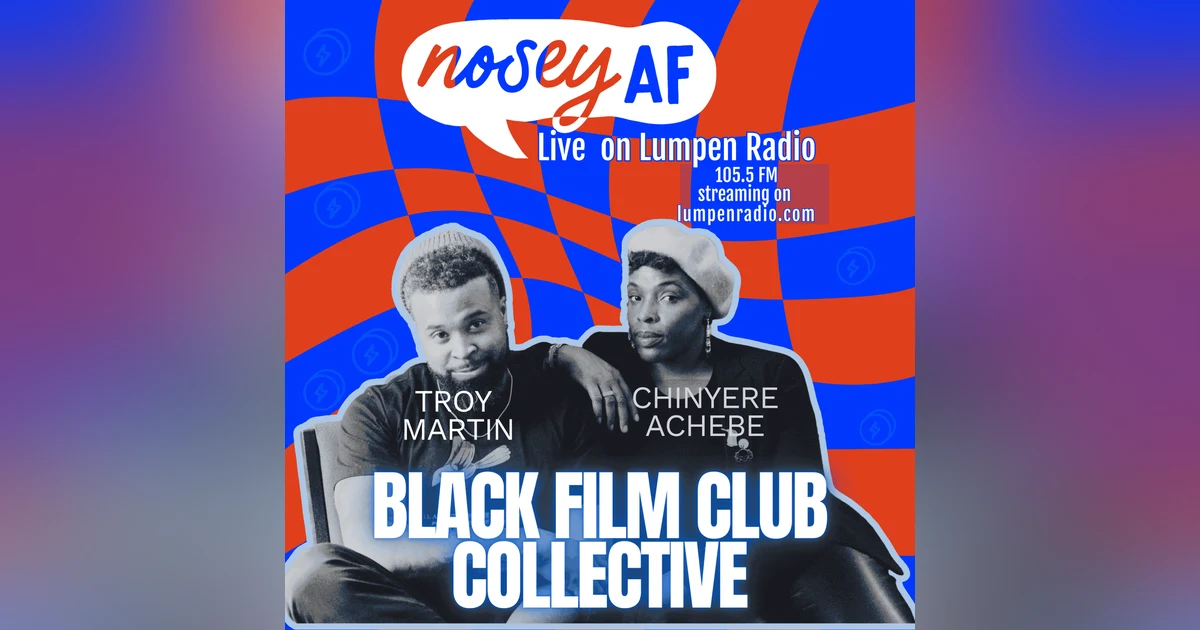
This episode was recorded live at Lumpen Radio on Saturday, July 11, 2026
Ep 117: More Than a Movie: Building Community Through Black Film
What happens when a love of movies turns into a movement?
This week, Stephanie sits down with Troy and Chi of Black Film Club Collective, a Chicago-based platform creating spaces for people to gather, watch films, and have the conversations that happen after the credits roll. From apartment screenings to citywide events, they share how film became a catalyst for community, connection, and cultural preservation.
What We Talk About
- How Black Film Club Collective grew from living room conversations into a thriving cultural community
- Why film creates a unique space for connection, dialogue, and deeper understanding across cultures
- How screenings became a way to rebuild community after the pandemic
- The power of discussing movies instead of just watching them
- What makes a film "Black" — even when people don't immediately think of it that way
- How their Fine Lines exhibition evolved into a larger storytelling and archival project
- Why community, memory, and family stories matter in preserving neighborhood history
- The unexpected joy of becoming artists, curators, and filmmakers along the way
If you love film, culture, community building, or thoughtful conversations, this episode is for you.
Chapters
- 00:00 - Introduction to noseyAF
- 02:18 - The Origins of Black Film Club Collective
- 20:23 - Exploring the House of the Collective
- 25:56 - The Evolution of Screenings and Audience Engagement
- 32:24 - Introduction to Fine Lines Project
- 44:12 - The Journey of Artistic Discovery
- 47:48 - Transitioning from Artists to Curators
- 54:43 - Discussion on Black Films
All about Troy & Chi
You're gonna love Troy and Chi, they're thoughtful, joyful, and deeply committed to creating spaces where people can gather around Black storytelling. As the co-founders of Black Film Club Collective, they've built a Chicago-based platform centered on screenings, exhibitions, conversations, and cultural programming that celebrates Black film and visual culture. Their work brings together audiences, artists, filmmakers, and community members to engage with stories that inspire connection, reflection, and dialogue.
Things We Mentioned
- Black Film Club Collective
- Fine Lines Exhibition
- Chicago Film Symposium
- Love Jones
- Mississippi Masala
- Atlantics
- Banel & Adama
- My Father's Shadow
- Love Brooklyn
- Sinners
- House of the Collective (gotta be picked for this link , i dont even have this plug yall) LOL!
Connect with Black Film Club Collective
- IG: @blackfilmclubcltv
- Website: https://blkfilmclub.com
Stay Connected
📬 Get the noseyAF Dispatch — all the month's episodes, straight to your inbox once a month. → Subscribe here
🏡 Grab the Good Neighbor Playbook — practical ways to build stronger connections in your neighborhood. → Download it free
noseyAF is a project of Stephanie Graham's art practice — photography, film, and documentary work rooted in community, culture, and everyday stories. → See the work
More ways to connect
- Email: stephanie@missgraham.com
- Follow on IG: @stephaniegraham
- Listen to more episodes: noseyaf.com
Support & Feedback
noseyAF is listener-supported — thank you for being here. 💛
📣 Share noseyAF with a friend who needs to hear this
Episode Credits
Lyrics: Queen Lex | Instrumental: Freddie Bam Fam | Cover Art: Emma McGoldrick
00:00 - Untitled
00:00 - Introduction to noseyAF
02:18 - The Origins of Black Film Club Collective
20:23 - Exploring the House of the Collective
25:56 - The Evolution of Screenings and Audience Engagement
32:24 - Introduction to Fine Lines Project
44:12 - The Journey of Artistic Discovery
47:48 - Transitioning from Artists to Curators
54:43 - Discussion on Black Films
Before we start, this episode was recorded live at 105.5 FM Lumpin Radio, where Nosy AF goes live on the air every second and fourth Saturday of the month. What you're hearing is the conversation as it happened. No edits, no retakes. Still curious and very fun, but honestly sort of scary.So settle in and enjoy this conversation on Nosy af.
StephanieGotta get up, get up to the whole world, you a winner, winner vision of a star with a mission in the cause what you doing, how you doing, what you're doing and who you are? Flex yourself and press yourself Check yourself, don't wreck yourself if you know me then you know that I be knowing what's up.
StephanieStephanie Graham is noseyAF A WLPNLP Chicago 105.5 FM Lumpin radio. Hi, Chicago. So excited to be here with you all today. We have. So excited to have.
StephanieOh my gosh.
StephanieSo excited. Oh my gosh. What is going on?
StephanieOkay.
StephanieSorry about that, guys.We are so excited to have Troy and Chi here from Black Film Club Collective, a Chicago based film and visual arts platform that brings people together through screenings, exhibitions and conversations centered on black storytelling. Welcome you guys.
ChiThank you. Thank you for having us.
TroyYes, thank you. Great.
TroyGreat intro song too. Oh, that was a vibe. I like it.
StephanieThank you so much. Just so we can know who we're talking to. Troye, can you say hello to everyone?
TroyYeah. What's up world Chicago? I'm Troy, co founder and one part of Black Film Club Collective.
StephanieCool, cool. And.
ChiAnd I am Chinyere, also known as Chi. I am the other half of Black Film Club Collective.
StephanieYes. And I'm so excited for you all to be here because you guys started Black Film club collective in 2020, is that right?
ChiCorrect.
StephanieWhich. Let's not talk about that yet. It's tough for everybody outside of you all starting Black Film club.
TroyYeah.
StephanieTake us back to the beginning. What was missing that made you want to create this space?
TroyYeah, I think just being a fan of just movies right at the time and maybe we can talk about that later, I think I was really starting to pick up my interest and love for it again. I grew up around it and so when I got to Chicago, obviously Chicago is a world class city as it relates to arts and culture.I started going to film centers, art houses, and I just noticed that I had friends that I would talk to one on one.But we never really had like defined spaces where we could come together and really just talk and discuss film at a conversational, like intellectual Level, you know, and wax poetic, if you will, about it. And so that was really kind of the core driving factor in, like, starting a film club.
StephanieYeah. Being the change you want to see.
ChiYeah.I enjoy having conversations with folks and really diving deep into what makes people tick, what their thoughts and ideas are, and I enjoyed that aspect. And I didn't see that enough or I didn't experience it enough.The closest to it was the poetry scene where you could really express yourself and have moments where you get up there and say whatever you want. But I liked the communal aspect of being in conversation with folks, and so that was the draw.And film seem to be such an easy catalyst to pick apart someone else's life without having to necessarily pick apart your own. But as you are picking apart those lives, you then become connected to, like, oh, wait, let me look at myself, you know, so it was just like a non.It was like a safe space to really be seen and also have conversations about other people. It's, like, okay to gossip about.
TroySure.
StephanieYeah. I know. Sometimes characters are so weird. Like, I think of, like, certain movies, and I'm like, oh, I wonder what that character is doing right now?And I'm like, wait, they're not real, are they? It's so bizarre.
ChiOr the thought behind the writers and why they wrote the character that way, or why they even. Why is this story being told? And I love how art allows you to be, like, a critic, if you will, but also be in it.And it's in that same way of, like, wait, you know, because definitely I thought Issa Rae and Insecure was my best friend.
StephanieYeah.
ChiYeah.
StephanieAnd you. You have to remember that Issafe Race, like, that's a character that, you know, she's acting as.
ChiYeah, you're real.
StephanieWhat were the early gatherings like, you know, before Black film club came to be what it is today.
TroyYou know what?That's such a. I love that you asked that question because really, to Chi's point, like, this idea of, like, I don't know if people remember Love Jones. Right. You have to remember.
StephanieYeah.
TroyWho does that in Chicago?
StephanieYeah.
TroyIf you don't watch the movie, shame on you.
StephanieBut.
TroyBut, like, I recall, like, those are friends, like, obviously going to poetry slams, taking part in kind of like, that intellectual, like, I guess, exchange at dinner. Right. And they're talking about, is God a woman or a man? Right. But it's just really having a conversation.And honestly, that's what the actual initial stages look like. It was literally in my apartment, friends crowded around, like, A living room and the kitchen table.Having conversations over probably too many glasses of wine, but really just thinking deeper about culture and, like, what these films are like, moving us to. So it felt very like, after school club, like, if. You know, underground, if you will.Kind of like cool vibes, you know, like somewhere where artist friends would do, like, if they were in, like, college or like, in high school, like, into the space.
StephanieSo, yeah, it always reminded me of, like, the kids in my neighborhood that would play magic cards, but, like, maybe in no Shade to the Magic Card kids, but, like. But better dressed. Like, there was, like, you know, like, we'd had leather.Leather jackets where maybe the magic card kids just had, like, a jean jacket.
ChiRight, right.
StephanieBoth are great, but, you know, it just seemed like it took it up a little.
ChiIt elevated just a little bit. Yes.
StephanieNow somebody's gonna message me, like, how dare you?
TroyOh, yeah, they coming for the DMs.
ChiOkay. What's wrong with a jean jacket? I know, right?
StephanieWhat's wrong with magic?
TroyKFC likes magic kids. Okay.
ChiOkay.
StephanieRight. Oh, my gosh. You know, I've been thinking about film as a universal language, sort of like you said.And we all come from different backgrounds, but almost everyone watches movies. Just like people around the world are watching, you know, the World cup right now. People around the world gather for film.Do you think film has a unique ability to connect people across differences? And how has that idea maybe shaped what you guys are doing?
ChiI do think it has the ability to connect people across differences. I think about films, international films, such as My Father's Shadow, or what was the one we Sanal. It was a Senegalese film.We showed Banal and Adama. Banal and Adama. And also there was another one, Atlantiques. Atlantiques, you know, that we had an opportunity to screen with folks.And I really appreciated it, how our dialogue was so rich and so meaningful, especially around. Or I shouldn't say especially. All of them were really rich.But My Father's Shadow was such a beautiful story because not only did we get to see someone going through different things in. I believe it was South Africa, where he was from at the time when he was going, when there was the uprising and all the things that were happening.And we got to see Nigeria. Yeah, yeah. We got to see a father going through some major things, but the dialogue was so.Because it was people in the crowd who were from Nigeria or who were raised by Nigerian parents. I am a first generation American, so my dad was Nigerian. And really just hearing the Stories like, oh, oh, oh. And like, putting the two. And putting.Putting two and two together, but also understanding it from this father's perspective.It was such a beautiful and rich conversation that everyone in the audience, or I shouldn't say everyone, but the folks who stayed back to have the conversation, we could tell that they were impacted in a really rich and meaningful way. And it was this. I don't know, it was like a really great connection.
TroyYeah, no, I agree. And I'll just.I'll throw out another one that I really like that I feel resonated with just, like, different audience, you know, people from different backgrounds. Mississippi Masala.
StephanieOh, yeah.
TroyYeah. Like, people haven't seen it literally just kind of, like, resurfaced. They were basically.The distribution company was in a fight, you know, to get the rights for a while, but now it's back and it's being shown in different capacities. But Denzel Washington, right, is a gentleman working in the South, Deep south.And he falls in love with a woman who is actually, I believe she's from. She has African origins, but she's also an Indian woman. Right. And we definitely had Indian.You know, people had Indian origin, you know, in there, in the audience, as well as, obviously, black and brown people there. And just the conversations around those differences, as they were both almost marginalized people in the south, you know, trying to make a way.But also having, like, those different family traits or cultural traits. Right. And, like, how they consider dating versus how we consider dating. What does free will look like? What does responsibility?Or, like, what do they say? The responsibility to my cultural, you know, like. Of, like, honoring tradition mean, you know, when it. As it relates to love.So that was a really rich conversation.And those are, like, the special parts around film where you can kind of bring people together and really just dissect, like, what do these things really mean for us, you know? Cause everybody's experiencing these things in different capacities and.And it's, like, good to kind of just bring those back to the table and really see, you know, how people feeling.
StephanieRight.
TroyWhen that movie was made in the 90s, 20 years ago, how do we feel about this today? You know, I think that's kind of the magic that we can get to when we kind of have, like, those, like, diasporic conversations.
StephanieYeah. And I feel like, because you guys include the conversation piece of your films, what do you think?Do you think people go to those excited to already discuss films or, like, where do you think that. What makes the magic that gets people to wanna share?
ChiI think Definitely people come knowing, or if they don't know, they're excited. Once they do find out, they get to talk, you know, because they wanna be heard. They wanna share their perspective. Because so many times.How many times have you watched a film with someone and wanted to lean over and whisper to them or say, whoa, did you see that? Or, you know, so it definitely feels like people are primed and ready to talk.When that portion comes up, they're like, okay, I' yeah, you know, so I love that.
TroyYeah, you would think that would be probably the toughest part. But honestly, that's. That might be the easiest part of the process, because to Chi's point, I think we've.We've done a good job of creating a space where people know, hey, we get to go talk about a film here. Yeah, right.So I think, for whatever reason, and I think this is maybe what I was feeling, you know, at the time, because I would be excited to just discuss. And there's no way to do it. So I think people are making up for lost time.
StephanieYeah, for real.
TroyLike, you know, and if you think about it, I feel like, you know, movie culture back, you know, when we were younger, I'm speaking from a millennial perspective. I don't know if my Gen Z people understand that maybe, but, like, you go.You went to go see a movie on a Friday or Saturday or Sunday, and it was a thing, like, we all went there and then we would maybe stay at a mall. Right. And talk about it or, like, have some level of exchange. And somewhere in the world of streaming, we kind of lost that.And I think that also the perfect storm of us coming out of a pandemic and really picking up storm, people wanted connection again.And I think that community is really at the core of, like, what we're doing when we bring people together, like, we're giving them community and also intellectual, like, food at the same time. Yeah.
ChiWe used to call it edutainment.
TroyEdutainment.
StephanieYes, edutainment.
ChiCheech.
TroyCoin that word, by the way, it's trademarked someone else.
StephanieYou know, I love, as you said, pass the love, pass down.
ChiGood point. Yeah.
StephanieCause it's the worst when, like, after you go to a movies and movie theater and your friends just want to go home, you're like, dang, nobody wants to get, like a slice of pizza and talk about the movie, man.
ChiA taco or something.
StephanieYeah.
ChiCan we stop talking?
StephanieRight.
ChiAnd sometimes, you know, I want to talk in the theater with folks. And so we recently, my daughter And I. We went to see Obsession.
StephanieUh huh.
ChiYeah. That's a whole nother story. Okay.
StephanieYes, I have thoughts about that.
ChiI have to come back and talk about that one. But after we ended up staying and talking with a few people that were there who had saw.We didn't know them, but we kind of had a conversation about relationships and what that movie meant. And then the person that was cleaning up the aisles preparing for the next show, they even got in on the conversation. I love it.So I was like, wow, this is so cool. Because I think people do.They want to talk about the points and the moments that kind of inspired them or pissed them off or just like, ah, I just got to talk about this. Yeah.
StephanieI was gonna ask if folks talk in your screenings.
TroyLike, I think so.
StephanieYeah, for sure.
ChiYeah.
TroyIt's definitely culturally built around, you know, the black experience as well. It feels like that the music reflects it, the snacks reflect it.Like, people will, you know, cite different, you know, popular captions or like phrases from a film. Like, it's. We want them to have that space. Right. Because sometimes you don't get to do it by yourself.
StephanieRight.
TroyYou know, so it's like a theater, like when people go. Right. You know, so yeah.
StephanieThank you guys so much for curating these screenings for everybody to come to such joy.
ChiYeah, it's. Thank you for thanking us. And also, it feels really good to be of service in that way. It's funny, I was telling Troy recently, like, we had.I can't remember which screen. It was a matinee and mimosas that we do in Wicker Park.And I had an opportunity just to kind of sit back and he was in front doing, you know, and it just was so much joy just to watch it from behind the scenes, if you will, and just see it. And it really does feel like service. It feels like we're giving people an opportunity to be in community in this way.And it feels rich, it feels luxurious, it feels fun. So I selfishly be having fun just looking at everyone. So thank you for thanking us.And also, it feels so, like, really cool to be in service in this way, in entertainment.
StephanieYes.
TroyWhoa.
StephanieFor sure. Absolutely. You guys must watch a bunch of movies. How do you decide what we're gonna see?
ChiI know. I wish I could watch more Troy. I feel like Troy does a really good job of, like, keeping us abreast of the films.Because me, I just kind of fall into film when I'm inspired.
StephanieI know. Yeah. Troy, you have to give us, like, how do you Cover so much ground,.
TroyI think, you know, yes, we do watch a lot of movies, but I think even as we run a club, we also have, like, subcultures of, like, film clubs within our, like, that we go to for inspiration, like our friends, right? Like, what are you all watching? And we share movies and share films.And I just find myself kind of going down different rabbit holes, you know, like, looking for different films or, you know, maybe I might get a coffee book that has just different things or a magazine that's talking about something interesting. So, yeah, I think it's just. I'm constantly thinking about, like, what is what?All right, if we're in this state of the world, what type of film might be reflecting life, you know, in a similar capacity? What could I gain from something like that? Yeah, you know, and I think that's kind of, like, my approach to it.And I think we also think it's just about the audience, you know, that we're catering to.
StephanieBut do you guys have, like, a quota of, like, movies you see? Like, okay, I need to make sure I watch three movies a night to be able to get together and plan out your season.
ChiDuring the film symposium, Season two, we are.We're getting there on the front of, like, having a stockpile of films, like, oh, we wanna watch this in October, you know, because we've been moving, so we've been tapped by these wonderful organizations to also be thought partners on some of the events and activities they have. And so we try to be emergent and also thoughtful in our plan.And, you know, it was funny, as Troy was mentioning, you know, just our wonderful community, we do have a really great community of folks who do archiving and folks who are acting and, you know, just doing beautiful things and who are into animation, anime, or into action films. And so we really do depend on our community to help keep it diverse.Because if it were up to myself and, like, I'm very, like, A Beautiful Mind patterned in some way, I'll be like, isn't it 20, 26 and what about 10 years ago? What were we doing then in 2006 and what films speak to that?And then in 19, and then I try and find these little patterns, and Troy will be like, no, she. No, no, we're not gonna sit here and try.
StephanieCome on, syllabus.
ChiWe're not gonna try and draw all of these patterns. And maybe if we cite this book to go with this. So it helps to break the monotony, definitely, to have our friends who are just well versed.
TroyYeah, well, I think also just watching, that's bad for it, actually.
StephanieYeah, but true. I'm down to go on a rabbit hole with you, by the way. Maybe that could be a week workshop or something like a week long.
TroyOh, she got rabbit holes. And they can go deep.
StephanieOh, my God, I love rabbit holes so much.
TroyBut also, I think it's something about, like, also just, like, being a fan of movies and watching just global films too, right? Like, just watching different things. Cause we watch a little bit of everything.And I think even being able to step out of, like, the black experience and see other films helps you come back and even look at different black experiences in a different way. Or, like, maybe go pick out something that you might have not thought about, you know? So I think that's also a part of it too.Just being a fan of the genre really kind of powers me in general. So I think that's kind of like what, you know, keeps it going, just keeps it fresh for me, you know?
ChiAnd I do want to give a shameless plug for House of the Collective, which is a platform we launched so that we can give our friends, who are also well versed in film, a space and opportunity to curate an event. Maybe they have a film they want to see, and then they bring together audiences.So House of the Collective is that space so that it's not all on My Beautiful Mind. And always international film watching. Like, we're like, okay, let's break it up. Let's see what else is out there. So that. That spin House Collective.
StephanieWait, tell us, tell us more about House of Collective. Is this just in your friend group or if somebody's listening and, like, I know a movie y' all should watch. Can they hit you up?
TroyYeah, yeah. House of Collective is a guest curating pro or curator programming series that we do.We've been hosting it at Monday Coffee, which is our resident, like, community screening. And we invite in trusted friends and guests up bfc, which we consider under the House of the Collective, to curate a film of their choice.And then they'll actually curate the film and actually lead the conversation.
ChiOkay.
TroyAnd so it brings in to Chi's point those different perspectives, right? Because we have perspectives of what we like, but this also brings in different friends. Right?And that's how we end up with maybe screening a boomerang again. Right? Or like Atlantiques, which is essentially almost like a. Well, it's really a Senegalese horror, you know, genre film, you know? Right.Which is like, super interesting. But that's what you get when you kind of invite friend voices in, you give yourself a chance to even step back and say, wow, I've been.I haven't even been thinking about this genre. Like, what else is, you know, here that we haven't been exploring?
ChiSo.
StephanieRight. It gives you a chance to sort of chill.Cause I would imagine when you guys are hosting these things, do you guys get an opportunity to chill and just watch the movie or are you always thinking about something?
ChiYeah, that's a good question. I know for me, me, I'm learning how to chill.
StephanieYeah.
ChiLike actively looking for a class, a tutorial on how not to do the most. So I'm learning.
StephanieYeah. I wonder if there's a film about that. I'm sure there is. Yeah.
ChiMaybe.
TroyUh. Oh, yeah, I think. I think similar to Chi, I think I learned. I think we've been.We've gotten to a place where we've been able to streamline a lot more of our processes, so it's becoming a bit easier to chill. And I think our audience is even learning, understanding, you know, the programming formats more.So the events are almost kind of learning almost how to run themselves, if you will.So I think there's been a been a more ease in letting go of some of the things where we thought we had to do a bit more teaching, and now the audience kind of already knows what to expect. Like, oh, we're coming here. We're gonna do this, like, at some point. This is gonn.You know, so, like, there isn't as much hand holding as we would think you would need to do.
ChiYeah, right on.
StephanieBecause the public is wild. When you guys started, they were like an Apartment screening series, wasn't it, like, sort of like Apartment. Were those public?
TroyWell, it started with friends.
StephanieOkay. Okay.
TroyStarted with friends. And then when we went. That would be kind of crazy. Yeah, yeah. Not quite there yet.
StephanieYeah, yeah, yeah.
TroyBut, yeah, but no, once we went to a venue, then it became public.
StephanieOkay.
TroyYou know, and. Yeah.And obviously, like, it's like the, you know, like a classroom, it can get rowdy versus, you know, on certain topics, people get passionate about things like, hey, it's the safe space, y'. All.
StephanieOh, wow.
ChiOkay. Yeah. Cause you're. You're hearing.You're hearing perspectives from people, and it can be a little triggering when you start having those conversations. But thankfully, we enter into it with the safe space. Of course, the most rowdiest folks, interestingly enough, were our mature community.They came in rebel roused. I was like, who would have thought we would have to tell our elders to simmer down.
StephanieYeah.
ChiSo. But it was right, because you can't.
StephanieTalk to elders like that, first of all.
ChiWell, yeah.
StephanieWell. And then you have to, you know,.
ChiTo even say elder to one of the elders. They checked me and said, I am not an elder. I'm just like you.
TroyI was like,.
ChiSo it was. It was really cute. And I was like. I was like, troy, who would have thought we would need crowd control for our elders?
TroyReally?
StephanieYeah. Oh, my gosh. I know.I always, like, you know, I'll go to, like, some lecture or whatever, and then when you hear somebody say, oh, but I disagree with that, you're just like, oh, yeah. It's like, oh, no. Oh, no.
ChiCue the Netflix documentary. Okay, okay.
StephanieI've been loving seeing people do that Netflix documentary series. That is just so hilarious.
ChiI'm glad. Just broke up the monotony from the polygamy.
StephanieYes. Have you guys watched that? I have not. I don't know if I can handle it yet.
ChiYou can't. Okay, okay, look, this is a PSA to everyone. Like, don't do it.
TroyDon't do it.
ChiI did it for the team because I kept seeing it come up in my feed, and then one night, I was like, okay, I'll do it. I cannot get my time back. Yeah, I've been trying.
StephanieIt's just amazing. Well. Well, the person who created that, like, she wrote that, and then she, like, let it sit for a while, and then somebody, like, picked it back up.It's like, wow. Yep.
ChiAnd. And. And. And to hear a story and how it started from a book, and the impetus for it was actually woman empowerment.But to see the show, I'm like, no, it was a mismatch.
StephanieOh, my goodness. You know, we have five minutes until we take a break. But I just wanted to say, like.Like, are there any particular memorable screenings outside of the Elders Raising Their Voices? Any sort of, like, memorable screenings, discussions, or moments that have stood out to y' all from the past few years that you've been doing this?
ChiMay I?
TroyYes, please.
ChiReally briefly. I really enjoy the times, and I know you said one time, but I enjoy the times we get to collaborate with folks. I think about the early days.We can collaborated with this group Sunday music session, and we did a Love Jones screening. It was a blast. It was so cool.And just those type of screenings, when we get to collaborate with folks, those are the memorable ones because they're fun, and then we're not doing everything.
StephanieYeah.
ChiSo, you know, I like those.
TroyYeah.
ChiAnd then most recently, Simple Wednesday, we did one for Brown Sugar. So I really like the ones where we get to collaborate. Those are awesome.
TroyThe collaboration is fun because it brings such a different energy into it. Like, you already have an energy of your organization, but then you get to feed off of their organization's energy and their community.So it's like an inner you kind of like a gumbo of, like, people mixing, and that's always super fun. I do got a standout screening. I really enjoyed the Love Brooklyn screening that we did.So we partnered with Greenwich for the premiere of Love Brooklyn, and I felt like the community was so excited. Like, they sold out the theater basically, like, twice.
StephanieWow.
TroyAnd, like, everybody was, like, so engaged.You could tell there was just, like, a thirst for, like, another type of like, just, you know, film around the black experience in, like, our dating life.
StephanieYes.
TroyYou know, that's actually mature and not, like.
ChiYeah, you know what I mean?
TroyLike, not like. Like, you have, like, the funny, like, holiday rom coms, but, like. Oh, like, what does it look like?Like, normal people falling in love and, like, messiness and, like, that theater. That theater got spicy. Like, you know, like, you know, like so.But I think that really stood out when, like, the community really just kind of, like, got behind it and, like, just supported it. And I think I felt like, all right, like, we can really, you know, build those relationships and really, you know, move the culture and be around it.
StephanieYeah. And it proves, like, yeah, duh, we like these movies. Like, we want more of these movies. Then there's room, like, make more.
TroyYeah. It's like Confirmation is like, oh, yeah, well, we have. We're bringing this movie. Yeah. Like, do it.
StephanieYeah.
TroyThere's an audience there.
StephanieYeah, for sure. I know, because there's always, like, some extreme and either has to be, like, reality show or, like, goofing off.It's like, yeah, it's just like one.
TroyOf the above or like some super, like, traumatic, like, you know, moment is like, ah. Why can't it just be, like, everybody makes it out and it's just like, maybe a heartbreak. You know what I mean? I know.
StephanieI know.
TroyYou know, but, like, it's like just madness, you know, like death and then it's like, craziness. You're like, I know.
StephanieIt's just such tragedy. Yeah, I know.
ChiYeah. Yeah. Also something that sticks out, and I want to honor time. Sinners.
StephanieYeah.
ChiWe got some king with Ryan. Well, I call it a hang. It probably was more like a. He didn't know who we were. But then it was like, hey.
StephanieOh, he knew.
ChiCome, come over, come over. You know? But it was really cool.
TroyThe team called us.
ChiThe team called. Nah, it was really great. That was a really great experience, you know?
StephanieWas he nice?
ChiOh, of course.
TroyCome on.
StephanieHe seems like he's a. Like a cool film house.
TroyAdvertised.
ChiYeah, yeah, he comes as advertised.
TroyIf you. If you ever get a chance, watch his Criterion Collection in the closet. He really is a film nerd.
StephanieYeah, no, he seems like it.
ChiProximity, his podcast, Proximity, which is really great. Oh, I didn't know he had a podcast. Oh, cool. Yeah. Yep. Wow. All right.
StephanieYeah, I'll have to definitely check that out. And I love the Criterion Collection closet. Have you all been to it? Is it like a real closet?I'm like, is it just like three walls that you guys have set up?
TroyEssentially? What do you call those? Like a trailer.
StephanieOkay.
TroyAnd you go in a place and it's like a bunch of films there.
StephanieYeah, yeah. But I love that.
ChiKeep it in the closet.
StephanieOkay.
ChiSorry, I just had to.
StephanieOh, my gosh. I just love how responsive everybody has been to the work that you guys are doing. It's like. Yeah, that's, like, really cool, y'.
TroyAll.
StephanieWe are here with Black Film Club Collective, but we're gonna take a quick break, so we will be right back. WLPNLP Chicago 105.5 FM Lumpfin radio. Guys, we are here with Black Film Club Collective.For some reason, I always want to say shy, but that's to be shy. Oh, is that where I got that from? Okay. I love it. Rebrand.
TroyYeah.
StephanieOh, my God. Love.
ChiI used to have a friend all the time.
StephanieEvery few weeks, she was rebranding her blog. I'm like, girl, just change the colors.
ChiAnd she won.
StephanieShe, like, didn't like purple, so she's.
ChiLike, I have to do a rebrand.
StephanieIt's like, just change the color. It's okay.
ChiYeah, yeah, yeah.
StephanieOh, my gosh.
ChiPerfection.
StephanieYou guys have an exhibition up right now. Fine Line. Are you all filmmakers also?
TroyWell, actually, yeah, we are.
ChiYeah. Stepping into that role.
StephanieOkay.
ChiYeah.
StephanieI love it.
TroyIt's crazy. I'm still getting used to saying that, right?
ChiI know. If the shoe fits. And it does fit big.
StephanieI think so. Yeah.
ChiIt makes sense.
StephanieTell us about Fine Lines.
TroyYeah.So Fine Lines is a West side and neighborhood focused, Chicago based West side Neighborhood Focus film salon and a vernacular archiving project based on the black people and the black communities on the west side. And it's centered around capturing their stories of the everyday, what makes them special. Right. And giving meaning to that.And we did that through a host of different activations, screenings, community portraits of multi generation of these multi generational families. And also memory work in the form of audio oracle storytelling of their migration to Chicago west side. So that's what the project is.And feel free to add.
ChiYeah, definitely tracking their migration journey, how they arrived to the west side, and also how they decide what to keep and who taught them how to remember. So we had a guiding question that guided us through this whole process to even get to Fine Lines. Right. So it started with making meaning.And so we began to ask the question like, who taught you how to remember? And also looking at how did you get here? What are some stories that. How do you decide what to keep now that you're here?And that introduced us to wonderful families, beautiful families, who not only told us about how they arrived, but the things that they kept in their family that helped them to have that legacy, that helped them to really have a place here in not only Chicago, but in the ecosystem of the west side. And wanting to tell their stories and illuminate their stories, which gave them an opportunity to really begin.We began to see the thread of the line. The fine line.
StephanieYeah, that was. As I was preparing for this, I was thinking like, oh, what does the title Fine Lines mean? But yeah, you just explained it beautifully.
TroyWe gotta give a shout out to saic, who actually was the sponsor of the project.
StephanieOkay, cool.
TroyBeen artist and resident with them.
ChiOkay.
TroySince the top of the year.
ChiOkay, Right on three.
TroyIs it three or four other artists? I want to say maybe three other.
ChiArtists that were a part of the program. Yeah, it was. I think it was actually four in total. It was king. Well, we don't have to go.
TroyYeah.
ChiBut essentially it was quite a. Yeah.
TroyAnd so.
StephanieYeah, a cohort.
ChiCohort of us.
TroySo shout them out for giving us the space and the resources to actually take this project and really kind of like sit with it and think about it and expand it the way that we have been. Which has led to the exhibition and now a short film we're working on too.
StephanieYeah, yeah.
ChiWe worked with Ken Cook, which is a wonderful photographer.
TroyMr. Ken Cook Jr.
ChiYes, thank you. Ken Cook Jr. Who is an amazing photographer on the west side of Chicago. His son worked with the Reader, Austin Weekly, North Lawndale publication.So he and other major outlets. And so we had an opportunity to partner and do this. The community portraits.
StephanieRight on.
ChiYeah.
StephanieWill Ken become a member of the.
ChiHouse of Collective Man? We Hope so.
StephanieYeah.
TroyHey, I mean, I would love. From, you know, Ken, if you're listening, you know, go ahead and give us what you got. You know, he is a friend of the house.
ChiYes.
StephanieCome on.
TroyAnd hopefully we'll be able to continue doing work with him. We have some ideas, you know, that we're thinking through right now on how to expand the project.
StephanieYeah. Cause I was so curious, like, you know what. How the idea feels important enough to explore across mediums, both an exhibition and a film.
ChiYeah, the film aspect is really just illuminating the story. Cause it. You know, it's so funny. When we first started, we, you know, in order, we had to submit a proposal. Our proposed idea.This is what we want to do. It was very basic, but when you put a Capricorn and an Aquarius in the room. Okay.
TroyI love it.
ChiYeah. Things grow very quickly. And so we started with these beautiful film salons. We knew we wanted to show films.We had the opening reception, which we were like, okay, just kind of chewing on some ideas. And then it began to grow into this thing where, like, man, we can't just show films and have conversations. We have to listen to stories.And then those listening to stories. We had been talking with Ken early on, before we even knew we were selected. And we were like, hey, we want to do some work together.And so when we found out Ken was. Ken Cooke Jr. Was selected, and we were selected. We were like, oh, we gotta do something together.
StephanieYeah.
ChiAnd then it kind of blossomed into this great idea around, okay, let's do some portraits. And Ken's work is so beautiful. And so it's like capturing families or capturing people in the realest, rawest moments.But making it look artful is just his magic or one aspect of magic that he brings into this world. And so it was really. It was like, oh, wow, we get to work with you. And it kind of blossomed from there into, like, okay, these community portraits.And then when we saw them, it was like, oh, these gotta be flags. These gotta be. People gotta see them. They gotta be huge and massive.So that when you come through, you see these wonderful families represented on the west side. And they look like somebody, you know, oh, this could be my auntie. This could be my uncle. This could be, you know. So it was like that.And then it was too big to house into this exhibition. And then it was like, okay, we gotta do a film, too. So I'll let Troy. Troy's really been beautifully spearheading a lot of the work we've been doing.With Kim Williams on this.
TroyYeah. And I had to shout out to Chi because I think when we were doing a community portrait shoot, I think she.You might have actually thought about the migration line to really capture those stories, and that's actually what's driving the narrative of the short film.
StephanieOkay.
TroyWe're actually taking a lot of that dialogue and building, you know, building upon the story of the exhibition on with these families through different archive of photos that they've given us. We're also working with the Getty Black collection to kind of also.And then also our very talented chief editor, Ken Williams, who we've been working very closely with, to also cut and edit and build the film out.So it's gonna be an extension that kind of just continues to grow that story and really give the full picture of these human beings, because Ken captured the joy, and now we can actually capture where they came from. How. How that kind of, like, how that joy became what it was here. That makes, like, the fine lines.
StephanieYeah.
ChiAnd what. What things they. And the thing that I love that we keep coming back to is what they chose to keep. That is so important.When you thinking about fine lines or you thinking about making meaning of your own generational story, it's like, why did you keep this Bible for so many years in our family, you know? And it's like, oh, it housed birth certific. It also housed that scripture that got grandma through. To even pray us into this new place that we're in.So it was just such a great opportunity to understand why we choose what we keep and why they chose what they kept that brought them to this place where, Whoa. These are the threads, these are the lines. This is the connection. And it was. It was great. It was great, and it made so much sense.
StephanieYeah. That's really beautiful. What did the. What did your subjects think, seeing themselves? Is anybody like, oh, yeah, y' all should have been.Did a movie on me? No.
ChiNo. That's so cute. So, no, like, bow time. It was really beautiful to see because. Okay, so I'm gonna walk you through it. So you come up.You come into this industrial building. It looks like, okay, where are you back.
StephanieYou're walking us through if. As we go to see the exhibition. Okay.
ChiRight. Yeah. And so you're. You're coming in, and you see the green line. You hear the train.You see some wonderful people, colorful people in the community, and you're like, okay, do I want to engage? Do I not want to engage? And you're walking, and you go through this alley to get to the black Room.And you go up these stairs and it's an industrial building. And you see fine lines. You know, you see your. Your artist statement. You see all the things.But then you walk around the corner and you see these massive smiles that just greet you. And it's these flags that are hanging down.And before you even look at the wall to see the families on the wall or see some of the heirlooms or their hands or their arms or what aspects of them that are being shown, you see a smile. Smiling families that look at you and they're on the west side.And so what we experienced is watching people's breath be taken away, like where they pause. Right. You know, just to touch on that is something that we often will do in a film screening. We'll have people pause to take a breath.
StephanieYeah, right.
ChiAnd so it's really cool to see them walk around the corner. And then they just are like, whoa. It's this gasp of like, wow, you know, to see a smiling family or see a smiling face.And so, yeah, they are awe inspired. It's a gift to witness all and see people in awe of themselves because they never imagined themselves to be that way.But then it's like, it makes so much sense. Thank you. Thank you for capturing it. So we heard thank yous. We saw breaths being taken away.
StephanieAw.
TroyYeah.No, and I think just like the timelessness of the portraits that Ken took in black and white, it felt very reminiscent of like our old portrait days with JCPenney Sears. You see, Go take them. Like, people came in, like, you know, matching wardrobes and tones for the shots. And I just.I think it just felt nostalgic to the sense of also, like when family used to do those type of portraits together. Everything's so digital now, you know, but going like, to. When we're.I feel like we're in a time where we're trying to get back to more of those analog things.Like, let's actually go to a space as a unit and actually do something together, like, let alone take an image, you know, speaking with some of the families. Like, getting these multi generational people together was even a moment to just to do that.And it's like, oh, yeah, like, let's go have a meal after this.
StephanieYeah.
TroyYou know, let's have a coffee now, since we're all together. And I think that's also magic in that piece as well.You know, when you think about those images and I think you can kind of see like that connected tissue of like, those fine lines of keeping, like, families, you know, connected in that manner.
ChiRight on.
StephanieYeah.
TroyIt comes through in the work, in my opinion.
StephanieOh, my gosh. It's so exciting, but also exciting. Like, what's it like?You know, do y' all identify as artists or, you know, I know people, like, say, film programmers. Like, what's it like to just add this extra level to your work?
TroyI'm gonna go first on this because she been about this art life, right?
StephanieI was gonna say. Yeah.
TroyHer entire existence. We always joke, like, Chi has. And she's in, like, life number 10, maybe.
StephanieOkay.
TroyRight now, I would say it's been. It's newer.Me, I definitely identify as a creative now, but definitely now that this film is being made, I would probably consider myself now an artist.
StephanieOkay.
TroyBut I don't.
StephanieWelcome.
TroyYeah, but I would say I wouldn't have identified myself as this five years or six years ago, you know, when it started. I definitely think I would have been just maybe much more of a fan of the, you know, a patron of the arts, let alone participating in this.Participating in this manner, if you will. So that's been my journey, but it's just been.Honestly, it's been like a great, I guess, learning of yourself or what you're capable of and manifestation, you know. But I'll let Chi speak for herself.
StephanieThat's giving me goosebumps. Troy. That's really exciting.
ChiYeah, that's really cool. And it's been nice to witness, yeah. Know, Troy blossom in this way, too.Of, like, he says he didn't consider himself, but I'm like, come on, come on, come on, sir. Okay. And, you know, I saw the early seeds of it, and it's been really nice to watch it grow in this amazing way.And I'm so looking forward to, like, all that comes of it. Cause I feel like, you know, Source Universe is not done with you. And I'm just so happy and just excited to see all the things.And, yeah, my background, you know, art was an escape for me in a way of, like. And I don't know what I'm escaping from, but it was like, this idea of the mundane. I really appreciate how art, it has.You stop to appreciate what's before you and be in the moment. And so, yeah, you know, like, I knew this was the path that I wanted to be on. I just didn't know what channel.You know, I consider myself very, very multifaceted. Like, I. Or what they call it, multi hyphenate. And I've done a lot of things. As Troy always teases me and others.I've done a lot of things, and it's really been this idea of, let me throw a whole bunch of things on the wall and see what sticks.
StephanieYeah.
ChiAnd now I feel like we're in the season of refinement.I'm less interested in gathering it anymore as I am in using the talents that I have and making sure that I'm staying engaged with them in a way that allows me to also have my breath taken away or, like, also have my awe moments and say, wow, you did that girl. Like, oh, cool. You know, and so it's been really nice to go to sleep at night and really find peace and solace with my. Yeah.You know, and less about, like, oh, are people coming? And seeing it. It was like, when we finally got those flags up, it got that exhibition, like, when we.
TroyWe ain't gonna tell y' all how close it was.
ChiHe calls it, you know, he stands up products. When we stood up this exhibition, I was like, wow. It was like a moment of like, whoa, we did that.
TroyDouched hills. For sure.
ChiIt was. We did that. And so, I don't know, it's been feeling really good to sit in this seat.Cause from artists to now curators, this was our curatorial debut. And that's, like, really cool. And we have so much respect for our curator friends.And so we're still learning how to fill those shoes and be with those shoes and what all of that means.And so this is great to be on this journey now from as artists and stepping into curators and being, you know, given this gift of holding people's work and their art and their vision in this way.
TroyYeah. And I'll say.And I just want to say thank you to, like, Chicago, like our Chicago creative artist community at large for actually trusting us, you know, with the responsibility of a. Being film programmers, but then also being curators and artists and commissioning these work with these humans right. In this neighborhood. Because.Cause I think me and Chi both take our work serious, you know, and we have a pride about it. And I think, you know, sometimes, you know, in this space, things can feel unattainable, you know, for people to attempt to do.But I feel like our community at large has supported us and kind of given us the green light to, like, really, you know, participate, you know, And I gotta say, that's just a. Contribute to maybe just the way we attempt to try to show up.
StephanieYeah.
TroyYou know, to, you know, to deliver. Not perfect. You know, understanding that we don't know it all. We went to Curator School 101.
StephanieYeah.
TroyAnd we probably got like a B, you know, B minus to B maybe.
StephanieYou know, we'll see you hard on yourself.
TroyWe see.
ChiBut still have a lot to learn.
StephanieOh, of course. Forever.
ChiYeah. And it's okay. Like I. There was a time when I would look for perfection in the work. Or like, oh, we gotta do with this. Cause I started.We started off that way and I was. I remember when we did our opening reception right after we had some curator friends come who is in the art world.And I immediately sent them a message like, was this. Okay, what did I miss? And you know. Cause I didn't go to school for this, you know. And so it was like, I was like, oh, did I do everything right?And it was like this moment after doing that, and they gave me feedback or what have you. And I incorporated as much as I could. It was like, no, you gotta really just get your feet wet and you gotta do it.
StephanieYeah.
ChiAnd that's just the beauty of art. Art is so forgiving. People may not be. People may critique and say, you know, I didn't see that artist statement. Where is that?
StephanieOr. Or.
ChiOr, you know, or whatever they, you know, the title cards or what have you. Yeah. And so they will have their feedback.But also when you're moving in a way where you are allowing the universe or source or whatever is inspiring you to express through you, sometimes you're just. Just gotta do it.
StephanieYeah, absolutely.
ChiYou know, so.
StephanieYeah, just get started. Oh, absolutely. You all have.
TroyYeah. 100.
StephanieYeah. And you're enjoying it and learning and.
TroyIt's been a blast, honestly.
StephanieYeah, that's really cool. I mean, I can't wait to see it. It's up until.
ChiYeah. Till this weekend actually. We are having our closing reception and artist talk on 7 17. It's 8pm awesome, right?
StephanieWow.
ChiLook at all those sevens. Hold on. I love it. Hold on. Let's play the lottery. Okay, coming back.
StephanieYou laugh, but watch where I go after this. Right.
ChiIt's 7:17. Well, at 7:00pm at the Black Room, 4015 West Carroll, we'll be having an artist talk and our closing reception.And yeah, people will be able to see it that Friday and Saturday and then we're taking it down that Sunday.
StephanieOkay.
TroyWe'll have Ken Cook Jr. In the building.
StephanieOh, wonderful.
TroyWho is the photographer, image maker. And Ken Williams as well, who's our cinematographer and editor. And we'll talk a little bit about project and kind of our process also.
StephanieYeah. And since we're just on the talk of, like, how to get in touch with y', all, where. How do folks find out about the screenings and stuff y' all have.Where could they go for more information?
TroyYeah, you can follow us at Blackfilm Club, cltv.
StephanieOkay.
TroyOn Instagram. And also we have a website as well if you wanna follow us there. That's blackfilmclub.com and that's just spelled B, L, K filmclub.com, all one word.
StephanieYes.
TroyAnd yeah, our social media from a awareness perspective is definitely on Instagram. That's where we have everything. We have a link tree with all the events, interviews, things. Basically, if you want to get in touch with us.
StephanieOkay.
TroyYou know, you can normally reach us there. And also our email is on there as well. If you want to reach out.If you're interested in more curatorial work or if you want to do some film programming with us, you know. Yeah, Our books are open.
StephanieYes. Okay.
ChiAbout the house of the collective. Yeah. If there is a film buff, a cinephile out there and they're like, hey, I got a film for you.
StephanieYeah.
ChiPlease feel free to email us. BlackFilm Club. That's blkfilmclubmail.com. Who knows? Maybe.
TroyMaybe promises.
ChiBut if it's heat, who knows, right?
StephanieIt could be that cousin that's like, I got a movie. I got a movie. Right. Because let's be putting you on.
ChiWe have the Chicago Film Symposium that will take place next year, 2027.
StephanieOkay. So that was wonderful. Was that last year? I feel like the time is sort of like messing with me. Okay. Yeah, that was wonderful. That was wonderful.
TroyYes. Danielle Scruggs, a black woman collector. She's on our co partner in crime conspiracy.
ChiYes.
StephanieYeah.
ChiCo conspirator. Yeah, yeah.
TroyCo conspirator in the development of this symposium. And so we wanna come back. We took this year off to revamp, develop and make sure we. It's stronger.
StephanieYeah.
TroyAnd we're more prepared to kind of serve everybody when we return. So.
StephanieYeah, I thought it was great. So we'll see what the next one's like.But, yeah, I think that's smart to take a break sometimes when people have stuff in, it's like, oh, my God, that's like in 12. Like another, like, 11 months after we had the sleep.
ChiAnnually. Yeah, we. That was like, the intent at first. And then we were like, oh, in order for us not to burn out, let's just be spacious. Yeah.
StephanieThat's the thing.
ChiBreathe through.
StephanieOh, I Love that word. Spacious. I'm gonna. Guys, I'm just gonna be spacious. Okay.
ChiYes.
TroyShe has the words.
StephanieYeah, yeah, you're good with these words.
ChiThank you.
StephanieYes.
ChiI do what I can do what I can do.
StephanieI want to ask you guys a fun question. Oh, my gosh, y', all, they work so wonderful together, don't they?
ChiWhat is a.
StephanieOkay, this is fun. Question time. What is a black film to y', all that folks might not seem. Is a black film?
TroyFolks might not interpret it.
StephanieInterpret as a black film.
TroyThank you.
StephanieYes, yes, yes, yes. Thank you. You're good with words, too.
ChiYes, yes.
TroyI can go. I can go on this. I'm going to. I'm going to go out and maybe folks think this, but I don't think everybody. I think people categorize this differently.Blade is 100% a black film. And honestly, before I even knew Marvel picked it up, I just thought it was like, yo, this is like a black vampire that, like.
StephanieYeah.
TroyIs doing God's will. Like, you know what I mean?
StephanieYeah.
TroyBut it's like a craz. Just to give you a little context, like, the first one is crazy because, like, his mother was, like, birthing him.She was taken advantage of by, like, this, you know, this European vampire. I think she dies in the process of having him, and it's just like, oh, my goodness.You think about that, like, connection of, like, how, like, black women have been treated in, like, hospital, and then just, like, him.His experience being a black vampire city, like, like, you know, there's, like, that universe is so interesting because, like, vampires are, like, ancient human beings, so they, you know, they have, like, these, like, European ties to, like, kingdoms. And then he's just like this inner city, like, mutt vampire.
StephanieRight.
TroyI'm like, this is such, like, a black experience, like, a microcosm of, like, how somebody would experience having, like, super abilities like this. And he's, like, on a campaign to, like, change everything because of how he ended up, you know, for sure, it's, in my opinion, 100%.It's a black film. Yeah. You know, he just had. Marvel happens to have the rights to it.
StephanieYeah.
ChiMine is Purple Rain.
StephanieOh, yeah.
ChiPurple Rain. It feels very black. And I really appreciate the storyline, even with the. Yeah. You know, I don't appreciate the domestic violence.That part was really tough to move through, but.But, you know, it was just the story of triumph and overcoming obstacles and really, unapologetically being about your art by any means necessary by a Podunk. You know, at the time, it Was considered like, Minnesota, you're from Minnesota.
StephanieYou know, it's like, what?
ChiAnd you're doing it. So it was like, very much a story of triumph and also a bangin soundtrack.
StephanieYeah.
ChiWhat's yours?
StephanieYou know what I was thinking Love and basketball. I feel like folks will definitely say, like, oh, no, it's just a story about basketball.But I'm like, I guess for me, black film is like, is there a black person in it? And that's like a black cast. And so anytime folks try to challenge that, I'm like, no, it was a black film.
ChiAnd the storyline. Yeah, that's my daughter relationship between Sanaa and her mother and how her mother saw her.
StephanieYeah, for sure.
ChiShe wanted her to go down this path of being what they even in the movie, prissy. And she was like, considered a tomboy. It's like, that was such a true depiction of how families during that time, they really thought like that.I remember my mother, I wore cross colors and baggy jeans, and she would be like, no, I want you to dress like this. So that dynamic felt very real.
StephanieYou know, before we go, does that mean going back to Blade? Do we only have three black vampires? Because I think of, like, so Sinners. The character in his.
ChiWell, no, that's just.
StephanieAnd then Blade. So I'm like, are there two black vampires?
ChiNo, honey, there's a few of them. The Sweet blood of Jesus.
StephanieOh, sure, sure, sure.
ChiDid you see that with.
StephanieNo, I didn't. I'm not a horror person. Danielle's been trying to. Black film director trying to put me on. That's why I'm like, for the movies that I've seen.That's how I'm counting.
TroyVampire in Brooklyn.
StephanieYeah.
ChiGanja.
StephanieOh, yeah, duh. Oh, my God. Yes, that's true.
ChiThat one. And also Lestat, the new interview with the vampire. Oh, true, true, true, true. I really like that story. Yeah, that guy is really handsome. Who?Shout out plays Louis.
StephanieI mean.
ChiI mean, if I gotta go and look at your IMDb and I'm stalking you on Instagram trying to see what you about, then.
StephanieYeah, you're a fan.
ChiI am a fan of Louis, the new interview with the vampire. So, yeah, so there are a couple. I'm sure there are more.
StephanieYeah.
ChiIn Twilight. They didn't have any.
StephanieNo, they didn't.
TroyI don't think I seen any. I think I did black vampires in Twilight.
ChiBut please keep us honest out there, listeners.
StephanieSomebody's gonna be like, okay, y' all asked for a movie. Let me put y' all onto a movie about black vampires.
TroyLeads about to be blown up.
StephanieYup. Oh, my gosh. Troy G. Thank you guys so much for being with us today on Nosy AF on Lumpin Radio. Yeah.
ChiAnd thank you for being making it easy.
StephanieOh, my gosh.
ChiSuch a great interview.
StephanieOh, my goodness. Thank you.
TroyToo easy.
StephanieYeah.
TroyI'm in the living room.
ChiOh, I love that.
StephanieI know. You guys are so easy to talk to. And we have until the 17th to get to the exhibition, if you will, but like to check that out.I'm sure everybody would love to see you there. So thanks, Chicago, for listening to us and have a great day.
ChiThank you.
TroySee ya.
StephanieThis has been another episode of Nosy AF where we have conversations about art, activism, and social change. I'm your host, Stephanie Graham. I hope you took something away from today. Maybe an idea, a feeling, something to sit with or just a good time.And honestly, I'm always here for a good time. Quick thank yous go out to Queen Lex and Freddie Bamfam for the nosy AF theme music and Emma McGoldrick for cover art and branding.And that's the show friends, until next time, stay, stay curious and take care. Bye.

