

 Apple Podcasts
 Spotify
 RSS Feed
 Castro
 Amazon Music
 PocketCasts
 Artistic Commitment: Sheri Rush on the Lifelong Path of Creativity (noseyAF Classic)
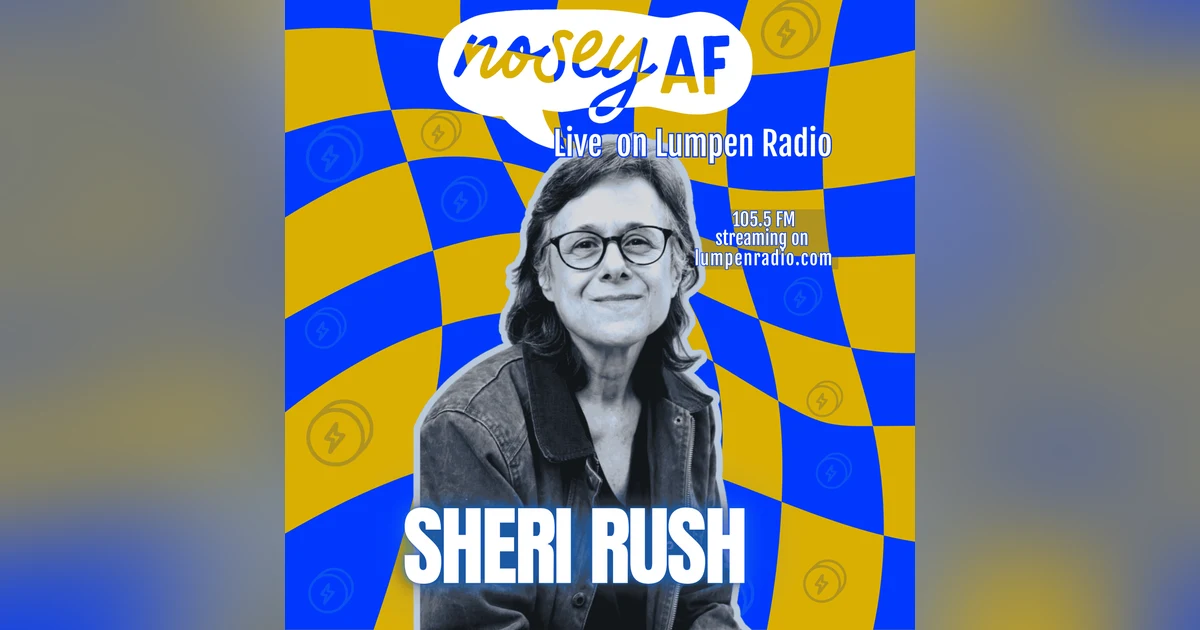
Ep #114: Sheri Rush — a life in art, big paintings, and staying creatively alive (noseyAF Classic)
Summary This one's for every artist who's ever wondered how to keep the fire going — through decades, through doubt, through life just getting in the way. Chicago-based painter Sheri Rush has been making art since childhood, and she brings a rare honesty to this conversation. We get into what it actually looks like to sustain a creative practice long-term, the residencies that changed her, how nature shows up in her work, and what's coming with her enchanted forest exhibition.
Chapters:
- 00:39 - Introduction to Memorial Day Weekend
- 10:33 - Exploring the Artistic Journey
- 19:40 - Transitioning Artistic Perspectives
- 28:06 - The Impact of Art Residencies on Artistic Growth
- 40:15 - The Upcoming Art Show and Its Themes
- 45:34 - Exploring Liminality and Transformation in Art
What We Talk About
- How Sheri has kept a painting practice alive from childhood all the way through a full career
- What artist residencies actually do for you — and why they're more than just a studio vacation
- Her upcoming exhibition centered around enchanted forests (yes, it's as magical as it sounds)
- The art of taking critique without losing your voice
- Working big: the logistics and the feeling of large-scale painting
All about Sheri Rush You're gonna love Sheri — she's a Chicago-based painter and total force of nature who's been deep in her craft her whole life. Her work lives at the intersection of landscape, memory, and big feelings on even bigger canvases.
Sponsor Shoutout 💖 This episode is brought to you by Artist Admin Hour
Connect with Sheri
- Instagram: @sherilrush
- Website: sherirush.com
- https://www.thomasmccormick.com/
More ways to connect:
- Subscribe to the noseyAF Dispatch
- Check out my work: http://missgraham.com
- Follow me on Instagram: @stephaniegraham
- Listen to more episodes: http://noseyaf.com
Support & Feedback noseyAF is listener-supported — thank you for being here. 💛 ⭐ Rate & Review the Show — it gives the show street cred and helps new listeners find it 📣 Share noseyAF with a friend who needs to hear this: https://www.noseyaf.com/follow/
Episode Credits
Produced, Hosted, and Edited by Me, Stephanie Graham (teaching myself audio editing!) Lyrics: Queen Lex Instrumental: Freddie Bam Fam Cover Art: Emma McGoldrick
00:00 - Untitled
00:39 - Introduction to Memorial Day Weekend
10:33 - Exploring the Artistic Journey
19:40 - Transitioning Artistic Perspectives
28:06 - The Impact of Art Residencies on Artistic Growth
40:15 - The Upcoming Art Show and Its Themes
45:34 - Exploring Liminality and Transformation in Art
Gotta get up, get up Tell the whole world you a winner, winner vision of a star with a mission in the cause what you doing, how you doing, what you're doing and who you are Flex yourself and press yourself Check yourself, don't wreck yourself if you know me then you know that I be knowing what's up. Hey, Stephanie Graham is nosy as WLPN LP Chicago 105.5 FM Lumpin radio. Hey, Chicago. Happy Saturday. It's Memorial Day weekend.Oh, my gosh, what a dream. Do you have to work on Monday? God, I hope you don't. I hope you get a chance to rest and relax.Welcome to 2:00pm My name is Stephanie Graham and this is Nosy AF. So today I'm revisiting a conversation that really still sticks with me, and it is my talk with Chicago artist Sherry Rush.And what I love about this conversation is that it's just about. Well, not just.It's not just about painting, which is what, one of Sherry's mediums, but it's about staying committed to your creative life over decades, learning how your process evolves and figuring out how to keep making work through all the different seasons of being an artist and a human.So we talk about residencies, large scale painting, nature archives, critique, and I just think it's really like, what it means to build a life around art. So Sheri is one of those artists who really lives in her practice, and I think you can hear that throughout this whole conversation.So whether you're an artist yourself or you're just somebody trying to stay connected to creativity, I think that there will be a lot in here for you. I really hope you enjoy this conversation. So let's talk to Sheri, shall we? Okay. So you guys, we have my friend Sherry Brush here.She's a fellow artist in Chicago. And how long have we known each other, do you know? A few years.
Sheri RushHas to go back to when you did the center program at Hyde Park Arts center, because I know that's the first place I saw your work. Yeah.
Stephanie GrahamOkay. Yeah. Wow. So it's been a long time.
Sheri RushYeah. I remember laughing hysterically when I saw.
Stephanie GrahamOh, my gosh. Thank you. Yeah.No, so, okay, so for a while, but I feel like as of like maybe like the past two years or so, we've like, started to like, talk even more. Become like, real buds.
Sheri RushI would definitely. And I remember we were both doing a critique at the CAC one time. Oh, you remember that?
Stephanie GrahamYes. Oh, my gosh.
Sheri RushI was sitting there really tensely and all of a Sudden you said something like, you know, I don't know about you guys, but I could use a shot. Oh, my gosh.
Stephanie GrahamThat's so ridiculous. I can't believe I said that.
Sheri RushOh, my gosh.
Stephanie GrahamYou know, those critiques. Critiques get. Critiques get so. Yeah. I don't know why critiques get so intense. It's like we're just sharing our opinion.
Sheri RushLike, I, I. It's. It's kind of. It's our soul, though, right? I mean, it's that product that is the end of this long process. It's really important to us.I mean, our. Our work is really important to us.
Stephanie GrahamYeah, that's true. You know what's interesting?I feel like I think I need to do some type of soul searching, because I feel like when people say, like, work is our soul, I feel like I can separate it somehow. Like, if people critique it in a bad way, I just think, like, I'm not going back and redoing all that work or something like that, you know,.
Sheri RushMore so than, like, that's probably very healthy, you know? I mean, I think too many people get kind of, you know, really taken back and really just kind of stopped, you know, and they.I think they take it to heart maybe sometimes. I mean, that's one thing you learn is, you know, starting in school and everything that you.You take what you can use, and then you leave the rest behind, you know? Yeah, that can be hard to do.
Stephanie GrahamYeah.
Sheri RushSome hurts more than others, you know?
Stephanie GrahamThat is very true. My friend Maya, we collaborated on the hashtag New Global Matriarchy Project.And I remember she said to me, like, when we were about to go to review, she's like, okay, listen. Anything that these people say have anything to do with how you will be moving forward? And I was like, no. And she's like, okay, then.
Sheri RushWow.
Stephanie GrahamAnd so then we just, like, listened to, like, the critique or whatever and, like, took it in and had, like, a conversation. But she's like, you know, these folks, and these are, like, just other artists in the program. She's like, what? They have to say, like, who cares?But it's like, in a way, like, to think it is interesting if they had something, like, I guess, technical to say. But we had, like, this piece that, like, sort of critiqued the Art Institute, and, like, a person got offended, and it's like, all right.Unless you have, like, something to say about, like, the way I photograph this, like, you're just making, like, a personal opinion.
Sheri RushListen, I mean, that's what. That's what Critiques turn into. Sometime I can remember being devastating in grad school because I went to the University of Chicago.So you had the faculty members all there, and then the visiting artist was one from the saic, and they clashed, but I was the one thrown under the bus. But it was about them clashing. And I don't think I was old enough to know that until the director, like, wrote me a letter saying, sorry.
Stephanie GrahamWow. Yeah.That's crazy, because it's like, listen, I'm paying all this money, and you all are, like, taking, like, taking jabs at each other, like, through my art. And that's not right.We're paying for a service, not for you, like, to get upset about something that happened at, like, a party last month or something. What is wrong with people?
Sheri RushA lot of philosophical differences back then. I mean. Cause, you know, you're talking the 80s, so I've been in this world a while, so it was a different game back then.
Stephanie GrahamYeah. Yeah. So you've been able to. How long have you been an artist?
Sheri RushSince I was nine.
Stephanie GrahamOh, wow.
Sheri RushYeah. Yeah. I asked my mom if I could take art lessons, so I've always. Since then, I've taken art lessons in some form.
Stephanie GrahamMm.
Sheri RushAnd I pursued art even in college. Even though I. I wasn't really doing my art in school, I was doing it. I. I. I was lucky. My parents supported me, and.And I. I took private lessons or in a class situation, you know, with a private person. But I wasn't, like, a big art person in. In high school. I was actually. I played the clarinet.I was actually more into the musician side of it, but I wasn't truly gifted as a musician, and I knew that because I had friends that were very, very gifted. But it's. I was in a high school that was very known for its band and competitions.So when I chose the school that I needed to go to in Texas for my bfa, I went there for art, but my parents wouldn't let me. So I decided to get a scholarship.And I knew the best way to do that was not through my art at that time, because I. I didn't have a lot of accolades behind me, you know, but I had it in music. So I actually started college on a music start.
Stephanie GrahamWow. So you actually were good at music.
Sheri RushI wasn't the best. You know, you have to be the top 10%, really pursue that. I think, you know, I.Given my choice of talents, I might have chosen Isabel, but, you know, we don't choose. We receive. Right.
Stephanie GrahamSo. Yeah. It just seems like, you might be a little hard on your.I mean, if it's top 10%, think it's a music scholarship and you got one like, oh, no, no, no.
Sheri RushThat makes it in the world. I mean, I was all. I was all State band. I was, you know, I was, you know, uil. Although all the. God, I can't remember.I can't believe I remember all this. But, yeah, all the competitions and nonsense, you know, I did all that.
Stephanie GrahamYeah.
Sheri RushYeah, I did all right. Yeah. But I wasn't the top.
Stephanie GrahamOkay. Okay. You know, it was funny. I played clarinet also, and I could not read music at all. I could not read music at all.Yeah, I really had a hard time, like, with the hand coordination. Like, I would be in recitals, just, like, just pushing whatever. I really was. I just remember, like, really pushing whatever. Like, I'm surprised.I. I don't know. I don't know if you could hear me, like, just off with everybody else. But, yeah, I. I just. I was not good at.
Sheri RushGot me to the school that I needed to be at to study art, and then I was able to get an art scholarship for my last year in college, so.
Stephanie GrahamOh, very cool. Yeah. Yeah, that's cool. So, yeah. You really have been doing it all your life.
Sheri RushYeah, yeah. And then I. Yeah, I came up here for grad school and did an mfa, so I got a scholarship. Yeah. So it's.
Stephanie GrahamWow, good for you.
Sheri RushI feel like I've been beat a lot.
Stephanie GrahamYou know, it's really something.I went to the Beyonce concert and she was like, as she was thanking everyone, she's like, you know, I've been doing this for 25 years, and it's like, wow, has it been that long? And it's just like, that's like a.And just like, I think similar to you, like, that's like a really long, like, time to be committed to something, like, committed to your craft, you know, and just like, keep going and just getting better and having these, like, different things happen along your career and whatnot. And so I feel like, you know, I feel like that with you because you've seen, you know, so many different things take place over your career.
Sheri RushYou know, it's a great deal.
Stephanie GrahamYeah. So I think that that's cool. So we've been talking, but let's tell the listeners about your work.So I'm going to describe it, and then you tell me if I'm right, because I'm trying to work better on talking about art.
Sheri RushOkay. A lot. Well, some people find painting very difficult to Talk about, you know.
Stephanie GrahamOh, really?
Sheri RushThe other genres? Yeah, I mean, different mediums and everything. And, you know, a.
Stephanie GrahamMore.
Sheri RushMore maybe. Gosh, if I say a more message oriented, I'm going to get killed by all the painters. Not that it's not, but.But, you know, there are people find other stuff easier to talk about than painting.
Stephanie GrahamI've been told that Sherry Rush is a large abstract painter. And I mean, like, big paintings. Not just like Your typical, like 11 by 14, 16 by 20, though, if you're lucky, you can find those sizes.If you are lucky. But that is not her base. And these paintings are bright colors, like neons. Neons, blues, reds. Nothing really dark.And this is her current body of work because she has went to those palettes before, like, where they were, like, darker, rich palettes, but now they are rich and bright. And they are forests, magical forests that you get to explore. They're sort of.I don't know what the word would be for, like, the animation version of cinematic. Not animation, like cartoony, but just, like, they're animated.They are, like, bright, colorful forest experiences that's mixed with, like, spray paint, acrylic paint, and I think that's it.
Sheri RushThat's good.
Stephanie GrahamOkay.
Sheri RushI think he really, really, really got it. Yeah, for sure. Oh, cool. I should write that down.
Stephanie GrahamI really feel like you could walk through your paintings. They're so bright. And I also think of them as, like. Are you familiar with TPing?
Sheri RushYes.
Stephanie GrahamSo, you know, like, in high school, we would always, like, TP each other's houses, me and my friends and some of them, like, with, like, the drips. They, like, look like if we had, like, hot pink toilet paper or, like, blue toilet paper.Like, if we would have, like, dyed the paper and, like, went and done somebody's, like, backyard who, like, they're like, in Barrington or something, you know, like, where they have, like, more like a foresty backyard. I feel like that would have been really fun.
Sheri RushOh, wow.
Stephanie GrahamSo not TP in, like, a juvenile way, but, like, in a visual way, you know?
Sheri RushRight. No, I saw thought in my head when you said that. I was like, oh, yeah, that might work.
Stephanie GrahamYeah, I know, right? We should try it. Like, I wonder how it would go with toilet paper, Crepe paper.It could be fun, but they do definitely feel, like, immersive, for sure.
Sheri RushYour work. Oh, that's good. I mean, that's really what this show is going to be about. This next show is all about that.So I have gone heavy on the side this year just because I knew I Had this show. I haven't had a large scale show in a long time and. A long time. 20, 20. 2020.I think it will was and I don't know they've chosen to, to show the small pandemic works recently and the last two years. So I, I've been really excited by this one because this is really my, this is my love. This is, I was always a large scale painter.I was very influenced by the abstract expressionists and you know, this is what I, I, I, I love doing. I think I also do it better than I paint small paintings. So you know, I've been working on trying to fix that. But yeah, this comes better for me.Life still works better for me.
Stephanie GrahamDo you have large scale works hanging in your home?
Sheri RushI have, yes, actually.
Stephanie GrahamOkay.
Sheri RushYes, I do have. I only allow one of mine in the house. Okay.And it happens to be a 10 foot painting that's a favorite of my partner and but I have all also I have collected a few throughout my life. So I have a seven by seven foot painting.
Stephanie GrahamOh wow.
Sheri RushYeah. And a Thrush Holmes, he's a Canadian artist. It's probably about five by six. Four by six maybe. Yeah, five by six. But so I, I, I'm, I'm drawn to it.Definitely. Even other people's.
Stephanie GrahamYeah, yeah. You know, I always will see like your work and other big works and I always think like, where could I hang this at my house.But it wasn't until though actually.And we could talk about this later but like in Pooch Covet James's house, when I was like, oh, look at these big pieces and like his, you know, like his living space, I feel like it's comparable to mine.So I'm like, oh, I guess you just put it on the wall, you know, and if there's like a chair in front of it, you know, as long as it's not like mashed up against it, you know, you can move it so people can see or like you move out, like you just sort of arrange around it. And then it made me think like, oh yeah, maybe this wall actually could, you know, take a big piece like that. Yeah.
Sheri RushNo. Yeah, you live in close proximity to it. I think it's a different point of view.You know, I noticed that and in fact I noticed that since I have done Puch Cove residency twice now, I a little bit differently there than I do in my studio because my studio I can't get as far back. And I've noticed that there's a real difference because I spend A lot of time when I'm in Pooch Cove looking.Since we live in the spaces, you know, and they're big, I spend a lot of time looking at them from far away. And I think I paint not. I'm sure it's not very differently to. To everyone, but in inside my head, it's very different.
Stephanie GrahamYeah. Yeah. I think I like. I like big, big work. You know, I think it makes sense. My own work. I prefer to like the prints that I have. They're like 16 by 20.And I think it. It makes a better. It's better, you know, and I'm like, that's not even that big.And that's why, you know, I said in the beginning, describing your work, like, I'm like, no, it's not like 16 by 20. People like, oh, my God, that's so big. It's like, no, no, no. That is like a 5, 4 by 6 compared to your. Your size works. But I think it.Yeah, big art, you know, if it calls for it, I think it. It really helps. And it's like.It's just, you know, I feel like when you have the smaller work, it's like, oh, this is for, you know, for everybody else. Like, you know, those starting out in your collection or something.
Sheri RushRight. Well, I find that a lot of people are uncomfortable living that close to having that big of an image.It doesn't seem to rest in the background as easily. There seems to be more kind of noise. And I remember one of my first experiences, a potential sell of one of those large pieces.In graduate school, we had our master thesis show, but then we had a group thesis show together at the Smart Museum. And this woman, I think she had a condo. I think it. Yeah, I think she was down in Hyde park, you know, a really nice, ritzy condo. And she called me.She wanted one of the. I wasn't quite as bright as I am now. Not.I mean, fluorescents weren't a thing and, you know, but there were some reds and some strong colors in it, and it was big. I used to paint Tim tree paintings back then, so she wanted to try it. And I took it down and, you know, I put it up on the wall and.And it was in her dining room. And she had this new white marble table. And she felt like the. The painting dwarfed the white marble table, so. And she decided not to buy it.
Stephanie GrahamOh, man.
Sheri RushYou know, that, that, that over the sofa view, I think people are very used to. And if you like large work, I think you commit a little bit More to living closer with it.
Stephanie GrahamYeah, yeah, yeah. Because I guess you would, like, as you eat, you, like, turn and, you know, like, becomes your whole world. But I love that, though, you know?I know, right?
Sheri RushYeah. I was like, okay.
Stephanie GrahamYeah.I think it would definitely have brought, like, a different dining experience, especially if you like to entertain a lot, because everybody always just, like, eats at, you know, a table with, like, exactly the wall, you know, so it's like, come on. Yeah.
Sheri RushIt was a learning experience. I'm like, okay, lesson learned.
Stephanie GrahamYeah. So we recently went to the Pooch Cove residency, and one of the things I wondered if you could talk about is actually how you would say you.Your paintings are. This is me trying to talk again about art. Like, you, like, you journal and then you're. Do you consider your paintings like poems? Are they like a.Responses to writings you do? Like, can you share, like, a little bit about your process?
Sheri RushYeah. You know, I did this when I was young. My family. I'm from Texas, and my family had a farm in central Texas.It was my grandparents, actually, and we were down there a lot, and I would just go out walking the acreage. And it's. Well, it actually started in grad school. It's not a journal as much as it's a.It's a photography journal, I guess you would say I document and I document. It's like, you know, almost ocd. It's a really heightened documentation. Not think of it in terms of documenting.I'm always looking for something, and I would always photograph down at the farm twice a year and. Cause I would. When I was living in Chicago, I'd be down there twice a year. And it was interesting to me.Look like after years had gone by, looking back and seeing. God, what was my focus that year? Because I could always tell the focus, you know, whether it was shadows or light or forms, the interaction of forms.It was always dramatic, though, I have to say that I. I always feel like I've set up little dramas all the time, so. And I worked from photos from the farm.And it never struck me until later that it was really about my processing the world and processing my life and about identity and my family identity and identity to that land. I worked from those from, like, 25 years.
Stephanie GrahamWow.
Sheri RushYeah. I had left the art world. I don't know, Sometime in the 90s, I kept painting, but my painting became quite stagnant, and it was.That's why I ended up in the center program to transition my work. One of the visiting artists, the first critique I had he said, get rid of your photos. So I shredded them.Then I made works with shredded photographs and charcoal and acrylic and spray. That's when I. I first started using spray. So they were all black and white because my photo.My photo journals from that time were shot in film and they were all black and white because I would do the print printing part myself in a wet darkroom. Wow. I know. That was well into the 2000s. Isn't that crazy?
Stephanie GrahamYeah. That you were photographing. You would photograph these things, print them, and then print them in the dark room and then paint from them.
Sheri RushYes.
Stephanie GrahamThat's too much.
Sheri RushIt's a lot.
Stephanie GrahamIt's a lot.
Sheri RushAnd I was lucky because where I lived, it had this extra room with this sink in it, like a. Like a, you know, slop sink or something. And, you know, it was. It was. My cats had it as. As their. Their little room.But then I would suddenly do like two weeks of. Of power printing. Yeah. You know, I had these special curtains and so.But then, yeah, computers kind of did away with that, you know, because it became too easy. Because as you said, it was a lot. I was spending a lot of time, a lot of the labor intensive, you know, time doing, preparing my source materials.But, you know, I have to say, looking back, that that whole process, that those source materials is part of my process. I think I'm just of accepting that now. You know, before, I'd say, oh, well, I do for photographs.But it was just, you know, this year when I was writing a statement that, you know, I was with a group of artists, and they asked me to describe my process, and they pointed out to me that this whole documentation and then archiving these things, this constant, you know, going through them and through them and finding what's this and what's that and that. That's a really huge part of my process. Oh, I'm just now kind of grappling with that.
Stephanie GrahamHey, I just want to pop in here real quick to let you know that I'm an artist. I make work about social class, subcultures, race and gender.These topics are complex, they're interesting, and they come up in my life all the time because I love to laugh. A lot of my work has humorous tones. I genuinely enjoy making and creating all sorts of things.My main medium is photography and film, but I also enjoy organizing art events. I would love to keep you in the loop of everything that's going on with my art exhibition.So please consider signing up for the Studio Graham newsletter@missgraham.com Sign up. Okay. Back to the top. Yeah. I mean, it's a lot of steps, but I'm also sort of like, what? I can't believe that guy said to shred him. Get rid of them.
Sheri RushHe said get rid of them.
Stephanie GrahamYeah.
Sheri RushBecause I was stuck. I was stuck and I needed to move on, so I move on.I moved on by working through imagery that I needed to work through and, and shredding those photos. It. Now I kept my negatives.
Stephanie GrahamOkay. Oh, okay, okay, okay.
Sheri RushThat's.
Stephanie GrahamYeah. Some. Cause I was like, oh, that work? Oh my God. Right?
Sheri RushNo, I. I know one of my best buddies, I've known him since grad school. He. He would like. When I said it, he looked at me and then he's like, oh, you have the negatives? I'm like, yeah, yeah.
Stephanie GrahamI'm like, oh, my gosh. That's what I was thinking. Like, oh my gosh. Because I didn't know if. Yeah. If it's like scanned.
Sheri RushYeah, they've been scanned now, which was. Yeah. So.
Stephanie GrahamOh, wow, you're so meticulous.
Sheri RushWell, I started printing. It was back then. It was like 2012 or 2013. I started. I. I learned that you could print with computer.
Stephanie GrahamYes, yes. No, that's. That's good. I have. It's good that you have everything scanned. I'm like, looking.I have some, like, boxes of negatives where I'm like, oh, I should maybe scan some of that stuff and see what's in there. Yeah. And I probably do. Like, I also have, like, DVDs that I probably should look and see.Like, this computer I'm recording our conversation on has a DVD player. I should see if it works and then just take a look and see what's in there and see what comes of it.
Sheri RushIt's an extraordinary process. It's crazy.
Stephanie GrahamYeah.
Sheri RushYou know, I had to. In 2019, I moved from the place that was my home and my studio for 27 years. Oh, wow. And I moved.But then it took me, I don't know, a good year to start getting all my art out of there. And my art, that was. It went all the way back to graduate school. And that's when I.And that's when I learned, because I couldn't remember that I used to paint 10 foot paintings back then. So I've always been that. That painter. Yeah, that was a real process, cleaning out all that stuff. I let 3/4 of it go, you know.
Stephanie GrahamWow. Yeah. Archiving, right? That's like a whole other piece of glance.
Sheri RushYeah, yeah, yeah.
Stephanie GrahamYeah, yeah.
Sheri RushYou should definitely always look back. It's always informative.
Stephanie GrahamYeah, that's a good. That's a good idea. That's a good idea.
Sheri RushDefinitely.
Stephanie GrahamYeah. Yeah, it was good. So you and I, we. How did you. So you and I, you know, we really got to know each other and spend time together at Pooch Cove.And you invited me. Thank you again. As a. To come with you to Canada.And, you know, it came at a really good time because I wanted to, you know, as I was telling you, like, do more residencies. And then here comes this residency, you know, and it's like, oh, yeah. About an artist career. Have residencies.
Sheri RushDefinitely.
Stephanie GrahamYeah. How did you get to do residencies with Pooch Cove and Res? Yeah, Pooch Cove.And then, like, if you talk about, like, residencies, like, in your work, if it's even, like a thing in your.
Sheri RushProcess, it's, you know, it wasn't. Because back, you know, when I was starting out, it wasn't a thing. Residency's a thing. I mean, you know, Ragsdale has always been there.Yaddo has always been there. But it's not like, you know, now artists can go from residency to residency, and they do that a lot, but it wasn't really a thing.But it's when I came back into the art World in 2014 that people were all talking about residencies. So, you know, once I started getting myself together and getting my work together. God, what. What year was. Must have been.I. I think I started applying. I applied for a few. I finally decided to do it, and I applied for a few here in the States.And during that time I was applying, I received an email, and it was from the Puch Cove foundation offering me a residency in Pooch Cove. And it was James, James Baird. He's the CEO founder. He said, would you be interested in something like that? And I said, oh, you know.Oh, yeah, sure, sure. You know, let me take. You know, send me the app. Let me take a look. And he's like, no, there's no application. It's just invitation.And I said, oh, yeah, yeah. But, you know, in my mind, I had just applied to, I don't know, I think two residences or something. And I really wanted this one.This one I really wanted. And I had no idea, though, since it was my first time that these things are competitive here in the States.
Stephanie GrahamHey, guys. Sorry to quickly interrupt. Well, actually, I'm not sorry. It's something I have to do. We had to take a quick break. Break.And we will be right back after this. Real Talk, how many opportunities have you bookmarked and never applied to? I know I have. And you know what? It happens.The admin part of the work we're doing is understandably boring and tedious, but when you neglect it, it can cost you real opportunities. That's why I created Artist Admin Hour, because behind every exhibition is a clear budget submitted. That makes sense. Admin is the flex.It's the work that makes the work work. But you don't have to do it alone. Every Wednesday, 7 to 9pm, Central Artists show up on Zoom to tackle what we've been avoiding.Residency applications, grant apps, budgets, invoices, whatever's on your list. Two hours of body doubling with structure, no shame, and real community, 25 to 45amonth gets you in.But if that's not doable, email me, because getting this done is very important. We will make it work. Stop letting admins sabotage your practice. Join us today at artist admin hour.com. Wlpn LP Chicago 105.5 FM Lumpin radio.Okay, my bad for interrupting the conversation so abruptly like that, but let's get back to our talk with Sherry Rush.
Sheri RushLike, just hugely comparative. Yeah, there's not that many spots for all those artists.And of course, you know, so time when I kind of blew time off and time went on and I got turned down for the residencies, and then, you know, I was lamenting to Deirdre, you know, in the studio, and Deirdre Fox is my studio mate and, you know, complaining. And I think I was thinking about jumping on a train or something and going out west and doing some photograph. I don't know. I was.I was, you know, of all kinds of schemes. And then all of a sudden, James wrote me again because I hadn't really thought about it. And I'm like, yeah, yeah, let's do this.You know, And I. I looked it up and, you know, you're kind of hesitant, I mean, because you're just opening your email and. But anyway, long story short, I went and it was amazing. And I finally one day asked him how did he find my work.And there is a platform called found artwork. Okay. I remember seeing it on Instagram when it started. It originally started for artists. And this was odd. This.This is kind of a throwback to the old days. It started for artists with MFAs.
Stephanie GrahamOh, interesting.
Sheri RushNothing's ever come of it for me, except James found me there. You know, then. Now it's. Now it's segued into, you know, all artists and it gives out a big grant once a year to an artist on the platform.But, yeah, he found me on that. He used to. Really. But what's funny is he hadn't. The new. The facility wasn't done. Okay. He was just finishing the units that are in the main building.You know, he was just finishing them up. And like, when Elaine was there, she was there alone, I think.
Stephanie GrahamYeah, she was. Yeah, she was.
Sheri RushI was there. It was me and another artist from the US and then one from Ireland and his daughter from Spain. So there were four of us.
Stephanie GrahamWow.
Sheri RushBut, yeah, all the units weren't done yet. And the loss weren't even. That was a dream. Yeah.
Stephanie GrahamYeah.
Sheri RushSo it was very, very different, but it was. It was very isolating. That was right before the pandemic. So I didn't know, you know, how to live without my coffee shop.
Stephanie GrahamYeah, that is hard. Yeah.
Sheri RushYeah.
Stephanie GrahamA cop. I don't know if you've ever heard me complain, but the coffee shops around here keep hours that are like, seriously rude. They're like 10 to three.It's like. Are you kidding?
Sheri Rush10 To three?
Stephanie GrahamYes. There's maybe one that is like super early because there's. It's by a metro, but it's like this like 7. 7 To 12, like. And so if I'm.If I'm out of coffee, I have to resort to either Dunkin Donuts or Starbucks, which I'm like, not that happy about, you know, I rather.If I'm gonna spend the money, go to a coffee shop, but then it's like, it's not close enough, you know, it's like, yeah, I guess if I want to drive, but like, that's not the point, you know, like, the point is to have something local and accessible and. Yeah, I know. We were in Puchco. I kept trying to figure out how.
Sheri RushTo have a coffee shop there, but. Well, I think as more artists move there, I think that your plan might work.
Stephanie GrahamYeah, I'll have to see. It's pretty up there. Do you like working isolated like that?
Sheri RushYes, I do. I get a lot done. My best painting was done there. Yeah, for sure. It's a real gift to be able to paint every day.But I have to say, this time was so much better. My mind was much healthier. I was in a much healthier place because of all of you guys were there.So I was in a happier place and I didn't get like, crazy, you know?
Stephanie GrahamYeah. Yeah. It is nice too.It was nice to know that while I was working, I Knew that y' all were working, too, you know, and there's not, like, friends that might be, like, frustrated because you're.They're going to see, like, a movie that you don't really want to see, but you might push yourself to go, to be social or, you know, it's like, okay, yeah, I do need to see my friend. I haven't seen him in a while, but it's just like, you know what? Yeah, Sherry's over there, but she's also working.And, yeah, maybe I could stop by, but have I done what I'm doing?Like, we are here to work, and then we had different times that we created organically for, like, socializing, and I thought that that was really nice. It made me want to be able to offer that to other artists somehow, you know?
Sheri RushYeah.
Stephanie GrahamI was like, oh, my gosh, what a treat this is, you know?
Sheri RushI know, right? Yeah. Yeah, it is.
Stephanie GrahamYeah.
Sheri RushYou think of that way differently. It's. It's just. It's just such a thing to. To be able to get up every day in pain is just.And all you have to decide is if you're going to the grocery store or not, you know, or.
Stephanie GrahamYeah, yeah. And then I realized I'm like, oh, my gosh. I way overpacked because I was just like, oh, just throw these jeans.Like, I rotate out, like, two jeans in the washing machine. Yeah, it's like, yeah, it was. It was a really good opportunity.
Sheri RushThat's. I'm glad you really enjoyed it. I'm glad you.
Stephanie GrahamYeah, yeah, it was. It was a lot. It was a lot of fun. And now you have you. But you. You're always working, though, which is really cool. Do you, like. Two questions. I was.I want to obviously talk about your show you have coming up, but, like, do you have any hobbies or chill time? Because I feel like you always have stuff going on.
Sheri RushYeah, I do. No, I've worked.
Stephanie GrahamTell the truth now. Tell the truth.
Sheri RushThe closest thing I get to a hobby are my dogs, I guess.
Stephanie GrahamYeah.
Sheri RushBut honestly, I've always had to work a day job.I've never been able to support myself on my work, and there were times that my day job was all encompassing and it was a fight to get into the studio. So I felt like that's what I did all my life, and if I had any spare time, it was in the studio.So now my job is a little less demanding, and I cut out a huge chunk of it because I used to do a lot of rehab work, and I don't do that anymore. Yeah. Relaxation. That's hard for me.
Stephanie GrahamYeah. Yeah. I'm trying to, like, make hobbies more like. Like, I think it's smart. You think it's smart.
Sheri RushI have a hobby, and I. I've been trained. I've been since my. I have young dogs again. I spent a lot of time with my dogs. I started training them, and that's the only other.Well, also, I started taking ceramics because I wanted to make it this object, and so I got it. I just kind of jumped in to ceramics.I don't know why I think of that as a hobby, but, I mean, I think that it could be an important part of my practice someday. But, yeah, I get. I guess. Yeah. I'm either making. I'm making art, usually trying to.
Stephanie GrahamYeah, yeah, yeah. No, it's.It's hard because even, like, with my girls, when I was doing it, when I first started to learn, I was like, oh, I can totally make this a business. But I was like, you know what? Why even rush. Like, people were having events like, hey, are your grills ready?Are you good enough yet to, like, come and sell these and take clients? And I'm just like. It was giving me anxiety, so I'm like, you know what?
Sheri RushYes.
Stephanie GrahamNo, I'm just gonna. You know how some people might knit? I'll just play with my grills stuff, you know, and just, like, go from there and play with that.And if, like, over time, if it starts to become something where, like, I want to make it a business, then so be it. But outside of that, I'm not, like, putting a rush on it or anything, you know?
Sheri RushYeah, I think that's a lot of pressure. I always. I always felt grateful to have, you know, a roof over my head and a job because it never pressured me to paint any particular way or size.
Stephanie GrahamYeah.
Sheri RushYou know, if I wanted to paint large, I could paint large, because, let's face it, they don't sell.
Stephanie GrahamYeah.
Sheri RushOh, my gosh.
Stephanie GrahamBut you do have a show coming up.
Sheri RushI do have a show coming up,.
Stephanie GrahamSo something must be. Listen, we have a show coming up where we will get to see your work, and maybe, hopefully, some of these beautiful pieces will move.So tell us about it.
Sheri RushYou never know.Well, the Chase Gallery, there's an art center, Epiphany center for the Arts, and it's a fairly new art space in Chicago, but it opened in 2020, which was, you know, a pandemic. So it's an incredible space. You know, it has, like, six to eight galleries, and it has all these music, you know, there's constant musical.It's a musical venue and a fine arts visual art venue. And I think it's incredible, I think it's incredible to bring your work, will have an audience that's not always you.You don't get that crossover audience all the time, you know, because people come to see the music, people come to have a drink. I mean, it's a very unique space in that. It's a, it's a renovated church.It's on South Ashland and it has an interesting history because the Black Panthers used to meet at that church.It's just if someone was going to save a church and make it into a really cool venue, this is it, you know, And I like the whole, like different things going on there. But this gallery is their largest gallery. It's about 2,500 square feet. And from the moment I saw it, I envisioned a large scale show there.And Aaron Baker was the director at that time. And you know, I thought, I was thinking my work was dealing with landscape imagery, but from a lot of different views.Then the pandemic kind of changed everything because I used to kind of dwell on how people do not the layers of everything between them and nature because they're sitting there looking through their camera, you know, often through a window. And so it was about kind of that kind of thing, the layers that we put. You know, we're looking through computers, we're looking through everything.And then the pandemic happened and we, we could only experience things looking through windows and the computer. So it was hitting kind of too close, you know.
Stephanie GrahamYeah.
Sheri RushI switched to a different view in different ways. Anyway, I decided that this show should be a large scale show and that I had all this source material from my first residency in Pooch Cove.
Stephanie GrahamOkay.
Sheri RushIt was from a hiking point of view. You know, I had, I had, you know, 2,500 photos.And I was looking at, getting really excited, you know, and thinking, oh my God, look at that, look at that. So I, I thought, God, what if I really went for it?Because, you know, I, I, I try to crush my landscape representational needs a lot, you know, just because I think, well, we've already done that. But I thought, well, just, just, just let it go.So I decided it would be fun to create a large scale immersive show around an enchanted forest kind of theme. And I, I, I had met this Canadian artist because he did the residency at Fuchs Cove.
Stephanie GrahamOkay.
Sheri RushAnd that's where he first saw my work. And he used My drop closet. And he reached out to me, and we've been keeping in touch.And he's an abstract painter with a very fluorescent palette who also has a great love of the abstract expressionists. And he's younger than me, so he has a lot of other, like, you know, anime and. Oh, wow. Madonna leopard patterns.All that kind of stuff feeds into his work. But we have a lot of the same mark making and abstracting language, and he's very. He kind of brings the enchantment up, up, up 10 notches.
Stephanie GrahamThat's really cool. This sounds awesome.
Sheri RushHis name is Jared Betts. Here. Here's. Here's two of our works together.
Stephanie GrahamOoh. Pretty, right? Wow.
Sheri RushYeah, it'll be good.
Stephanie GrahamYeah, that is gonna be good. When does it open?
Sheri RushSeptember 15th.
Stephanie GrahamOkay.
Sheri RushAt 6 to 9. So, yeah. And it'll be open until November 4th, so there's a lot of time to go see. And you can go see some music and have some drinks.Yeah, it's a cool venue.
Stephanie GrahamYeah, I've. I've been there before to see a can. Like, they have, like, a candlelight series with, like, a cover band. I think they were doing Sam Cooke.
Sheri RushNo kidding.
Stephanie GrahamYeah. Yeah.
Sheri RushOkay.
Stephanie GrahamYeah, me and my father went one time, so. Yeah, that was cool.
Sheri RushOh, very cool.
Stephanie GrahamYeah, yeah, yeah. They always have stuff going on, so. Yeah, I'm excited about this because you're right. It's always, like. It's always bustling over there, so.
Sheri RushIt is. And it's. I think it's a. I. I think it's going to be a very popular venue, you know, for everything, eventually. So.
Stephanie GrahamYeah, that's great. We need more spaces.
Sheri RushYes, exactly.
Stephanie GrahamYeah.
Sheri RushCool.
Stephanie GrahamWell, hey, wait. What's the name of the show?
Sheri RushDid you say Situations of Liminality and Transformation? And someone. Someone asked me. They're like, all right, what's with the title? You know.
Stephanie GrahamYeah, you're. Yeah. Your titles are always off the chain. Your titles are always off the chain.
Sheri RushWell, I'm really interested in traditional symbolism, different types of symbolism. And there was a. There was a time in my painting career that I was very into alchemy and the colors of Ascension and then the colors of descension.I would only use those colors. But anyway, so I was looking at the symbolism, traditional symbolism of the Enchanted Forest, and it struck me because, one.I mean, basically the definition was containing situations of liminality and transformation because the intended forest, or even the forest, is a threshold symbol. And it's symbolic, you know, passing from one state to another.I mean, there's a ton of symbolism surrounding forests and enchanted forests, you know, and it can be good or bad, actually, but.
Stephanie GrahamAnd I.
Sheri RushAnd I just love that because I've always really enjoyed the word liminality. I'm a big believer in transformation, so.
Stephanie GrahamYeah, I mean, you've gone through different transformations of your career amongst the. Through the time, so I get that.
Sheri RushDefinitely. Yeah. Big, big believer in that. So I. It. So it's literally the. A definition and, like, a traditional symbolism.
Stephanie GrahamOkay.
Sheri RushA big definition. But, yeah, I was kind of stunned someone asked me about the title. I was. I was like, oh, never knows.
Stephanie GrahamYeah, no, they always sound so, like, pretty and long with big, big, juicy.
Sheri RushWords,.
Stephanie GrahamWhich I love.
Sheri RushI think I've named a couple of paintings something Liminality. So, yeah, you know, I don't know.
Stephanie GrahamI don't know.
Sheri RushYeah. Strikes my fancy. Yeah.
Stephanie GrahamNo, I get it. I get it. When you get something you're into, like, you go with it, you know?
Sheri RushYeah.
Stephanie GrahamWell, Sherry, I'm so glad that we talked. Is there anything else that you want to bring up before we call our conversation complete?
Sheri RushI. No, I just think thank you. Thank you for having me, and thank you for talking. It was a lot of fun, actually. I'm not. I'm not. I'm kind of shy, so it's.It was. It was good. You're very easy to talk to.
Stephanie GrahamOh, that's so nice. I am so thankful I was able to share this conversation with you today.Conversations like this one I had with Sheri remind me of why I love being here at Lumpin. I love radio. Shout out to Bonnie Deschon. I love storytelling. You know, I just love. Yeah, I love storytelling in the first place.Like just being able to have a chance to slow down, listen to somebody else, share their story, and connect through art, connect through memory, and connect through lived experience.So thank you, Sheri, and, you know, for more information about Sheri's work, please visit sherbrush.com and if you're here in Chicago, you know, Sheri currently has work on view at McCormick Gallery over in West Town, and I believe the exhibition may have been extended because it's still hanging. So if you're looking for something inspiring to do this memorial holiday weekend, that is an option to you if you want.If you want, you can learn more about that at her gallery@thomasmccormick.com. I'm so ready for this weekend.You know, as I've been sitting with this conversation preparing it for you, I keep thinking about the importance of leaving something behind and not necessarily like in a grand way, but through small things too, you know, through creativity, through care, through being a good neighbor, through just ways that we could show up for one another over time.And so I think artists like Sheri remind us that our lives matter, our stories matter, and things we create can become a kind of record of who we were, what we cared about during our time here.And let's see, like, that idea, you know, it sits with me and even more lately because I've also been in this season of like, documenting in my own work and my own process. And I've been out here photographing these prom send offs.You know, all the dressing rooms, living rooms, front yards, hotel lobbies, all these in between spaces where so much care, stress, joy, flash, intention, it's all happening at the same time. And I gotta tell you, I love it. I love pizzazz, razzle dazzle. And what I've really been drawn to, like, is everything around prom.Not just like the event itself, but like the ecosystem that makes it possible.The dressmakers, the tailors, the makeup artists, shout out to the parents, coordinating all this stuff, families pooling resources, event planners turning full homes into full time celebrations. It's like all a part of this larger ritual of coming of age. And it's interesting because this time of year brings also graduation season.So, you know, super duper, duper congratulations to all of the graduates, grade school graduates, high school graduates, college trade school, master's degrees, PhDs. Oh, my gosh, do you have a PhD? Not me, I do not.But, you know, all these rites of passage that are just moments where community gathers to say, we see you, we're proud of you, we're sending you forward with love. I would love to know if you all went to prom and like, what it was like.If you find me on Instagram, I would love to hear those stories because just like, working on this project has been making me think a lot about just how we document transition.And obviously there are all the photographers out there, all the filmmakers out there documenting all of these kids on their, you know, send offs to prom. But I just like to remember, like, who we were right before everything changed. And this is a change, right? Prom is a change.And then how much invisible and how much invisible work goes into creating these moments that people only see for just a few hours and then the kid is gone. So I don't know, I think that's what I've been learning the most. And that's like behind every big moment, there are dozens of people holding it up.And I Just love that. And being able to be out there witnessing it and being up close to it. I just love that.So with this being Memorial Day weekend, I just also wanna take a moment to acknowledge what this holiday represents. You know, we have our cookouts, we got the sales, long weekends. I came into the conversation super excited about a long. About a long weekend.But Memorial Day is ultimately about remembrance and then honoring the people whose lives that were lost during military service.And especially with this world being so crazy right now, I'm just reflect thinking on sacrifice, thinking about the generations of people who came before us and helped us shape the world we lived in today. And I'm also thinking about the world that we lived in before, you know, who. Oh, my goodness.I've just been, like, personally thinking about how we quickly.The world changes, you know, politically, socially, emotionally, and just how important it is to hold our humanity through all of it, to stay connected to each other, stay connected to ourselves, to remember that care, reflection, and community, that it all still matters. And I think that's part of why art and community, being a good neighbor matters too.It gives us all space to pause, to reflect, feel something, and helps us to, like, process a moment that we're living through. Sometimes it helps us imagine something better, which is, like, super important.Let me talk about myself right now, you know, so this weekend, I really hope that you get a chance to slow down a little bit, spend some time with people you love, get some rest. If you can. Shout out to all my cashiers that are ringing folks up as they're getting ready for all this stuff, man. I used to work at Toys R Us.Do y' all remember Toys R Us? And it would just be so crazy. We would have these holiday sales, and I would just be in the aisle leaning, resting, leaning on bikes. Um, yeah.So, you know, I just appreciate how precious life really is and, you know, just taking a moment to think about that kind of legacy that I want to leave behind.Maybe something that you think about as well, and whether that's, like, through art, family, friendship, community, or just being a good person to the people around you. So thank you so much for listening and spending time with me today. I appreciate you all deeply.I appreciate Stephanie and Charlie and the rest of the show here at Lumpin. I feel so honored to be a part of the show here, of the family here. 10 Years. You know, Lumpin has celebrated 10 years. Isn't that wild?You know, Sheri's been artist 25 years, Beyonce over 25 years. You know, everybody, all these long commitments. It's impressive. So, anyhow, I hope you guys have a wonderful, wonderful weekend.A wonderful, wonderful day. It is almost three and. Yeah. Have a wonderful, wonderful afternoon. Peace. All up in your business? All up in your business? All up in your business?All up in your business? Your ball up in your? In your ball? Up in your business? Oh, she's so nosy? Oh, she's so nosy? Oh, she's so nosy? Nosy sa.

