


Outcry Project: How Collective Scream Sessions Create Radical Empathy and Healing with Whitney Bradshaw
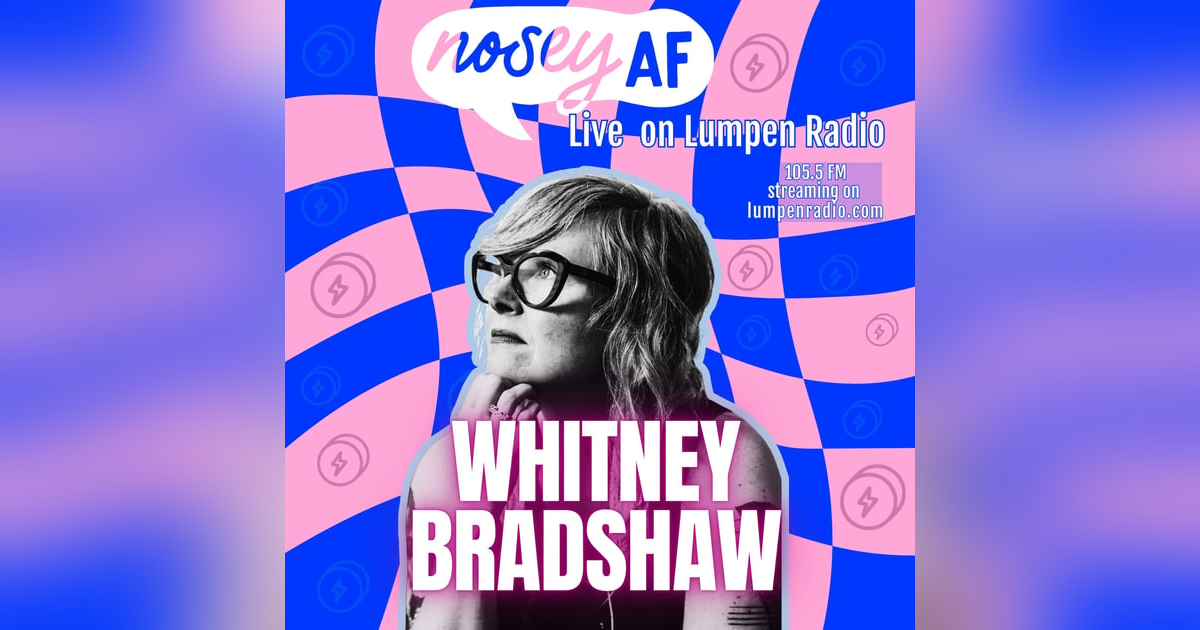


Ep #97: Outcry Project: How Collective Scream Sessions Create Radical Empathy and Healing with Whitney Bradshaw
Thank you for listening to noseyAF! So happy to have your ears!
This conversation was recorded live at Lumpen Radio on Saturday, December 13, 2025
Summary of the episode
What does it look like to be allowed together? In this powerful episode, artist and activist Whitney Bradshaw shares the story behind Outcry—her groundbreaking social practice project that brings women, non-binary, and genderqueer people together for collective scream sessions centered on healing, resistance, and radical empathy.
Born from the intersection of the MeToo movement and the 2016 election, Outcry creates intentionally intersectional spaces where participants practice speaking up and out for themselves, release trauma held in their bodies, and build unexpected community with strangers. Over seven years, Whitney has facilitated nearly 80 sessions in 14 states, photographing more than 530 participants in moments of raw emotional power.
We get the skinny on what actually happens during these two-hour sessions, the science behind why screaming makes us 7% stronger, and how radical empathy can transform both personal healing and collective action. Plus, we talk about the new documentary film Outcry: Alchemists of Rage, somatic therapy, scream boxes, and why our culture desperately needs more spaces for collective grieving.
Key Takeaways:
- The Outcry project serves as a transformative platform for collective healing and empowerment, particularly for marginalized communities
- Screaming is not merely an act of expression; it serves as a therapeutic mechanism that fosters resilience, emotional release, and literally makes you 7% stronger
- Whitney Bradshaw's work emphasizes the importance of radical empathy, encouraging participants to engage deeply with diverse experiences across intersectional identities
- The sessions facilitate a unique environment where individuals can practice voicing their truths in front of strangers, contributing to personal and communal growth and often forming lasting friendships and activist networks
Resources & Links:
- The Body Keeps the Score by Bessel van der Kolk
- 21C Museum Hotel Louisville (current exhibition through end of December 2025)
Chapters
- 00:09 - Introduction to Motivation and Self-Reflection
- 01:38 - Introducing Outcry: A Collective Healing Experience
- 17:14 - Voices Unleashed: The Power of Sharing Stories
- 22:50 - The Importance of Expressing Anger
- 27:11 - Introduction to Radical Empathy
- 41:41 - The Evolution of Outcry
- 51:10 - The Evolution of Outcry: A Journey of Healing and Art
- 55:57 - Exploring Artistic Identity and New Projects
All about Whitney
You're gonna love Whitney she's a powerhouse artist, activist, and the kind of person who invites neighbors over to scream in her living room (and bakes banana bread for the occasion).
Whitney Bradshaw is an artist, activist, educator, curator, former social worker, and documentary film producer whose practice is dedicated to healing and empowerment while boldly confronting the social systems that marginalize and oppress. She is the creator of OUTCRY, an ongoing social practice project that has been exhibited widely across the United States, with solo shows at Atlanta Contemporary, the Berkeley Art Museum and Pacific Film Archive, the DePaul Art Museum, Villanova University Art Gallery, Moreau Galleries at St. Mary's College, the 21c Museum Hotel Louisville, and Wave Pool Contemporary Art Fulfillment Center.
Her photographs are held in prominent collections including the Museum of Contemporary Photography, the DePaul Art Museum, Northwestern University Pritzker School of Law, the Hall Art and Technology Foundation, and the Sara M. and Michelle Vance Waddell Collection and have been featured in Ms. Magazine, The New York Times, The Chicago Tribune, NewCity Magazine, and Vogue.
Both Whitney and OUTCRY are the subject of a short documentary film titled OUTCRY: Alchemists of Rage directed by Clare Major and produced by Frankly Speaking Films. The film premiered at the Frameline Film Festival in San Francisco in June 2024 and was shortlisted for the International Documentary Association's Best Short Film Award of 2024.
In Fall 2023, Whitney was named one of NewCity Magazine's "50 Chicago Artists' Artists." She currently serves as curator at the Lubeznik Center for the Arts in Michigan City, Indiana, following earlier roles as chair of the visual arts conservatory at the Chicago High School for the Arts, curator of the esteemed LaSalle Bank Photography Collection, and adjunct professor of photography at Columbia College Chicago. Before her curatorial and educational career, she worked as a social worker supporting survivors of sexual abuse and assault, families of children with disabilities, and adults with disabilities.
Whitney holds an MFA in Photography from Columbia College Chicago and a BA in Sociology and Women's Studies from Eastern Illinois University, where she helped establish the interdisciplinary Women's Studies program in 1988 and became its first graduate in 1991.
Recent Press on Whitney:
- Ms. Magazine: "Screaming for Change"
- NewCity: "Feminine Gaze Feminine Rage OUTCRY" by Zara Yost (August 8, 2024)
- NewCity's Top 50 Chicago Artists' Artists
- Ms. Magazine: "Whitney Bradshaw's OUTCRY"
Sponsor Shoutout 💖
This episode is brought to you by Artist Admin Hour
Every Wednesday, 7 to 9pm Central, artists show up on Zoom to tackle what we've been avoiding: residency applications, grant apps, budgets, invoices, whatever's on your list. Two hours of body doubling with structure, no shame, and real community. $25 to $45 a month gets you in. But if that's not doable, email me—getting this done is very important, and we will make it work.
Stop letting admin sabotage your practice. Join us today at Artist Admin Hour.
Connect with Whitney
- Website: WhitneyBradshaw.com
- Instagram: @thewhitneybradshaw
- Film Website: OUTCRYfilm.com
- Whitney's Linktree : For upcoming screenings, exhibitions, and sessions
More ways to connect:
- Email: stephanie@missgraham.com
- Check out my work
- Follow me on Instagram: @stephaniegraham
- Listen to more episodes
Support & Feedback
Episode Credits
Produced, Hosted, and Edited by Me, Stephanie (teaching myself audio editing!)
Lyrics: Queen Lex
Instrumental: Freddie Bam Fam
Photo of Whitney by Jamie Kelter Davis for Seriously Badass Women
Gotta get up, get up to the whole world you will win a winner Vision of a star with a mission in the cause what you doing, how you doing? What you're doing and who you are?Flex yourself and press yourself Check yourself, don't wreck yourself if you know me then you know that I be knowing what's up. Hey, Stephanie. Graham is noseyAF as WLPN LP Chicago 105.5 FM Lumpin radio. Hey, Chicago, it's 2 o'. Clock. It is so cold outside.I cannot believe it, but it is warm in the studio because I am joined today by Whitney Bradshaw. I am so excited.Whitney is an artist, a curator, formal social worker, and the creator of Outcry, which is an ongoing social practice project that brings women, non binary and genderqueer people together for collective scream sessions centered on healing, resistance and radical empathy through photography and community gathering. Owlcry asks, what does it look like to be allowed together? Whitney, I'm so excited that you're here.
Whitney BradshawI'm so excited to be here. I'm such a fan girl of yours. Oh, my goodness. And of noseyAF.
Stephanie GrahamThank you.
Whitney BradshawAnd I can't believe I'm sitting in this cool studio dancing with you.
Stephanie GrahamIsn't it beautiful?
Whitney BradshawIt is.
Stephanie GrahamOh, my gosh, are you warm?
Whitney BradshawI'm so warm.
Stephanie GrahamYes, it is just Chicago, you never cease to amaze me. Your weather.
Whitney BradshawOh, yeah, it's unbelievable.
Stephanie GrahamYeah. So we are here to talk about your project, Outcry.I think if folks have seen this work, you see these beautiful, huge portraits of women, non binary, queer folks yelling and.
Whitney BradshawOr screaming or emoting.
Stephanie GrahamEmoting. Okay. Yeah. When I was trying to think of.
Whitney BradshawA range of emotions.
Stephanie GrahamA range of emotions. Right. You said that Outcry lives at the intersection of range of rage and healing. What first drew you to screaming specifically?
Whitney BradshawWell, I was thinking about a lot of things, but when I started the project, it was 2018, you know, it was the first round of Trump.And additionally, the MeToo movement was really, really making revolutionary change where people were actually being held accountable for their victimization and predatory behavior.
Stephanie GrahamYeah.
Whitney BradshawAnd so I was enraged about having a president who was an outspoken predator.And as a feminist activist and a survivor of childhood sexual abuse, I felt that it was really important to start to kind of gather together people who were having the same kind of experience, who were enraged about the political climate.
Stephanie GrahamYeah.
Whitney BradshawBut also I wanted to bring people together to try to help propel the MeToo movement forward and encourage people to speak up and out for themselves whenever and wherever they Needed to, and also as like sort of a consciousness raising tool.So a way for people to start to recognize where their silence might be complicit in the larger systemic positioning around power dynamics in terms of gender and race and class and ability. So rage seemed like a good place to start. And also it was a way for people to practice speaking up and out for themselves.So I started to invite groups of people to come together to scream collectively as a way to have sort of collective grieving and healing. And the scream itself, there's many reasons for that.One I'll repeat again, is about like making sure that people learn how to speak up and out for themselves, both personally and socially and politically. But also screaming, if it's something you choose to do, really has positive effects on your system. Right. So it increases feelings of empowerment.It makes you 7% stronger. So one of the things about the project is that it can be a way to help people if they ever need self defense. Right.If they need to take care of themselves in any kind of a space.And if, you know, I had taken some self defense classes and one of them, I was tasked with breaking a board and I tried to do it twice and I couldn't break through the board.And the third time my teacher said, whitney, you need to conjure that thing that really upset you, like what really made you angry, and you need to scream through it. And I screamed and it broke the board just like that.
Stephanie GrahamWow.
Whitney BradshawYeah. So that is one of the things.And then if you scream really loudly and you choose to scream when you're not in, in a fight or flight kind of mode, then it actually calms your nervous system and it allows you to release a lot of things that you've been stuffing down. Right. Emotionally.
Stephanie GrahamYeah. I think what's like cool about practicing screaming or having this practice of learning to speak out for yourself?It's like as you were talking, I'm thinking, when was I taught that?And I feel like not since I was a little kid when they're like, hey, you're about to go into school if anybody bothers you, you know, like that's when you speak. It was like maybe just like those simple small exercises as a kid, but then, you know, maybe not. Like in Girl Scouts, they didn't teach us anything.
Whitney BradshawRight.
Stephanie GrahamWe were shopping.
Whitney BradshawWell, you know, as you get, you know, once you're not three or four years old, right. You're really always. Your anger and your screaming is contained, Right.It's softened, it's pathologized in a lot of ways, like if we think of the history of. And you think of the history of hysteria for women and, you know, those are ways in which the people in power sort of keep us quiet. Right.And keep us from expressing our anger and then collectively coming together to do that.
Stephanie GrahamYeah. Because, like, if you do that, you might look crazy or whatever. You don't want to look crazy.
Whitney BradshawRight. Or you might be thought of as like, you know, the angry woman or the angry feminist.
Stephanie GrahamRight, right.
Whitney BradshawSo there's. There's a lot of those tropes that are created by. By the people in power who really just want to keep us down and keep us quiet.
Stephanie GrahamThat's terrible.
Whitney BradshawYeah, it's real.
Stephanie GrahamYeah. Well, so with your outcry, you. What does a session look like? Because you have them as, like, community gatherings.So can you, like, walk us through what actually unfolds in the room? Because we always just see the end with these beautiful portraits.
Whitney BradshawYeah, well, you know, when I first started the project, it was a little bit different because I was doing it out of my living room.
Stephanie GrahamOkay.
Whitney BradshawRight.
Stephanie GrahamYeah.
Whitney BradshawSo when I first started was very similar to what I do now, except that when I was doing it out of my living room, I would usually, like, bake something.
Stephanie GrahamOkay.
Whitney BradshawYou know, so that, like, make some homemade banana bread or some scones or something. So that when people walked into the space, they would sort of feel warmth and care. And, you know, food is so much about care and feel welcome.
Stephanie GrahamYou brought treats today.
Whitney BradshawAnd I brought treats today. I brought home my.
Stephanie GrahamYeah.
Whitney BradshawAnd so I would invite people who don't know each other. So these sessions are. They're all two hours long.
Stephanie GrahamOkay.
Whitney BradshawAnd I invite maximum now, 15 people. And I try to ensure that it's very intersectional. So if you're 18, you might be in a space with someone who's 80.And if you're a white, middle class, privileged woman, you might be in a space with other people who are more marginalized than you are. So someone who's trans, someone who's black or brown or disabled.And so the idea is that it's truly intersectional and you have to be with people who you don't know. So a lot of people will come with one or two people that they know, but they are in a space with a lot of strangers purposefully.And so people come in and they're, like, usually pretty nervous because screaming is actually a very difficult thing to do.
Stephanie GrahamYeah.
Whitney BradshawAnd in a space with people that you don't know or even with people you do know.
Stephanie GrahamYeah. It's very intimidating. It sounds very intimidating.
Whitney BradshawYeah, yeah. And so people are encouraged to bring, like, whatever they have going on into the space.So I'm a sexual abuse survivor, and so, you know, a lot of my intention behind the work is related to that. But you do not have to be a survivor to come to the sessions.
Stephanie GrahamYeah.
Whitney BradshawSo you could come to a session because you want to practice speaking up and out for yourself and make sure you can keep yourself safe, or you can come to a session because you are a survivor and you want to share a story that's maybe been silenced.But what I do, after people kind of hang out and eat and sort of chat and get to know each other a little bit, then I introduce the project, I explain what my intentions were, why I started it, and then we actually practice together.
Stephanie GrahamOh, okay.
Whitney BradshawSpeaking up and out. So we'll do, like, I'll do some practice screams. Some exemplified screams of different ways that people could approach it.So, you know, you could do a blood curdling scream, like in a movie, which is really great, cathartic, you know, kind of transformational as a somatic exercise. Or, you know, you could scream a particular thing, like if you want to do it.For practicing for self defense, you could yell stop or back off, you know, or if you are, you know, if you had an experience that's been silenced and you haven't been able to share it, you can share it in that space and you could say whatever you want and then ask all of the people who are in the scream session to support you in any way you want them to. So you could ask them to scream certain thing, a sentence, whatever.So I sort of lay that all out and we practice those things so that people get a sense of the range of ways in which they can approach it. Because I really want people to use the. The session in a way that's going to be healing and supportive and empowering to them.
Stephanie GrahamThat's really nice. Instead of just being like, okay, scream, thanks for coming and like, keep moving with your project.
Whitney BradshawIt's not like that.
Stephanie GrahamNo.
Whitney BradshawThe meat of the project is really the two hours of, like, the experience where it slowly unfolds. You know, it's like I tell stories about how my voice has saved me in my life. So the ways that I've used it to keep myself safe.
Stephanie GrahamYeah.
Whitney BradshawAnd then, you know, I share other stories that are very personal, that were silenced by my family, by the community, about my own trauma and abuse.
Stephanie GrahamYeah.
Whitney BradshawAnd so that sort of opens things up for people to start to think about what they want to talk about.
Stephanie GrahamYou know, when you first. You said that the folks don't all know each other, but when you started, did the people know each other? They still. They don't know each other.
Whitney BradshawThey didn't know each other.
Stephanie GrahamOkay.
Whitney BradshawI mean, some of them knew each other.
Stephanie GrahamSure, sure.
Whitney BradshawBut I didn't even know some of them, which is usually how these sessions go, because I photographed over.
Stephanie GrahamEven in the beginning.
Whitney Bradshaw30 people. Even in the beginning. Wow.
Stephanie Graham530 people.
Whitney BradshawYeah, man. Yeah. So when I first. The very first day was the day of the Women's March in 2018.
Stephanie GrahamOkay.
Whitney BradshawAnd I had, ahead of time, asked three of my neighbors who come from very different walks of life. One of them is my next door neighbor, D, who is five years older than me, and she's a black woman who's an elementary school teacher.And then my neighbor across the street, Lynette, who's. She's a high school dean. She's younger. I think she was in her 30s at the time. She's a Latina woman.And then another neighbor across the street who's a white redhead who works for the Tribune who's like, in her 40s.
Stephanie GrahamYou have a great blog.
Whitney BradshawYeah, pretty great. They're all right. And then my partner's hairstylist really wanted to go to the women's march and couldn't go.And so he told her about my doing this scream session and trying it out. And she was like, can I come? So he called and said, can she come? And I said, of course. Tell her to bring someone that she knows. Okay.So then it was like, there were five people at the first session.
Stephanie GrahamYeah.
Whitney BradshawAnd it was really impactful for all of us. There was a lot of, like, joy, a lot of tears, a lot of, you know, laughter. A lot of deep connection.Happens in these two hour sessions where people tell things that, you know, you never talk to. You don't have real talk with people most of the time.
Stephanie GrahamRight, right.
Whitney BradshawSo this is a space for. For real talk. It's a space for truth, you know, a space for release, a space for healing, and a space for resistance.
Stephanie GrahamAnd there's something about, like, how you'll tell a stranger, like, anything about yourself, like, versus, like a parent or a best friend.
Whitney BradshawRight.
Stephanie GrahamYou know, So I could see that being a space for, like, folks to just share, because maybe they'll see them again, maybe they won't. Like, especially with your neighbors. Like, again, that's like a time where you just see your neighbor's passing by.I Only talk to my neighbor when he's going out of town. He tells me, like, oh, I'm going out of town. But, like, we've never had, like, tea or anything, actually.You know, it made me think, like, I barely know him outside of when he's traveling, just to keep an eye out. So.
Whitney BradshawYeah, that's really cool. I spend a lot of time with all of my neighbors. Oh, yeah.And the three women who I told you about who came to the first session, we get together often. Yeah.
Stephanie GrahamYou know, one of Now. Now you do. I love it. Because now you've made friendships. Like, do friendships happen through these different sessions?
Whitney BradshawAbsolutely.
Stephanie GrahamYeah.
Whitney BradshawYeah.I've had sessions where, you know, I had a session at the Berkeley Art Museum in Berkeley, California, and the session was all students from Berkeley, and none of them knew each other when they came to the session. And right after that session, they all went out and got tea together.
Stephanie GrahamOh, I love that.
Whitney BradshawAnd they've stayed, you know, really, really close, and they did a lot of activism together after that, which was really cool.
Stephanie GrahamYeah. You're, like, bringing people together.
Whitney BradshawYeah.
Stephanie GrahamWhich is so wild because you would think in school that you would make friends or see these people, but I guess everybody just doesn't have time to actually talk.
Whitney BradshawYeah, Well, I think, you know, people have sort of their. Their cliques, their crew. Right.And then we also live in these, like, super segregated communities, you know, and there are good things about that and there are bad things about that.
Stephanie GrahamRight.
Whitney BradshawLike, we want to be around people who have experiences similar to ours, who we know we can trust, who support us and care for us. But we also. It's important that we find ways to connect across, you know, cultures and communities. And. And so I think that outcry does that.
Stephanie GrahamYeah.
Whitney BradshawYou know, and so I think at Berkeley, you know, I was, you know, people signed up, but I also was very clear everywhere I go that it's important that we have an intersectional group of people. And they can't all know each other.
Stephanie GrahamThey can't all know each other. Yeah. It reminds me of Girl Scouts in a way. Like, I didn't really.Like, I feel like in Girl Scouts, it's just like, everybody who signed up, but you don't know everybody.
Whitney BradshawOh, my gosh.
Stephanie GrahamI'm bringing up a lot about Girl Scouts. This is a thing that's coming up for me. I didn't know Girl Scouts. Oh, you were. Oh, my God. That's a whole other, like, chit chat.
Whitney BradshawBut it was a campfire girl, which is a whole Other thing that has its preference.
Stephanie GrahamI've never even heard of Campfire Girl.
Whitney BradshawWe'll talk about that. That's a long story.
Stephanie GrahamYou know, one thing that comes with outcry is, like, it thinks, like, as you talked about, like, you know, trauma and abuse. And you said that folks can come with anything to these sessions. Yeah.And it makes me think about when I was in church, they would have these testimonies, right? And everybody would come up with their testimony, but their testimonies would be like, just these, you know, hard stories.You know, like, maybe somebody lost a job, people lose their homes, you know, different abuse situations. And I would be, like, getting ready to give my testimony, and it would be about how I'm just glad I passed a test, you know, which is important.
Whitney BradshawRight.
Stephanie GrahamBut I'm like, how can I go up after this person who's sharing how, you know, the universe has brought them through, you know, to get them a home? And here I am just talking about a test. Can you speak to how, you know, your screen matters, like, no matter what it's about?Because, man, that intimidated me. Like, I, like, left and went to another church that was, like, on a school campus where everybody was. Everybody's testimonies was about test scores.
Whitney BradshawThat's hilarious. Yeah, I love that.
Stephanie GrahamYeah.
Whitney BradshawWell, that's a good question.I mean, you know, one of the things that I do when I lead the scream sessions or facilitate the sessions is that, you know, I share my own stories, like I said. But I also.When we're doing sort of the practice circle screams together, which we do about three of them, I will exemplify different stories, actually, that have happened in outcry.I don't say anybody's names or who or what they said, but I will use them as examples so that people can see and hear a range of ways that people use it. So, for example, there was a woman who came to an outcry scream session.And she came because she had been experiencing this issue at work where she would be in meetings, and this guy she worked with would just continually interrupt her in meetings, and she would never get to finish her thought. She would never get to finish her sentence, and she would just be silent.And she was just really building up a lot of resentment around this and anger. And so she expressed that at the session and asked us all to support her.Because that's one of the things you get to choose to scream or outcry on your own, or you get to choose to do it with the support of the whole group. And so she asked us to support her by yelling, I'm not finished yet. You know, I have more to say. And then. So I would use that as an example.And then I also use examples of, you know, people who have, you know, there was a woman who was at a scream session who actually signed up to come, canceled because she was nervous, signed back up, canceled because she was nervous, and then actually signed up and came.
Stephanie GrahamOkay.
Whitney BradshawAnd she was in her 70s, and she, you know, told us that she had been raped when she was 19, and she hadn't told anybody for 50 years. And so there's that kind of a range in the room all the time.And all of those experiences and desires of being able to use your voice and share your story are valid, right?
Stephanie GrahamYeah.
Whitney BradshawAnd so people use it. And people also use coming to the session really to practice speaking up and out for themselves.Because many people have nightmares that they can't speak up and out for themselves when they need to. And so people will come just to practice.
Stephanie GrahamYeah.
Whitney BradshawAnd that's one of the most powerful things about the project, is people get to practice three times on their own in front of the camera. So everybody gets to go around more than once.
Stephanie GrahamYeah.
Whitney BradshawYeah.
Stephanie GrahamEven, like, Ed support. Yeah. Even if you're like, I don't think I. Do people ever say, like, I don't think I could do it again. I could do it better.Do people ever do that with you?
Whitney BradshawYeah. Yeah. And people are like, you know, people. Like I said, it's a slow sort of roll and unfold over the course of two hours.So, you know, if you are up in front of the camera and you want to share a story and then do an outcry while I'm photographing, then, you know, a lot of people will start in one place, and then they'll go. And then, you know, 14 other people will go. And then it'll come back around to them. Okay.And then they'll have had all this time to think more about what they want to use it for.
Stephanie GrahamYeah.
Whitney BradshawAnd it also allows people to, like, open up over time. But then there's people who, you know, by the third screen, they're like, I got this. I'm gonna do this on my own. I don't need any support.
Stephanie GrahamWow.
Whitney BradshawI got this.
Stephanie GrahamYeah. And you would have had practiced screaming with other people who might want the support?
Whitney BradshawAbsolutely.
Stephanie GrahamYeah. How would anybody even practice screaming, like, at home? Like, I mean, I guess I can just scream at home.But wouldn't people wonder, like, what is she doing?
Whitney BradshawRight. Well, that's one of the reasons, when I started the project, I had my neighbors come to the first session.Cause I was like, you know, if this is gonna be happening all the time, I want the people here to know what's going down.
Stephanie GrahamYes. It actually makes me think that, like, when my neighbor texts me that he's going out of town, maybe that's when I could practice screaming.
Whitney BradshawYeah.
Stephanie GrahamI could be, like, perfect. Cause I'm gonna be screaming.
Whitney BradshawYes.
Stephanie GrahamThat's a good way to use it.
Whitney BradshawYeah. So I live in a freestanding home.
Stephanie GrahamOkay.
Whitney BradshawSo I don't have, like, you know, neighbors. We don't share walls or floors, so that makes it a lot easier. But I actually have.I have a recipe for how to make a scream box so that people can actually scream into a box. So if you live in an apartment or if you're. You live with your parents.
Stephanie GrahamYeah.
Whitney BradshawYou know, if your children. You know, if your kids who. It's really important that we express our anger. You make scream boxes.You know, and so I've actually done workshops on how to make.
Stephanie GrahamI was gonna say that needs to be a workshop.
Whitney BradshawI've done a lot of them. I did a bunch of them during the pandemic.
Stephanie GrahamOkay.
Whitney BradshawTaught people how to make them over zoom. And then we did, like, a group scream session, but everybody was using their scream boxes that they made.
Stephanie GrahamI feel like the preschoolers need that too.
Whitney BradshawEverybody does.
Stephanie GrahamYeah, everybody needs one.
Whitney BradshawLike I said, you know, our whole life, we're being repressed. Our anger is repressed.
Stephanie GrahamYeah.
Whitney BradshawIt's pathologized. It's silenced. Right. And. And it's actually a really important emotion that we need to express in a way that's constructive. Right. Not destructive.
Stephanie GrahamYeah. How did you discover that screaming was. Was so helpful for us?
Whitney BradshawYou know, I started screaming a lot in my. In my car. Okay. Actually, as a way to sort of release, like, when you have a lot of trauma, you kind of hold it in your body. Right.So you feel it in your body in different ways. So it's a good somatic kind of release.But I started noticing how much it was helping me, and so then I started researching more about, like, what does it actually do? And it actually helps release cortisol, which is, of course, a bad hormone that we. That's not good for your body.It causes inflammation, and then it brings up the good hormones. It gives you the good juice. Right. The happy juice.
Stephanie GrahamYeah. I never thought about it. I never scream. I need to start. I need to take on this practice.
Whitney BradshawA lot of People have been doing it.I've had a lot of people who've come to the sessions have sent me notes afterwards explaining how it was transformational for them, but also letting me know that they're making it a daily practice.
Stephanie GrahamYeah. Somatics is also a thing I've just started. I feel like it keeps picking up. Like, now everybody seems to be a somatic practitioner these days.
Whitney BradshawI have a somatic therapist.
Stephanie GrahamYeah. Where'd it come from?
Whitney BradshawYeah, well, there's a really important book that came out, which is called the Body Keeps the Score. And I can't remember the author's name at the moment, but it's easy to find, and it's a great book. And I read that book.
Stephanie GrahamOkay.
Whitney BradshawAnd it.You know, after all this research around trauma, where we do a lot of talk therapy, which is important and really, really critical, but there's so much evidence that, you know, a lot of our trauma happens pre. Before we can speak. Right. And so a lot of that trauma is held in our bodies, and then we're also silenced, and it's. It's sort of pushed down.And so we therapists are trying to find ways to sort of support and help release those things through movement, through energy and touch. And so it's a whole. It's a whole new. Yeah, it's like a whole new way, and it's amazing. Yeah.So I have a talk therapist, and I also have a somatic therapist that I see.
Stephanie GrahamWow, they take insurance. Somatic therapist. Oh, they do.
Whitney BradshawI have a $30 copay.
Stephanie GrahamCome on.
Whitney BradshawSomatic therapist who I. I. Every time I leave there, I feel very balanced in a way that I don't normally feel.
Stephanie GrahamOkay, I'm going to have to check that out. I've been hearing it everywhere, and then I swear, it's like everybody is a somatic therapist.I did a residency where that was the first time I heard it, where they were like, okay, we're going to go through somatics. And it was like this breathing on a scale, like a certain scale. And I'm just like, I've never even heard of this before. It seems like.Yeah, it was just like, where in.
Whitney BradshawThe world did this come from? It's wonderful. Yeah. And when we do. When we.When we scream at outcry sessions, you know, I have everybody stand up if whoever's able to stand up, if you have to sit. That's also. It's also super helpful.Yeah, but that helps you kind of move it through your body, you know, And I think that there's Everybody who comes to a session feels a big release.
Stephanie GrahamOkay.
Whitney BradshawAnd, you know, feels empowered.
Stephanie GrahamHmm.
Whitney BradshawAnd connected. Yeah.
Stephanie GrahamOkay. I loved it. Thank you for the quick breakdown of Somatics.
Whitney BradshawYeah.
Stephanie GrahamBecause I just feel like it's everywhere.
Whitney BradshawAwesome. I highly recommend it. Yeah.
Stephanie GrahamWe're three minutes out from 2:30, but I wondered if you could talk about radical empathy. You know, what does that mean in your work and how does it show up in these sessions?
Whitney BradshawYeah. Radical empathy, I mean, is critical to this project and part of the foundation of it.And I mean, really what radical empathy is to me is going beyond sort of simple sympathy, like where you hear and listen to someone's story and can connect with it in some way. But this is more. It's going further where you start to recognize your own biases. Right. You. You deeply listen and hear from someone.Their experience, which might be so different from yours because they're from a very different background and layers of oppression are different depending on if you're a white woman or you're a black woman or you're a trans woman. Right. Everybody has different layers.And so I think in a space that is purposefully intersectional like that, it allows people to get a deeper understanding of other people's experiences.And my hope for the project, and one of the reasons that I call it outcry, is that I really want it to be a way to express, like, public disapproval for the ways in which marginalized communities and people have been oppressed and how we can learn from each other and then go out in the world and really support each other in a way where we're not just supporting people individually, but we're seeking systemic change. Right.
Stephanie GrahamYeah.
Whitney BradshawSo I think that's what radical empathy is to me, that it's bigger.
Stephanie GrahamYeah. And it's like, look, whether you like to or not, you're in the session. We're all in the session together.So even if you had a different thought, you're gonna get this lesson today.
Whitney BradshawYeah. And people learn so much from being there.And it also, you know, I talk about it as a consciousness raising thing, which is about learning about your biases and hearing about other people's experiences, but it's also about recognizing your own complicity within the system.
Stephanie GrahamYeah, I love that. Radical empathy. I love radical empathy.Cause I feel like we can all learn from each other, you know, even though we have, like all these different backgrounds. But we're going to take a quick break and then we'll be right back. But guys, we are here with Whitney Bradshaw. What a Dream.
Whitney BradshawOh, thank you, Stephanie.
Stephanie GrahamReal Talk. How many opportunities have you bookmarked and never applied to? I know I have. And you know what? It happens.The admin part of the work we're doing is understandably boring and tedious, but when you neglect it, it can cost you real opportunities. That's why I created Artist Admin Hour, because behind every exhibition is a clear budget submitted. That makes sense. Admin is the flex.It's the work that makes the work work. But you don't have to do it alone. Every Wednesday, 7 to 9pm Central Artists show up on Zoom and to tackle what we've been avoiding.Residency applications, grant apps, budgets, invoices, whatever's on your list. Two hours of body doubling with structure. No shame in real community, 25 to $45 a month gets you in.But if that's not doable, email me, because getting this done is very important. We will make it work. Stop letting admins sabotage your practice. Join us today at Artist Admin Hour, Wlpn LP Chicago 105.5 FM Lumpin radio.We are here with Whitney Bradshaw. And welcome back.
Whitney BradshawHey. I'm so happy to be here. We were on the brig chatting somewhere which we almost missed our entrance.
Stephanie GrahamYes. Oh, my gosh, you know Whitney. Okay, so we have.You've taken us on this ride of us being at an outcry session and we've screamed our three times and it's all over now, right? Well, at least the session is over. Everybody in the room has screamed. What happens after?And also, how do you take care of yourself because you've heard all these stories. Like, that's a lot of energy on you, you know, like, what's the after. What's the aftercare of all this?
Whitney BradshawOh, yeah. Well, I'll tell you. I. And I guess I'll finish up with the screen. Sessions are like, for a minute, the.
Stephanie GrahamMic towards you some more. There you go. Thanks.
Whitney BradshawYeah, I think I knocked into it.But anyway, you know, after people get up in front of the camera, have an opportunity to scream and say whatever they want in front of the camera, then you know, the way that the trajectory of a session goes is people start out nervous. They hear some stories from me. We do some practicing. People start to open up and share their own stories.Then they get photographed in community and can feel supported in that. And then we always end on this, like, very high note of like, positivity and empowerment.And everybody really has an opportunity to sort of feel like, you know, in a way, a hero in the space. Right. And to feel really connected and supported. So then people just hang out and chat like everybody wants to. To talk more and stick around.But then I explain what the next steps are. And so the next steps are that I am making pictures. I'm trying to make beautiful, empowering portraits of the participants. Power and voice.And so while I'm making the pictures, I use a digital camera.So I show people the back of the camera so they can kind of see what the pictures are looking like, and I can get a sense of which ones they love and which ones they're really feeling. And then.And then I let them know at the end of the session that, you know, it's going to take me a month maybe, depending on how much work I have to do.
Stephanie GrahamYeah.
Whitney BradshawTo edit the photographs and figure out which one I think is the strongest to add to the project. And because people are emoting and moving and breathing and screaming, there's. And I'm not using strobes. I'm using constant lights.There's a lot of motion. So I'm also looking for a picture that has some sharpness to it in an interesting and emotive way. Right.And so I let them know that there's not gonna be like 50 photographs of them they could choose from. Right.
Stephanie GrahamYeah.
Whitney BradshawSo I edit a photograph that I love the most, and then I send each individual person their digital file so they can see what the photograph looks like and make sure that they're happy with it. And then in addition to that, I created a playlist for Outcry.So everybody gets a link to this empowering playlist that has everything from, like, 1975 Loretta Lynn song called the Pill, about the pill and how that's really gonna be liberating for women. Oh, wow. And then Mary J. Blige, you know, Survivor, which is one of my favorite songs, up to, like, Pussy Riot. Yeah. So it's like a probably.I think now it's an 18 hour playlist.
Stephanie GrahamOh, wow.
Whitney BradshawSo everybody gets a link to the Outcry playlist. And then I created a closed Facebook group that's just for Outcry.And, you know, I'm not a huge fan of Facebook, but I think it's important to have a space where we can.You know, I can let people know what's happening with Outcry, but then people who are in the project can also post things that they want people to know about, like, hey, I'm teaching a yoga class, or, you know, I'm doing a poetry reading, or, you know, I'm going to a protest.
Stephanie GrahamYeah. Yeah.
Whitney BradshawAnd so it can be a way for us to continue to have community.And then I also send out regular newsletters to people in Outcry that, like, let people know when screenings are happening or exhibitions are happening or if I am, you know, going to a protest or if there's something happening nationwide that people should know about or whatever.
Stephanie GrahamYeah.
Whitney BradshawAnd then if other people in the project reach out to me and say, hey, will you let the group know about this? Then I send all of that. I'll send out whatever people.
Stephanie GrahamThat's so nice.
Whitney BradshawYou have, like, kind of this ongoing community.
Stephanie GrahamYeah, I was gonna say like an alumni community or something like that. Yeah. And then if you have other scream sessions coming up, you post them there as well. I do, yeah.Do people ever come back who've done it in the past?
Whitney BradshawI'm so glad you asked that question, because actually, just in November 1st, I was doing an outcry scream session in St. Louis.And the way that came together was that one of the participants named Maya, who was actually in Outcry, engaged in a scream session in 2019 at Eastern Illinois University. She was in grad school then and since has left and has been doing social service work in St. Louis and is an activist and is an artist.And of course, like everyone else in Outcry, we've kept in touch and we've actually talked a little bit more because she's asked me questions about my trajectory and, you know, and I've tried to support her in any way that I can. And then she. I said, you know, I'm going to be coming to St. Louis. Would you want to help me organize an outcry scream session? And so she did.And so the last session I did, she came to. So it was her second scream session with seven years in between.
Stephanie GrahamMan.
Whitney BradshawYeah.
Stephanie GrahamThat's crazy. That's really cool.
Whitney BradshawPretty amazing.
Stephanie GrahamYeah. That was so awesome that she did that.
Whitney BradshawYeah. Yeah.
Stephanie GrahamCan people hit you up to, like, organize a scream session? Absolutely. Oh, they can.
Whitney BradshawAnd people do.
Stephanie GrahamYeah.
Whitney BradshawYeah. So, you know, people will reach out from different organizations and asked me to do an outcry scream session.I've also done empowerment sessions with, like, high school students where I don't photograph them and I don't share traumatic stories, but I do talk about the importance of using our voices to keep ourselves safe and to speak up and out for ourselves when we know something shouldn't be happening. And so I've done a lot of that kind of stuff too.
Stephanie GrahamYeah, I was always so curious, like, how folks would find you, because I find even with my own art projects that involve, like, the public, sometimes the outreach not only goes so far, but still, I guess, only goes so far. Like, you meet, like, friends or friends of friends that know, like, they could still be related to artists.But as you're talking, I'm like, oh, you know, my dental hygienist should come to a screen scream session, you know, and, like, people who might not have access to the art or artists, like, how would they find out about this? Because I still feel sometimes the projects can. Not yours, but projects can still be related to, like, you know, who we know.But yours has expanded way past that.
Whitney BradshawWay past that. Yeah. Yeah. I've done scream sessions in 14 states. Yeah.
Stephanie GrahamThat's wild.
Whitney BradshawYeah, yeah, yeah. And then. And also some overseas zoom, which is pretty. Pretty interesting.
Stephanie GrahamBut even after this, like, how do you take care of yourself after a scream session?
Whitney BradshawWell, you know, people often ask me that, and it's an important question. And I already said that. I, you know, I go to therapy. Right. So I have a talk therapist, and I also have a somatic therapist. So I have.I believe in therapy. I think it's important. But I'll tell you, you know, I actually leave the outcry scream sessions feeling so joyful and so connected and so. Impacted.I mean, it's in a positive way. You know, I don't leave feeling like I'm carrying a lot of heavy stuff.
Stephanie GrahamOkay, you don't? Yeah.
Whitney BradshawAnd. And I don't think other people who are in the sessions leave feeling like they're carrying heavy stuff either.I think everybody talks about feeling lighter after the sessions and more empowered, so it's not. You know, I think people think I'm taking on all this, like, heavy stuff, which there is a lot of heavy stuff.I mean, we all have a lot of trauma, but it's just such a positive, liberating experience that. Yeah, I just. I don't feel like there's a lot else that I need to do for myself beyond what I'm. You know, the therapy sessions that I.
Stephanie GrahamGo to, because it's like, you're facilitating this. You're telling folks you're taking pictures.
Whitney BradshawYeah. And also, you know, when I do it, I've done almost 80 sessions now, which is a lot.And when I do the sessions, I'm also practicing sharing my own stories. Right. And I'm practicing speaking up and out for myself. And so I think that each time I do it, I get stronger.
Stephanie GrahamYeah.
Whitney BradshawIn a way.
Stephanie GrahamRight? Yeah. You're, like, working out all the time. If you said every time we scream, it makes us stronger.
Whitney BradshawAnd it does.
Stephanie GrahamYeah.
Whitney Bradshaw7% stronger. You can break a board. I'm telling you. Stephanie.
Stephanie GrahamYes. That's amazing. Oh, my gosh. Maybe that's another workshop. Breaking a board. Yeah.
Whitney BradshawYeah, absolutely.
Stephanie GrahamYou also have a. There's a documentary film about this whole project called Outcry, Alchemists of Rage.
Whitney BradshawYes, there is.
Stephanie GrahamCan you talk about that? Because that's a whole other thing. That's a whole other part of the project, which is great. I've seen it. It's wonderful. Yeah. Tell us about your film.
Whitney BradshawI'm so glad you came to see it.
Stephanie GrahamYeah, I'm glad I came to see it too. And the poster has you afterwards.
Whitney BradshawOh, yeah, the poster is me screaming.
Stephanie GrahamYep.
Whitney BradshawOf course. Yeah. So the. The film was not something I expected, you know, it just. It just happened.So I mentioned earlier that I was doing an outcry Scream session at the Berkeley Art museum. So in 2022, the summer of 2022. Right. That's right around the time Roe was overturned.And I was invited to do an exhibition at the Berkeley Art Museum. And it was gonna.They have this huge outdoor public screen that's like three stories high, and I don't know how wide, but it's massive, and it's right on a major street. And they wanted me to put together over 100 outcry portraits that would be projected on that screen three times a day for six months. It was up.And so I. They invited me to come do a couple vow cry scream sessions there.And I think it was the second one that I did where the Berkeley News wanted to do a story about it. So they hired a film, a cinematographer, filmmaker to come in and document the session.And I, like I always do with these sessions, I said, you know, it's really important that, you know, I'm fine with this happening, but it needs to be. The filmmaker needs to be a woman, non binary, genderqueer person. And I need to talk to them ahead of time so that we.I can make sure that they just don't show up. Keep the space safe and brave. Yeah, yeah. And so they ended up hiring Claire Major, and we had a great conversation. I loved her.She's done a lot of work that's very intimate and really requires, like, a careful touch. And so she understood, and we talked through how we were going to work on all this.And she came into the session and I introduced her, and she talked about if there's ever a moment where you don't want me to film, you just put your hand up like, you know, like a stop sign with your hand, and I'll just, you know, step, step off. And so it ended up being this really incredible thing where she was sort of like a fly on a wall, which is hard because she's got this huge rig. Yeah.You know, she's got a huge rig and she's, you know, and she's following me around and following everybody who's in the session around. And it didn't change the vibe of the session at all. It was really. Everybody was still very, very open and brave and, you know, truth telling.And it went really well. And then afterwards, she interviewed every one of the participants on film, which none of those things made it into the documentary.
Stephanie GrahamOkay, wow.
Whitney BradshawBut what happened was that piece then was edited by the Berkeley News, and it was really powerful.And then, I don't know, maybe two months later, Claire reached out to me and said, I cannot stop thinking about how transformative these Scream sessions are, and I am really interested in doing a documentary about Outcry. How would you feel about that? And, you know, when she first asked, she was like, you know, it'll be a short 10 minute documentary.You know, she made it sound like it wasn't going to be a big deal.
Stephanie GrahamYeah.
Whitney BradshawAnd I was like, well, I need to think about it, you know, and I wanted to see the other films that she had worked on, which I hadn't seen at that point.So I did my research and I thought about it and I was like, you know, there is a short video that travels with the Outcry exhibitions that one of the participants made during her own Scream session at the Milwaukee Institute of Art and Design in 2019. Her name's Ana Marie Edwards, and she was studying to be a documentary filmmaker.And she had reached out ahead of time and asked me if she could film the Outcry Scream session. And I said, sure. You know, no one's ever done that. That'd be great.And so together, she and I edited that down to a three minute clip that travels with the exhibition everywhere it goes, which gives you a little peek into a session, and you get to hear stories of about five different participants in that piece. But no one had ever done anything that really tells you all about the project or really allows you to feel as much of what a session feels like.And so I was like, you know, this would be really, really important to do, and I want other people to be further impacted by this project. And so I agreed to do it as long as we could get the film done in time to start screening it before the 2024 presidential election.Because I wanted it to impact the election.
Stephanie GrahamYeah.
Whitney BradshawAnd Claire did, too. And so what ended up happening then was she. I already had a bunch of exhibitions lined up.I had a bunch of screen sessions lined up, and I was doing a bunch of activism. And so she basically followed me for a year.
Stephanie GrahamWow.
Whitney BradshawEverywhere to all of those things and documented it. And I was the producer, one of the producers. Frankly speaking, films are co producers. And so that allowed me a lot of control over the story.So it was great because I've never done filmmaking before, so I learned a lot.
Stephanie GrahamDid you like it?
Whitney BradshawI did like it. It's a lot, A lot, a lot of work. But. But it was great. And it ended up, you know, the piece was not 10 minutes, you know. Yeah.
Stephanie GrahamHow long is it?
Whitney BradshawIt's now a 30 minute piece.
Stephanie GrahamOkay.
Whitney BradshawYeah, it's 30 minutes. So it's a short film, but it's a long, short film.
Stephanie GrahamYeah. Cause even thinking back about, I'm like, wow, like, without telling too much, like, there was like, she was talking to you.Like, there was like a scene with like, you all were like talking to some guy, like on the street. So I'm like, wow, she actually really did follow you. It's not just showing up and being, you know, what did you. What did you think about that?Did you like being followed? It's like, you know, like a reality story.
Whitney BradshawIt was stressful. That's what I think. I mean, I'm used to being behind the camera. I'm not used to being in front of it. And, you know, it just.It added a level to everything.
Stephanie GrahamYeah.
Whitney BradshawYou know, and also, you know, my daughter's in the film. You know, she was at our house a lot.
Stephanie GrahamYeah.
Whitney BradshawOur cats in the film was a great part, by the way. The cat also uses her to speak up and out for herself.
Stephanie GrahamI love that. Right. The cast, like, look, I'm learning a lot as well. Okay.
Whitney BradshawYeah. So, yeah, I mean, it was a lot, but it was also a lot of fun. You know, I learned a lot. I did got to do a lot of editing together. And yeah, it was.It was pretty, pretty amazing. And I'm honored to be a part of it. And Claire did an incredible job.
Stephanie GrahamIt's a beautiful film.
Whitney BradshawIt is beautiful.
Stephanie GrahamIt looks beautiful. And then was Claire like, so you're running these scream sessions and photographing by yourself. Is Claire doing all the filming by themselves?So y' all were just a two person crew out.
Whitney BradshawTwo person crew.
Stephanie GrahamWow.
Whitney BradshawEvery city we went to. So she filmed me in, I think five or six different cities, and each.
Stephanie GrahamCity we were flying out from Berkeley to each city back and back. Wow. Yeah.
Whitney BradshawAnd we would hire a sound person in each city, and we always hired someone who was woman, gender, queer, binary. And so we're making sure that we're supporting people who aren't getting as much support and making as much money.
Stephanie GrahamRight, yeah.
Whitney BradshawAnd then we would also hire production assistants in our city. So we would always hire two people to work with us.
Stephanie GrahamStill small.
Whitney BradshawStill small.
Stephanie GrahamYeah.
Whitney BradshawYeah.
Stephanie GrahamI love it. So what else do you dream of outcry becoming?Like, you have your exhibitions, you have the film, and then those are touring, and that's like on a pettif thing. What else do you want to have happen?
Whitney BradshawYeah, well, you know, a Scream Center. I like that idea.
Stephanie GrahamYeah.
Whitney BradshawWell, I mean, there is something I've been saying, sort of toying with is making like a public screen box, sort of like one of those old phone booths.
Stephanie GrahamOh, my gosh.
Whitney BradshawYes. You know, could be.I could create one, the first one, and then maybe there could be more, and we could have them placed in cities all around the country so that anybody could go in and scream when they needed to.
Stephanie GrahamThat would be so fun.
Whitney BradshawSo that is an idea that I have, and I. And I've been trying to get some funding for that.
Stephanie GrahamOkay.
Whitney BradshawSo, yeah, yeah, there's that. And then, you know, I never in a million years would have thought that I would be working on this project for.This is seven years now that I've been doing this project. I think it's coming up on eight. And, you know, I want to keep doing the project because it's so meaningful to so many people. And it's really.It's an honor to me to be able to create space that is both personally healing and, you know, socially and politically connecting and impactful.
Stephanie GrahamYeah.
Whitney BradshawAnd so especially during these times, you know, I started it during a time where There was the MeToo movement, but then there was the pandemic and. And then there was the Freedom Summer, and then there was. Now we're in this totally different moment, like with the.With Trump and the Epstein files and fascism and, you know, ICE and all these things.So all of these social things that are happening and political things that are happening are actually creating more and more need for this kind of space.
Stephanie GrahamYeah.
Whitney BradshawAnd we don't have spaces of collective healing and grieving in our culture. And so I want to continue to make those spaces in times when people really, really need them.
Stephanie GrahamYeah.
Whitney BradshawYou know, and, you know, there's Scream. There's Scream groups popping up everywhere that are. That are very different from Outcry, but people really need space to release.
Stephanie GrahamYeah. I feel like the Scream groups and. Sorry, if, like, listener.If you're somebody who hosts that, but they just feel, like, trendy, like, over at the bar. Let's go in the back and scream together.
Whitney BradshawIt's like, okay. Yeah, it's really. I mean.
Stephanie GrahamYeah, it's different from what you're doing in a way. Yeah.
Whitney BradshawOutcry is much more therapeutic, and it has a lot. A lot of other layers to it. Yeah.
Stephanie GrahamYeah.
Whitney BradshawBut I think there's a place for those things, too.
Stephanie GrahamOh, yeah, definitely. There's a place for everybody, for sure. But I'm just thinking, like, this is a little bit different.
Whitney BradshawIt is very different.
Stephanie GrahamYeah. I'm always. I'm very inspired by outcry. I think, even just as a photographer, like, how long the project's been going on, I'm always like.As I'm thinking about, like, new work, I'm like, okay, what can I do? Like Whitney and just, like, stick to it for the next 10 years?I'm just so used to, like, jumping around and, you know, having new ideas and then going to do this and going to do that, you know? So I'm really, like.I think it's encouraging, you know, that you've been making this work for as long as you have, you know, and that you still want to do it, you know?
Whitney BradshawOh, yeah. I'm totally. I mean, and it's the most important work that I've done. I really feel that way, and it's so meaningful to me and to so many other people.I just don't want to stop doing it. But I also want to make other work.
Stephanie GrahamDo you have other projects that you do?
Whitney BradshawYeah, yeah. I've been making some ever since Roe was overturned, and I've been making some, what I call post Rose self portraits.
Stephanie GrahamOkay.
Whitney BradshawWhich is kind of. I mean, turning the camera on myself is something that I haven't really done that much of since I was in grad school.
Stephanie GrahamYeah.
Whitney BradshawAnd, you know, there's something significant about turning the camera on yourself when you get to be my age. Right. So now I'm 56. So that is part of it. And how. We don't see a lot of empowered images of women after a certain age. Right. And contributing that.But it's also a way for Me, like, Outcry is such a. It's an intense project, and it is a lot to manage because it's over 550, 530 people now. Almost 550.And, you know, each session is a lot to care for and make sure that everybody feels safe in that space. And so being able to do self portraits is, in a way, just also kind of a break for me, where it's just, like. Just me. I just got to deal with me.
Stephanie GrahamYeah.
Whitney BradshawSo it's a nice counterbalance.
Stephanie GrahamYeah, for sure.
Whitney BradshawYeah, for sure. But I have, like, three or four other projects that are. That I've started that I haven't had time to finish.
Stephanie GrahamOkay.
Whitney BradshawYou know, so, I mean, you know, I also have a job.
Stephanie GrahamRight. Okay.
Whitney BradshawSo if I didn't have a job, I could be working a lot of other things.
Stephanie GrahamOh, man. Police. For sure. For sure.
Whitney BradshawRight, right. It's the trouble of being an artist, right?
Stephanie GrahamYeah, definitely. I know. I had just started a new film project, and as I'm going back, you know, to work, like, pulling in, I'm like, wow. Like, I'm gonna miss.I miss my, you know, little 11am walks or the little riding club I would go to. And I was like, y', all, I can't come. I can't come for the next few months. You know, I'm like, wow, that's something. You know?But I'm like, but they get to stay. I don't know how. I don't know what their background is. Like, maybe they have work from home or, you know, they don't have to work. Who knows?Who knows? But they're able to still go, you know, to the writing club. Well, I have to go to work.
Whitney BradshawBut I know it's a blessing. I mean, I also. We like our job.
Stephanie GrahamYeah, no, for sure. No doubt, no doubt. Well, Whitney, where else can we find more information about the work that you're doing? You know, outcry. Where can we go?Well, and what do you have coming up?
Whitney BradshawI have a lot. A few things coming up.
Stephanie GrahamOkay.
Whitney BradshawSo you can find out more information about Outcry in a couple places. So on my Instagram page is a good way to go. It's Hewhitney Bradshaw.
Stephanie GrahamOkay.
Whitney BradshawAnd I have a link tree there.
Stephanie GrahamOkay.
Whitney BradshawSo in that link tree is where I put, like, upcoming screenings or current exhibitions or upcoming exhibitions or whatever it might be. I'll probably add this on there.
Stephanie GrahamYeah. Okay.
Whitney BradshawAnd then I currently have an exhibition at the 21C Museum Hotel in Louisville, Kentucky. And if anybody happens to be near there. It's up till the end of December.
Stephanie GrahamOkay.
Whitney BradshawYeah. And there's each outcry exhibition is site specific, so it really.I get the floor plan from the place and then I figure out how I'm going to work that particular installation. So this space fit exactly 79 portraits.
Stephanie GrahamOkay.
Whitney BradshawOut of 530. So some exhibitions have, you know, 530 portraits. Some have 400, some have 200, some have three.
Stephanie GrahamYeah, right. That's cool. I love that. I love that it can be like everybody gets something tailored for them.
Whitney BradshawYeah. It's unique.
Stephanie GrahamYes.
Whitney BradshawAnd I spend a lot of time and in design, creating the layout because I want to make sure that each wall is very intersectional and balanced in terms of color, text, expression, skin tone, you know, all of those things.
Stephanie GrahamOkay.
Whitney BradshawSo those take me a lot of time to organize.
Stephanie GrahamOkay. So go to the Instagram. The Whitney Bradshaw.
Whitney BradshawThe Whitney Bradshaw. And then about the film, we have a website, outcryfilm.com.
Stephanie GrahamOkay, awesome. And then Whitney bradshaw.com whitneybradshaw.com to see all the work that you've been doing.
Whitney BradshawAbsolutely.
Stephanie GrahamWow. Whitney, thank you so much for being on noseyAF. What a treat.
Whitney BradshawThank you so much for having me.
Stephanie GrahamYes.
Whitney BradshawAnd thank you listening.
Stephanie GrahamI'm thrilled. Oh, my gosh. We are fans of each other.
Whitney BradshawYeah.
Stephanie GrahamAnd guess what, listener? We are fans of you.
Whitney BradshawThat is right.
Stephanie GrahamStay warm, Chicago. Yeah.
Whitney BradshawTake care. Happy holidays.
Stephanie GrahamIs. Pnlp chicago 105.5 fm lumpin radio london radio radio nopal intercom.

